


Views: 209 Author: Bohui Electric Publish Time: 2026-07-21 Origin: Site


Content Menu
● Understanding The Core Function
● Why Junction Boxes Matter For Safety And Compliance
● Types Of Junction Boxes By Material And Design
● Industry Applications: Beyond Residential Wiring
>> Power And Utility Infrastructure
>> Telecom And Network Systems
>> Renewable Energy And New Energy Vehicles
>> Industrial Automation And Manufacturing
● Explosion-Proof And Hazardous Area Boxes: An Expert Insight
● How To Choose The Right Junction Box: A Practical Checklist
● Pull Box Vs Junction Box: A Common Point Of Confusion
>> What is the main purpose of a junction box electrical enclosure?
>> Can a junction box be used outdoors?
>> What material is best for industrial junction boxes?
>> Are junction boxes required by electrical code?
>> How do junction boxes differ across industries like solar and telecom?
A junction box electrical enclosure is a protective housing that safely connects, organizes, and shields wire splices from moisture, dust, vibration, and accidental contact. For manufacturers and engineers working across power, telecom, and renewable energy sectors, choosing the right junction box directly impacts system safety, longevity, and long-term reliability.
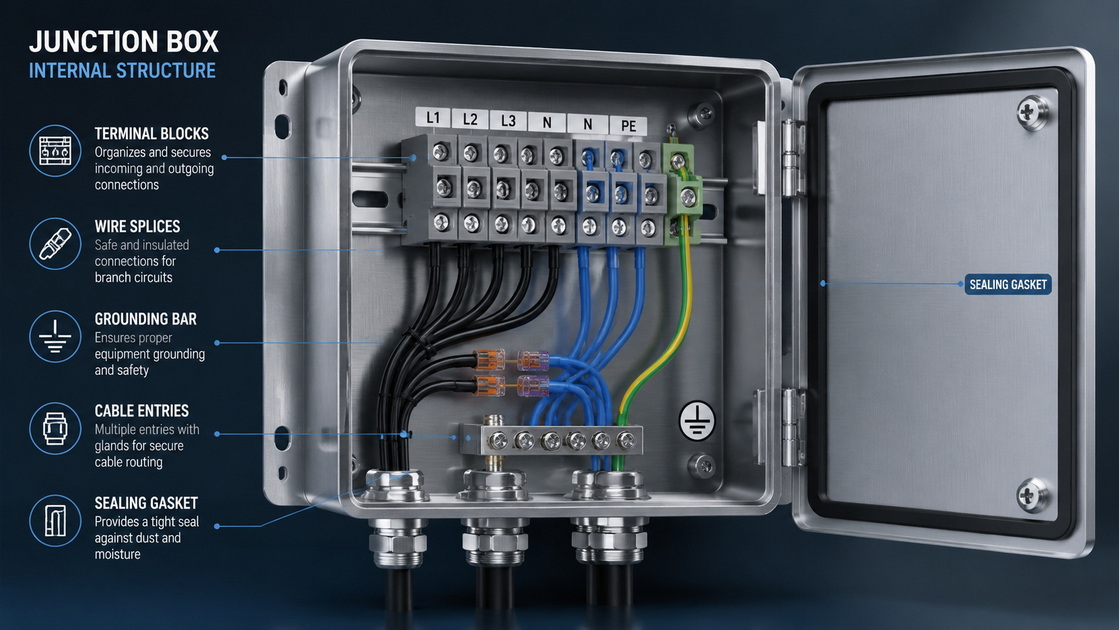
At its most basic level, a junction box electrical enclosure is where multiple wires meet and get safely joined or split. It acts as the hub of an electrical system, keeping connections organized while protecting people from accidental shock and preventing fire hazards caused by exposed splices.
Inside, electricians typically use terminals or wire nuts to join conductors, then seal the enclosure to block dust, moisture, and physical damage. This simple design principle scales from a residential wall box to a heavy-duty metal enclosure protecting high-voltage industrial circuits.
Junction boxes form an integral part of circuit protection systems where circuit integrity must be maintained, including emergency lighting, emergency power lines, and critical infrastructure wiring. Without a properly rated enclosure, exposed splices become fire risks and shock hazards, which is why national electrical codes mandate their use in nearly every wiring scenario.
Key safety benefits include:
- Protecting wire connections from fire hazards
- Keeping electrical joints safely enclosed and inaccessible to accidental contact
- Allowing easy access for inspection, maintenance, or repair without disturbing the entire circuit
- Improving overall system reliability in high-vibration or corrosive environments
Selecting the correct box depends on installation environment, current load, and industry application. The table below summarizes the most common categories.
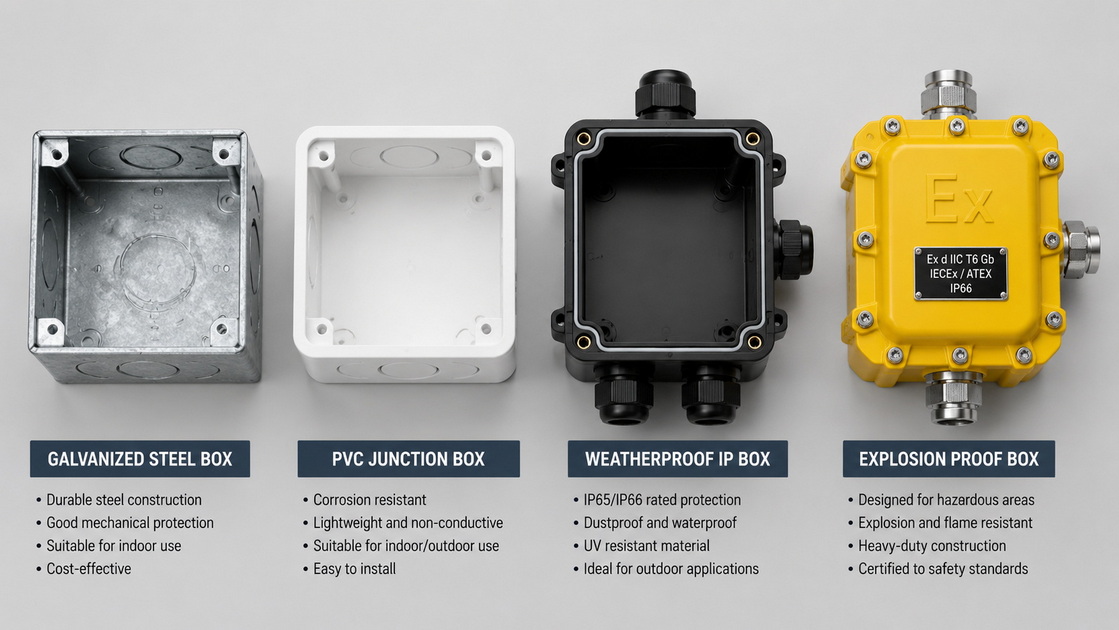
| Type | Material | Best Suited For |
|---|---|---|
| Metal (steel/aluminum) | Galvanized steel, aluminum | Industrial, high-current, fire-resistant needs |
| Plastic (PVC/SMC) | Thermoplastic, PVC | Outdoor, corrosive, moisture-prone residential/light commercial |
| Weatherproof/IP-rated | Metal or reinforced plastic | Outdoor power distribution, renewable energy sites |
| Explosion-proof | Reinforced metal | Oil & gas, chemical plants, hazardous gas zones |
| Underground/buried | Sealed composite or metal | Buried cable runs, utility substations |
Design shapes also vary — rectangular boxes suit wall outlets, while round or octagonal boxes commonly house ceiling fixtures and light connections.
While most consumer guides focus on home wiring, industrial and commercial applications represent the fastest-growing demand segment for engineered junction boxes. This is an area most existing content overlooks.

In power utilities, junction boxes are pole-mounted or panel-integrated to safely distribute electric connections across transmission and distribution networks. Optical Ground Wire (OPGW) joint boxes, for example, serve a dual role — protecting fiber optic splices while providing lightning protection grounding on overhead transmission towers.
Telecom infrastructure relies on junction boxes to house cable splices and data line joints, ensuring stable signal transmission across base stations, data centers, and fiber optic networks. Mini junction boxes specifically protect fiber connection points from moisture, dust, and UV degradation in outdoor fiber optic communication systems.
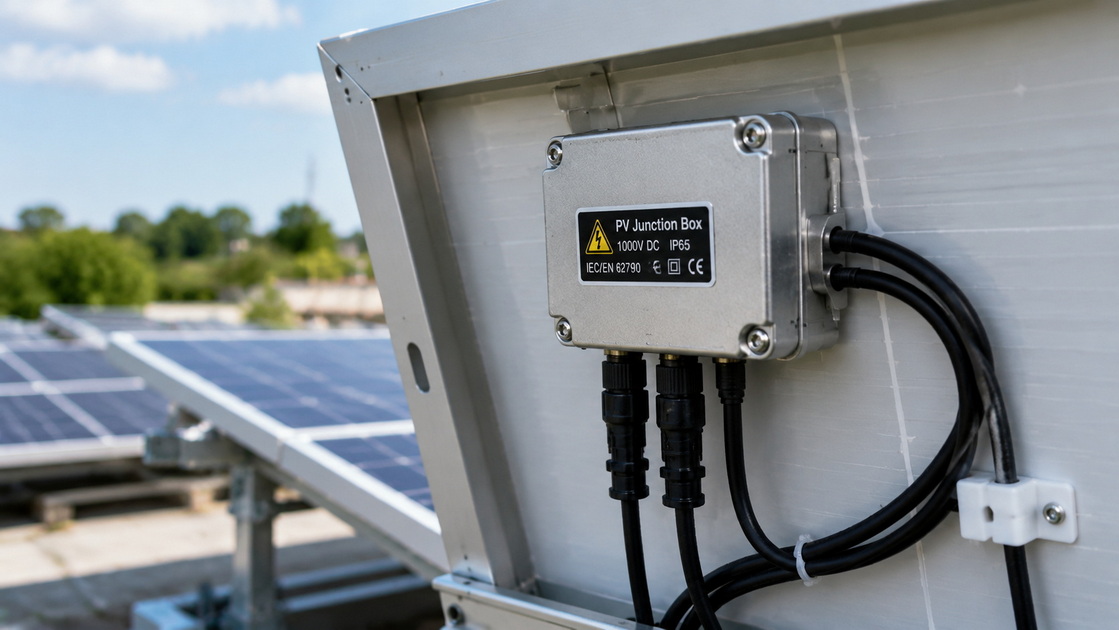
Solar photovoltaic systems depend on PV junction boxes attached directly to solar panels, serving as the critical output interface between panel cells and inverter cabling. In automotive electronics, including new energy vehicles, mini junction boxes manage wiring harnesses between sensors, actuators, and control units, optimizing space while maintaining electrical stability.
Manufacturing plants use junction boxes to manage high-voltage supply lines feeding multiple machines simultaneously, a core requirement in industrial automation and robotics where sensors, actuators, and controllers all need protected power and signal distribution.
One frequently underexplored topic is explosion-proof junction box engineering. These enclosures are specifically constructed to contain electrical sparks and prevent ignition of surrounding flammable gases or vapors, making them essential in oil & gas, chemical processing, and certain industrial smart manufacturing environments. Fire-rated variants go a step further, maintaining circuit integrity even during active fire conditions — a critical feature for emergency lighting circuits in commercial buildings.
Manufacturers serving multiple verticals (power, industrial, new energy) should evaluate IP ratings alongside material choice, since a box rated for indoor commercial use will typically fail in an outdoor renewable energy installation exposed to rain, dust, and thermal cycling.
Selecting a junction box is not a one-size-fits-all decision. Consider these five factors before specifying an enclosure for a project:
1. Environment: Indoor, outdoor, underground, or hazardous zone exposure
2. Wiring capacity: Number and gauge of conductors entering the box
3. Material durability: Metal for industrial/fire resistance vs. plastic for corrosion resistance
4. IP or NEMA rating: Determines moisture and dust protection level for the specific application
5. Regulatory compliance: Local and international electrical codes governing circuit integrity and fire safety
Engineers often conflate pull boxes and junction boxes, but they serve distinct purposes. A junction box permanently houses wire splices and connections, while a pull box primarily facilitates pulling long cable runs through conduit without splicing, and code rules governing sizing differ between the two. Understanding this distinction prevents costly installation errors, particularly on large industrial or utility-scale projects.
A junction box electrical enclosure may seem like a small component, but it plays an outsized role in keeping power, telecom, industrial, and renewable energy systems safe and reliable. Choosing the right material, IP rating, and design for a given environment prevents costly failures and keeps critical infrastructure running smoothly. Whether the application is a residential wall outlet or a high-voltage industrial line, the fundamentals of protection, accessibility, and compliance remain the same.
If you are sourcing custom electrical sheet metal junction box enclosures for power, telecom, renewable energy, or industrial automation projects, working with an experienced manufacturer ensures your enclosures meet the specific IP rating, material, and safety standards your application demands.
It safely houses wire connections, protecting them from moisture, dust, and accidental contact while organizing multiple circuits in one accessible point.
Yes, but it must carry a weatherproof or IP-rated designation specifically built for moisture and dust resistance in outdoor conditions.
Galvanized steel or aluminum enclosures are preferred for industrial settings because they offer superior fire resistance and heat dissipation for high-current applications.
Yes, most electrical codes require enclosed, accessible junction boxes wherever wire splices occur, particularly for circuits tied to emergency power or lighting systems.
Solar PV junction boxes serve as panel output interfaces, while telecom junction boxes protect fiber and cable splices from environmental degradation — the core function is the same, but internal components and sealing standards vary by industry.
1. Wikipedia — Junction Box: https://en.wikipedia.org/wiki/Junction_box
2. UltraTech Cement — Junction Box: Meaning, Types & Electrical Uses: https://www.ultratechcement.com/home-building-basics/junction-box
3. Viox — Understanding Electrical Junction Box Types: https://viox.com/understanding-electrical-junction-box-types/
4. Sintex Online — What Is a Junction Box Used For? Evaluating Commercial Uses: https://www.sintexonline.com/blog/what-is-a-junction-box-used-for-evaluating-commercial-uses/
5. LinkedIn — 12 Types of Junction Boxes for Electrical Systems Explained: https://www.linkedin.com/posts/karthik-viswanathan-fm_electricalengineering-electricaldesign-activity-7442902302350385152-VqYI
6. Jixiang — What Fields Are Mini Junction Box Suitable For?: https://www.jixiangcn.net/news/832
7. Huaneng Fitting — A Guide to The Junction Box: https://pt.huanengfitting.com/resources/a-guide-to-the-junction-box.html
8. E-Abel — Pull Box vs Junction Box: Key Differences & Uses: https://www.eabel.com/pull-box-vs-junction-box/

2026-07-26

2026-07-24


