


Views: 211 Author: Bohui Electric Publish Time: 2026-07-26 Origin: Site


Content Menu
● Why Junction Box Size Matters
>> Box Fill For Splices And Devices
>> Pull Space For Larger Conductors
● How To Size A Junction Box Step By Step
>> Step 1: Identify The Application
>> Step 2: Count The Conductors
>> Step 3: Compare The Space Needed With The Box Volume
>> Step 4: Check Pull Direction And Raceway Layout
>> Step 5: Consider Future Maintenance
● Selection Factors Beyond Size
● Final Checklist Before Choosing A Box
● FAQ
>> 1. What is the first step in sizing a junction box?
>> 2. Why is box size so important?
>> 3. Should I choose the smallest box that fits?
>> 4. What should I check besides dimensions?
>> 5. Are all junction boxes sized the same way?
>> 6. What happens if a box is too small?
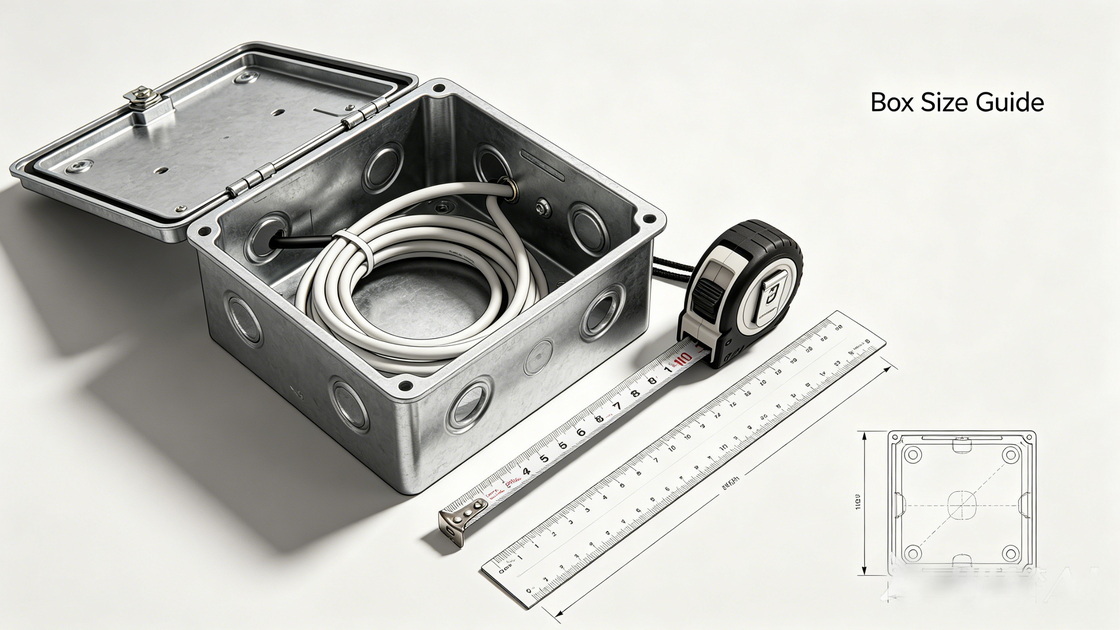
Sizing a junction box is not just a matter of fitting wires inside a metal enclosure. It is about protecting conductors, maintaining safe spacing, supporting reliable terminations, and choosing a box that works well in real installation conditions.
Many projects fail at this stage because the enclosure is selected by guesswork instead of function. A box that is too small can make wiring difficult, damage insulation, and create problems during inspection or maintenance. A box that is too large may add cost, but it usually gives installers more room to work and reduces the risk of crowding.
For that reason, the right junction box size should always be matched to the application, conductor quantity, conductor size, and the environment where the enclosure will be installed.
A junction box is more than a container. It is part of the electrical system's safety and organization. When the enclosure is correctly sized, conductors can be routed cleanly, splices can be made without stress, and future servicing becomes easier.
If the enclosure is undersized, several issues can appear. Conductors may bend too sharply, insulation may be damaged, heat may build up, and the final installation may be difficult to maintain. In commercial and industrial projects, these problems can lead to delays, rework, and higher labor costs.
In practical terms, box size affects three things most of all: safety, serviceability, and installation efficiency. A good enclosure should support all three at the same time.
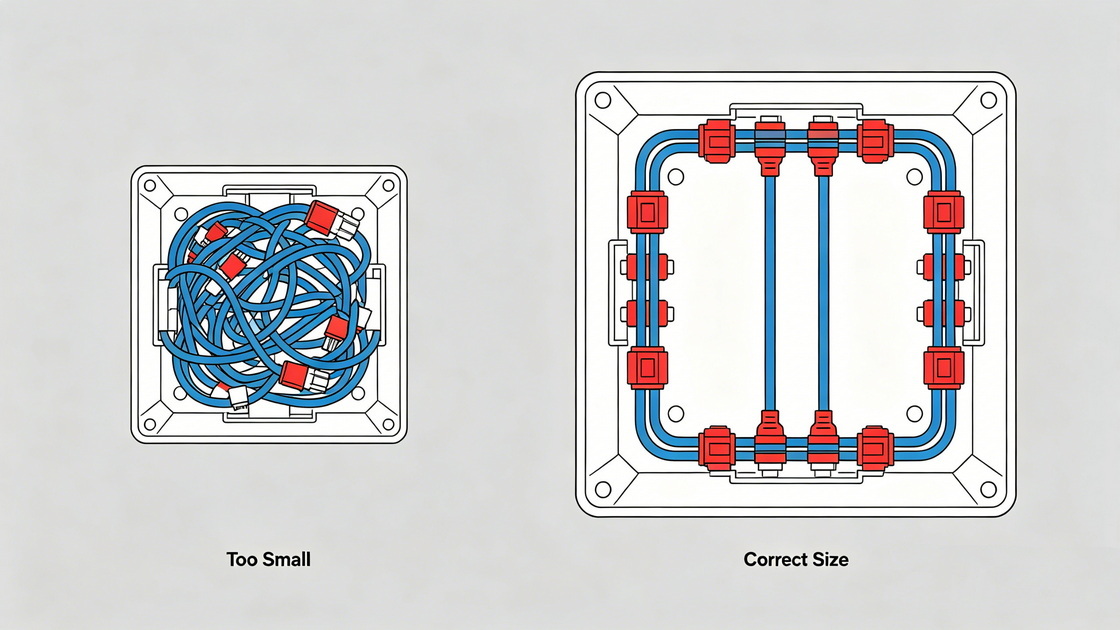
When the enclosure is used for splicing wires or mounting devices, the main concern is box fill. This means the box must provide enough internal volume for the conductors, the device, any internal clamps, and grounding conductors.
This type of sizing is common in lighting systems, branch circuits, control wiring, and general-purpose wiring connections. The basic idea is simple: if too many conductors share the same space, the box becomes crowded and harder to wire correctly.
A proper box-fill approach helps keep the installation neat and makes it easier to close the cover without pinching wires.
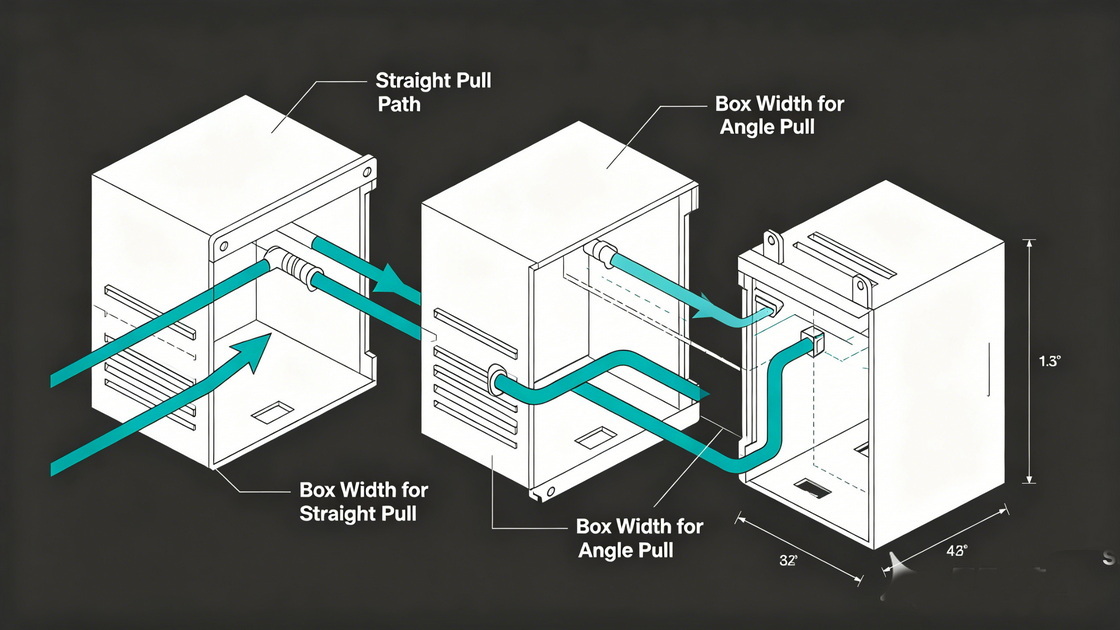
When the enclosure is used for pulling conductors through raceways, the required box size is different. In these cases, the key issue is not just volume, but also the bending space needed for the cables to enter, change direction, and exit without damage.
This is especially important when the conductors are larger and the raceways are more rigid. Pulling space should be generous enough to avoid sharp bends and reduce strain on insulation. In industrial and utility-style projects, this often means choosing an enclosure with much larger internal dimensions than a standard splice box.
Start by determining whether the box will be used for splicing, device mounting, or wire pulling. This is the most important first decision because it determines the sizing method.
If the enclosure is for a light fixture junction, a control connection, or a branch-circuit splice, focus on conductor fill. If the enclosure is for large cable pulls in conduit, focus on pull space instead.
For a splice or device box, count every insulated conductor entering the box. Then account for grounding conductors, internal clamps, and device yokes if present.
This step is where many sizing mistakes begin. Installers often count only the visible wires and forget the additional allowance needed for fittings or terminations. To avoid this, the box should always be evaluated as a complete system, not just as a physical shell.
After counting the conductors, compare the required volume with the box's internal capacity. The box must provide enough usable space for all conductors and terminations without forcing wires into tight corners.
If the available volume is too small, choose a larger enclosure. In most cases, a slightly larger box is easier to install and service than one that only barely fits the wiring.
For pull boxes, the layout of the incoming and outgoing raceways matters as much as the box size itself. Straight pulls, angle pulls, and U-pulls each require different space relationships inside the enclosure.
Before selecting the box, map the cable route and identify which wall each raceway enters. This simple planning step can prevent sizing errors and help the installer choose a box that fits the actual pulling path.
A junction box should not be selected only for today's wiring. It should also allow room for future maintenance, inspection, and possible circuit changes.
This is especially true in industrial facilities, telecom systems, and energy projects where wiring may be expanded later. Leaving enough internal space from the beginning often saves time and money over the life of the installation.
The table below provides a general starting point for common applications. It is not a substitute for a code-based calculation, but it is useful when comparing enclosure options.
| Application | Typical Box Size Range | Common Use | Notes |
|---|---|---|---|
| Small indoor junctions | 80 x 80 x 50 mm to 120 x 120 x 70 mm | Lighting, low-voltage wiring, compact connections | Best for limited conductor counts |
| General-purpose wiring | 150 x 150 x 70 mm to 200 x 200 x 80 mm | Branch circuits, outdoor wiring, mixed connections | Offers more working room |
| Industrial and large cable systems | 250 x 250 x 100 mm and above | Control systems, large conductors, equipment feeds | Better for complex routing and service access |
These ranges are useful for quick comparison, but the final selection should always reflect conductor count, wire size, mounting method, and site conditions.

The environment can affect the enclosure choice just as much as the wiring itself. A box used indoors in a dry room does not need the same protection as one installed outdoors, in a washdown area, or in a corrosive industrial setting.
For that reason, the enclosure material, sealing method, surface finish, and mounting details should all be reviewed alongside the dimensions. A correctly sized box still performs poorly if it is not suitable for the environment.
Cable entry hardware takes up space. Cable glands, connectors, knockouts, threaded holes, and flange fittings all reduce usable room inside the box.
This means a box that looks large on paper may feel tight after the entry points are installed. When possible, internal dimensions should be checked together with the planned entry layout.
Crowded boxes are harder to wire and harder to inspect. They can also trap heat around terminals and splices.
In systems with frequent servicing, such as industrial control panels or communication equipment, the ability to open, inspect, and rework the box matters just as much as the initial installation. A little extra room can improve both safety and efficiency.
- Choosing a box based only on outside dimensions.
- Forgetting to include clamps, grounding conductors, or device yokes in the calculation.
- Using a standard splice box where a pull box is actually needed.
- Ignoring the direction of conductor entry.
- Selecting an enclosure that has enough volume but not enough working room.
- Overlooking environmental protection requirements.
These mistakes are common because junction boxes often look simple at first glance. In reality, a correct selection depends on both electrical design and installation details.
In manufacturing and project engineering, the best junction box is usually not the smallest one that meets the minimum requirement. It is the one that balances fit, access, durability, and ease of installation.
For export projects, this balance is especially important. Different markets may require different mounting styles, hole patterns, sealing expectations, and material preferences. A good enclosure supplier should be able to support those variations without sacrificing internal space or quality.
From a practical standpoint, buyers should request internal dimensions, entry layout options, and finish details before ordering. This helps avoid field modifications and makes the installation process smoother.
Before ordering a junction box, confirm the following points:
1. The application is clearly defined.
2. The number of conductors is known.
3. The conductor size or raceway size has been checked.
4. The installation environment is understood.
5. The entry layout matches the cable route.
6. Enough room remains for installation and future maintenance.
7. The enclosure material and finish suit the site conditions.
When these points are reviewed together, the result is usually a safer and more practical enclosure selection.
The best way to size a junction box is to begin with the application, then match the enclosure to the conductor count, pull requirements, and installation environment. A splice box, device box, and pull box each demand a different approach, so the sizing method should never be guessed.
A properly sized enclosure improves safety, supports easier installation, and helps the system remain serviceable over time. In both commercial and industrial projects, that combination is far more valuable than choosing the smallest possible box.
The first step is to identify whether the box will be used for splicing, device mounting, or wire pulling. That determines the sizing method.
Box size affects safety, installation quality, and maintenance access. An undersized box can crowd conductors and make wiring harder.
Not usually. A slightly larger box is often easier to install, easier to inspect, and better for future maintenance.
Check the environment, cable entry layout, enclosure material, sealing method, and service access.
No. Splice boxes, device boxes, and pull boxes follow different sizing logic.
A small box can create wiring difficulty, insulation stress, poor access, and potential installation issues.
1. [How to Size a Junction Box: Essential Guide for Safety - E-Abel]
2. [NEC Junction Box Code: What Installers Must Know 2026 - Lianjer]
3. [Sizing Junction Boxes - EC&M]
4. [Pull Box and Junction Box Calculations, Part II: NEC 314.28 - EC&M]
5. [NEC 314.16 Box Fill Calculations - UpCodes]
6. [NEC 2026 314.28 — Pull and Junction Box Sizing - SparkShift]
7. [Junction Box Sizes and Specifications: A Complete Guide - CNP Nji]
2026-07-26

2026-07-24


