


Views: 215 Author: Bohui Electric Publish Time: 2026-07-23 Origin: Site


Content Menu
● Common Gauge Options for Electrical Enclosures
● Factors That Influence the Right Gauge
● Thickness and Performance Requirements
● Material Type Changes the Result
● Matching Gauge to Application
● Manufacturing Considerations
● Environmental Protection and Enclosure Design
● Expert View on Buyer Decision-Making
● FAQ
>> 1. What is the most common gauge for electrical enclosures?
>> 2. Is 12-gauge steel stronger than 14-gauge steel?
>> 3. Can 16-gauge steel be used for an electrical enclosure?
>> 4. Does a thicker gauge always mean a better enclosure?
>> 5. Should outdoor enclosures use thicker metal?
>> 6. How do I choose the right gauge for a custom enclosure?
Selecting the right gauge metal for an electrical enclosure is one of the most important decisions in enclosure design. The gauge affects rigidity, durability, fabrication quality, and long-term performance in the field. A thinner sheet may reduce cost, but it can also lead to flexing, denting, door misalignment, or reduced structural stability over time.
For industrial buyers, the best gauge is not a fixed number. It should be matched to the enclosure's size, application, mounting method, and environmental conditions. In many cases, 14-gauge steel offers a strong balance between cost and performance, while 12-gauge steel is preferred when greater stiffness and durability are required.
The metal gauge directly influences how an electrical enclosure behaves during manufacturing, shipping, installation, and daily use. A properly chosen gauge helps the cabinet maintain its shape, supports door and hinge performance, and improves the overall feel of the finished product.
In industrial environments, enclosures are often exposed to vibration, accidental impact, and repeated maintenance access. If the metal is too thin, the enclosure may deform more easily, which can affect sealing, alignment, and the protection of internal electrical components.
Gauge selection also affects fabrication. Thinner sheet metal may be easier to form, but it can be less stable during welding and assembly. Thicker material improves rigidity, but it may increase weight, cost, and handling complexity.

The most common gauges used in metal electrical enclosures are 16-gauge, 14-gauge, and 12-gauge steel. Each has a different balance of strength, weight, and cost.
| Gauge | Typical Use | Main Advantage | Best Fit |
|---|---|---|---|
| 16 gauge | Smaller or lighter-duty enclosures | Lower cost and easier forming | Compact indoor cabinets |
| 14 gauge | General-purpose industrial enclosures | Good balance of strength and weight | Standard industrial use |
| 12 gauge | Larger or heavy-duty enclosures | Higher rigidity and durability | Harsh or high-load applications |
In practice, 14-gauge is often used as a baseline for industrial cabinets, while 12-gauge becomes more attractive when the enclosure is large, carries heavy internal components, or must withstand tougher field conditions. Smaller enclosures may still perform well in 16-gauge material when the application does not demand high structural strength.
The correct gauge depends on more than just material thickness. Several practical factors should be evaluated before finalizing the design.
- Enclosure size: Larger cabinets usually need thicker material to prevent flexing.
- Mounting style: Wall-mounted units and floor-standing cabinets face different stress levels.
- Internal load: Heavy components, back panels, and door hardware add stress to the structure.
- Environment: Indoor, outdoor, corrosive, and washdown settings require different material strategies.
- Protection level: The enclosure must support the intended protection performance, not just look strong.
A small indoor control box may be perfectly acceptable in 16-gauge steel. A large industrial automation cabinet, however, may need 12-gauge material to maintain structural stability and long-term reliability.
Electrical enclosure design is not only about choosing a gauge number. Thickness requirements may also be expressed in millimeters or inches depending on the standard or engineering specification being used. In many cases, the material must meet minimum structural requirements tied to safety and enclosure performance.
This is especially important when the enclosure is intended for regulated industrial use. The material must be suitable for the expected environment, fabrication method, and protection target. A well-designed enclosure should provide enough rigidity to protect the components inside while also allowing clean assembly, reliable sealing, and consistent hardware operation.
Gauge alone does not tell the whole story because different metals behave differently at the same thickness. Steel, galvanized steel, aluminum, and stainless steel each have unique strengths and trade-offs.
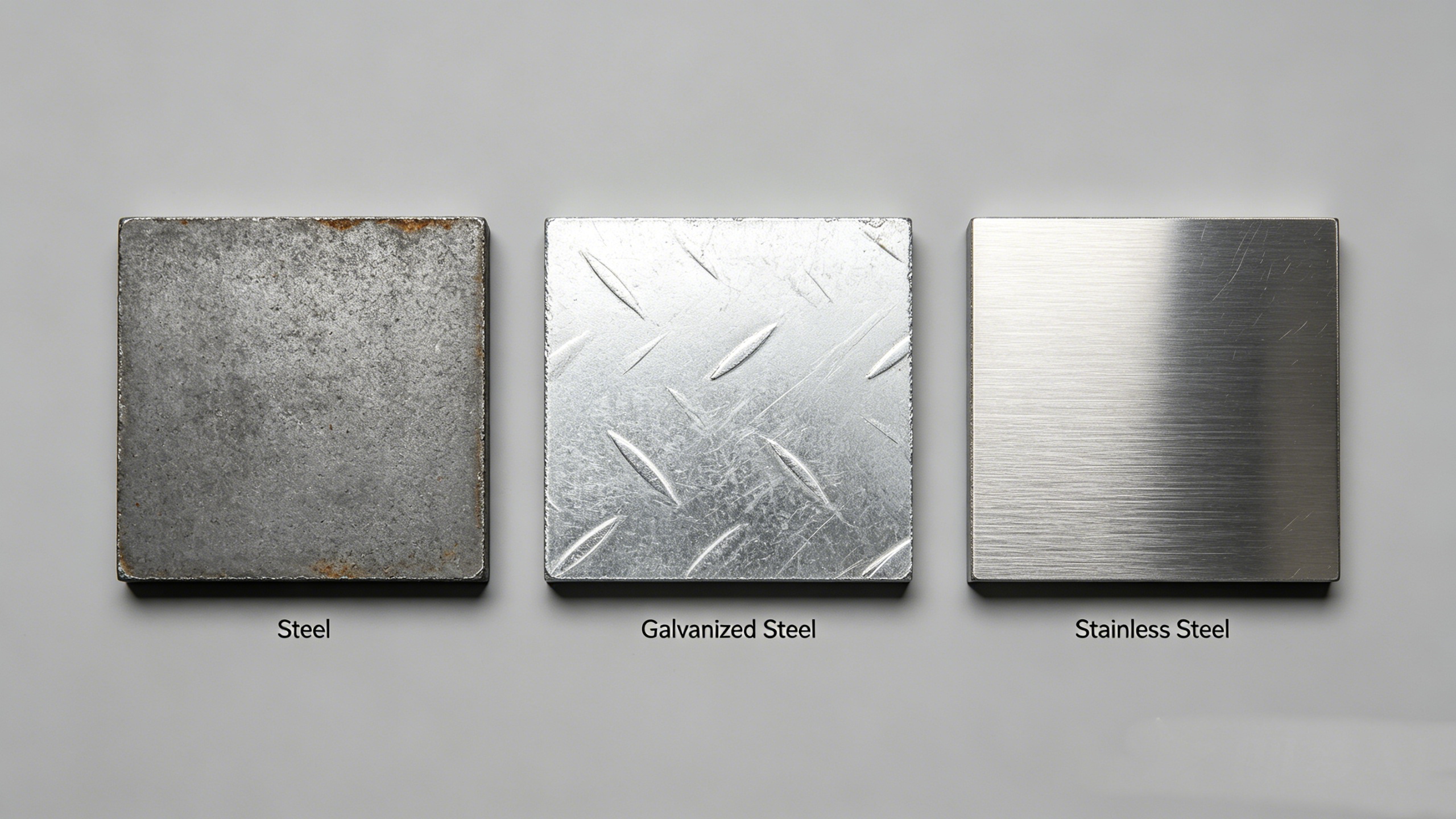
Steel is often chosen for its strong structural performance and cost efficiency. Galvanized steel adds corrosion resistance, which can be useful in many industrial environments. Stainless steel is better suited for corrosive, outdoor, or washdown applications, while aluminum reduces weight and can be helpful where handling or transport is a concern.
Because the mechanical behavior of each material differs, the same nominal gauge may not deliver the same performance across all metal types. That is why material selection and gauge selection should always be considered together.
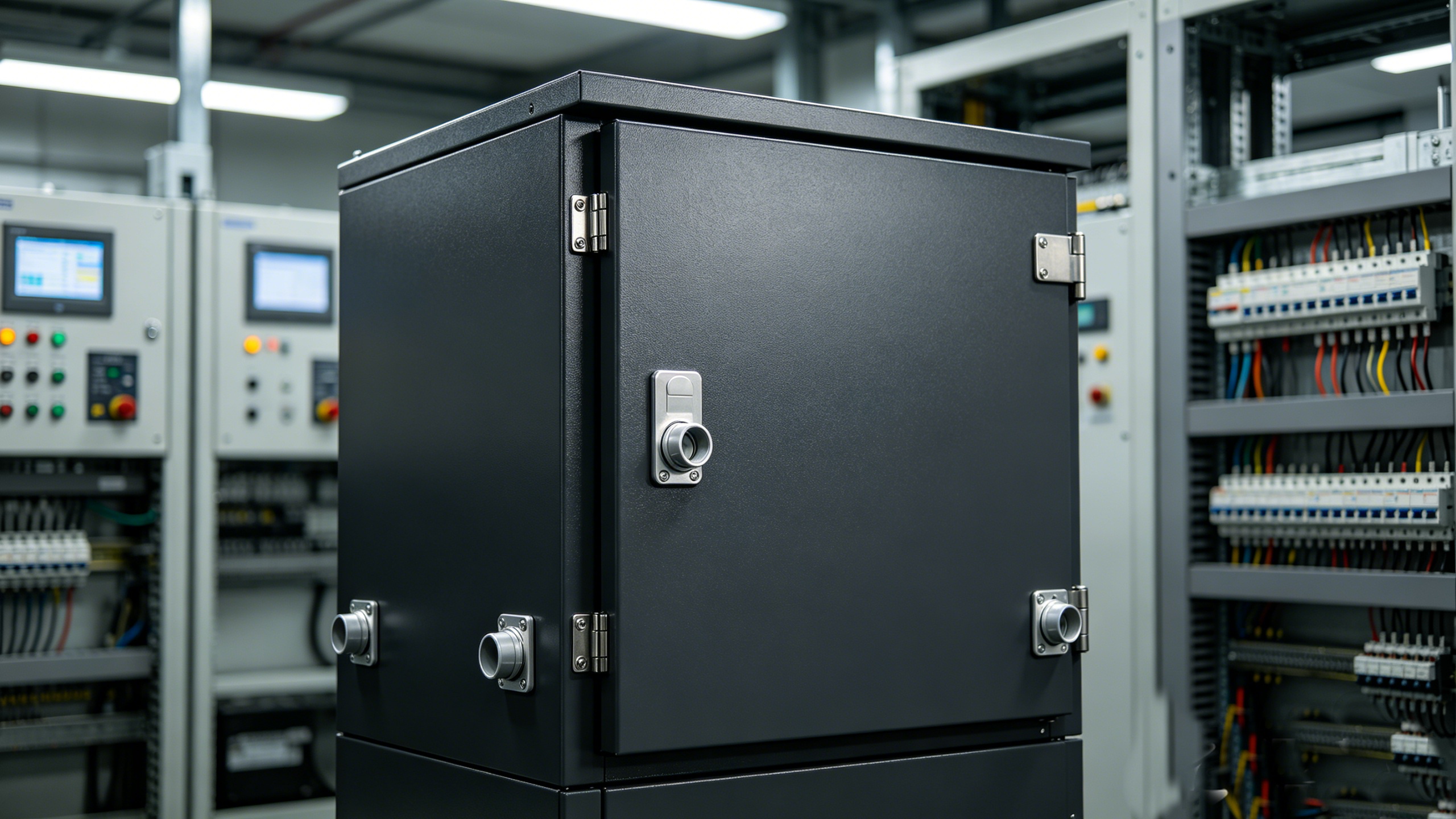
A practical way to choose the right gauge is to match it to the enclosure's application profile.
- Indoor control panels: 16-gauge or 14-gauge steel is often sufficient.
- General industrial cabinets: 14-gauge steel is usually a strong all-around choice.
- Large equipment enclosures: 12-gauge steel is often better for rigidity.
- Outdoor or corrosive settings: material choice, coating, and sealing become just as important as gauge.
- Custom OEM units: gauge should be determined by loading, hardware, and enclosure geometry.
This approach helps avoid over-specifying the enclosure. It also prevents under-specifying it, which can lead to structural problems, field failures, or customer complaints later on.
From a manufacturing perspective, the chosen gauge must support consistent production. The enclosure should bend cleanly, weld properly, and maintain dimensional accuracy after coating and assembly. If the sheet metal is too thin, distortion may occur during fabrication. If it is too thick, production can become more expensive and less efficient.
Door fit, hinge performance, gasket compression, and panel alignment are all affected by material thickness. Good enclosure design balances these factors so the cabinet performs well without unnecessary cost or weight. In real production settings, this balance is often more important than choosing the thickest possible sheet.
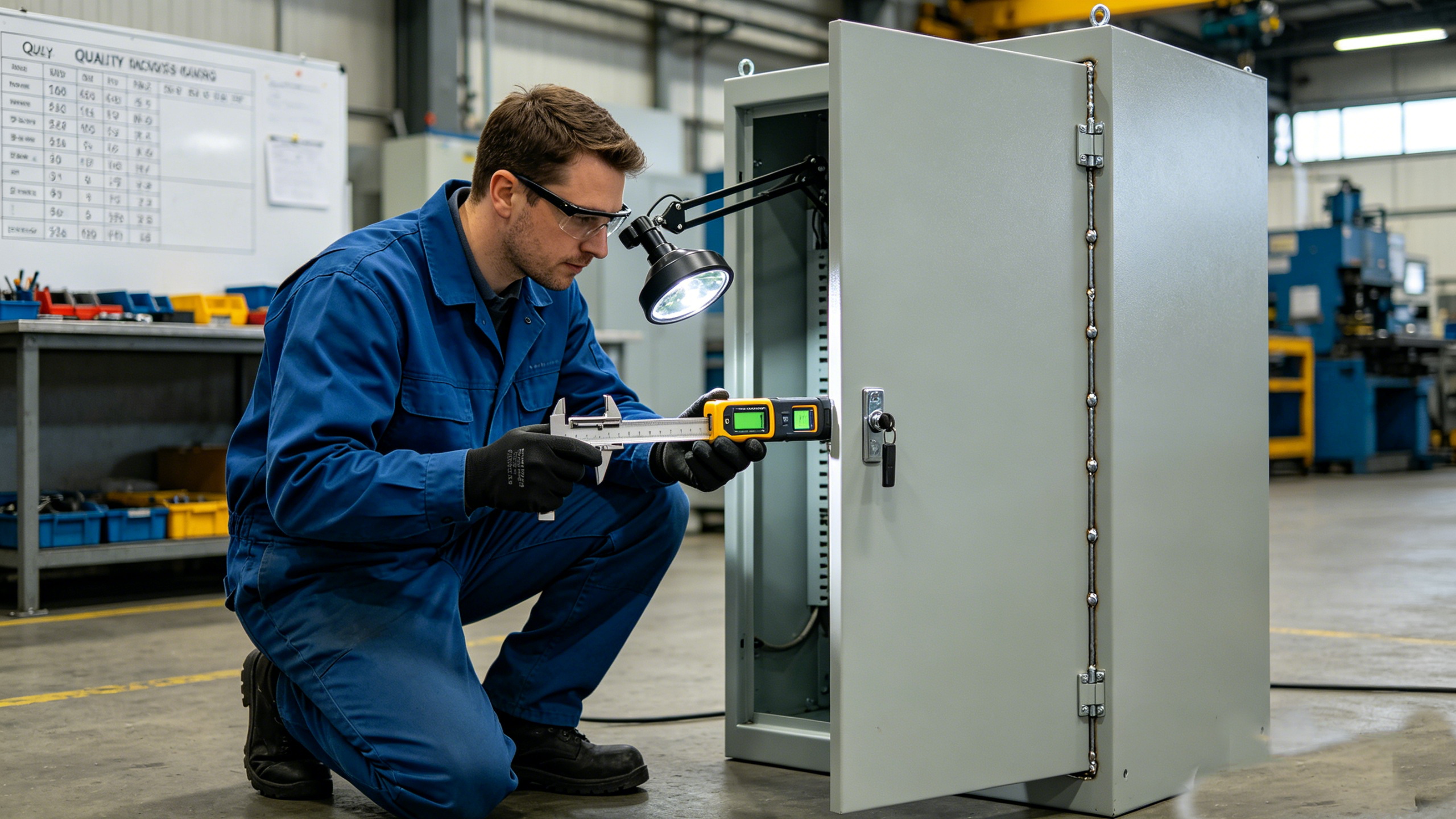
The installation environment plays a major role in gauge selection. Indoor cabinets generally face less mechanical and environmental stress than outdoor or industrial field enclosures. In harsher settings, the enclosure must resist moisture, dust, impact, and corrosion while still protecting sensitive electrical systems.
For this reason, gauge should never be selected in isolation. It must work together with the enclosure's sealing design, surface treatment, gasket system, and hardware. A well-built enclosure is the result of the full system, not just the metal thickness.
A simple rule of thumb can help narrow the choice:
1. Start with the enclosure size.
2. Evaluate the amount of internal load.
3. Consider the installation environment.
4. Check the expected handling and vibration.
5. Choose the lightest gauge that still supports the required rigidity and durability.
In many industrial use cases, 14-gauge steel is the best starting point. If the enclosure is larger or more heavily stressed, moving to 12-gauge steel is often a smarter choice. If the enclosure is compact and the environment is controlled, 16-gauge steel may be enough.
A good enclosure is not necessarily the thickest one. It is the one that delivers the right balance of protection, performance, and manufacturability. Buyers often focus on price first, but the lowest-cost option may create higher long-term costs if it leads to deformation, poor fit, or reduced service life.
A better approach is to choose the gauge based on application needs, then confirm material type, coating, and fabrication quality. This reduces risk and helps ensure that the enclosure will perform reliably in the field.
Choosing the right gauge metal for an electrical enclosure is essential for strength, durability, and long-term performance. This guide explains the most common gauge options, key selection factors, and practical advice for industrial applications.
The answer to what gauge metal for an electrical enclosure depends on the enclosure's size, environment, and performance requirements. For many industrial projects, 14-gauge steel offers a strong middle ground, while 12-gauge steel provides extra rigidity for larger or more demanding applications. The best result comes from matching gauge, material, and design to the actual working conditions of the enclosure.
A well-chosen enclosure thickness improves durability, supports easier manufacturing, and helps protect the electrical system inside. For industrial buyers, that makes gauge selection a key part of building a reliable and long-lasting enclosure.
For many industrial electrical enclosures, 14-gauge steel is one of the most common choices because it balances strength, weight, and cost.
Yes. 12-gauge steel is thicker and more rigid than 14-gauge steel, so it is often used for larger or more demanding enclosures.
Yes. 16-gauge steel can work well for smaller or lighter-duty enclosures, especially in controlled indoor environments.
No. A thicker gauge improves rigidity, but the best enclosure also depends on material type, coating, sealing, and the intended environment.
Often yes, but gauge alone is not enough. Outdoor enclosures also need proper sealing, corrosion resistance, and suitable hardware.
Consider enclosure size, internal weight, installation environment, mounting method, and expected mechanical stress before selecting the final gauge.
1. Top Cabinet, "Sheet Metal Gauge Thickness for Enclosures" — https://topcabinet.com/sheet-metal-gauge-thickness-enclosures/
2. Schneider Electric, "What gauge steel is used for the standard NEMA 1 I-Line ..." — https://www.se.com/us/en/faqs/FA124126/
3. UpCodes, "Minimum Thickness of Enclosure Metal" — https://up.codes/s/minimum-thickness-of-enclosure-metal
4. UL 508A document — https://www.starsplas.com/wp-content/uploads/2019/01/UL508A-2014.pdf
5. Electrical Enclosures Type 1 catalog data — https://www.electrical-enclosures.com/wp-content/archive/uploads/251.pdf
6. Polycase, "Electrical Enclosure Standards" — https://www.polycase.com/techtalk/electronics-junction-boxes/electrical-enclosure-standards.html
7. Hammond Mfg., Type 3R enclosure example — https://www.hammfg.com/electrical/products/commercial/c3rhclo
8. Protocase, "Electronic Enclosure Design 101" — https://www.protocase.com/blog/2017/02/16/electronic-enclosure-design-101/

2026-07-26

2026-07-24


