


Views: 222 Author: Bohui Electric Publish Time: 2026-06-17 Origin: Site


Content Menu
● What Is a Junction Box And Why It Matters
● Safety, Codes And Before-You-Start Checklist
● Tools And Materials You'll Need
● Step‑By‑Step: How To Wire A Junction Box (Residential‑Style Example)
>> 1. Prepare and mount the box
>> 2. Bring cables into the box
>> 3. Strip insulation and identify conductors
>> 5. Arrange conductors and close the box
● Outdoor, Industrial And Instrumentation Junction Boxes
● Grounding, Bonding And Condensation Management
● Common Wiring Mistakes To Avoid
● Expert Tips For Long‑Term Reliability In Industrial Projects
● Call To Action: Choose The Right Junction Box Partner
● FAQ About Wiring A Junction Box
>> 1. Do I always need a junction box for wire splices?
>> 2. Can I completely bury a junction box behind drywall?
>> 3. How many wires can I put in one junction box?
>> 4. Is it safe to wire a junction box myself?
>> 5. What IP rating should I choose for outdoor junction boxes?
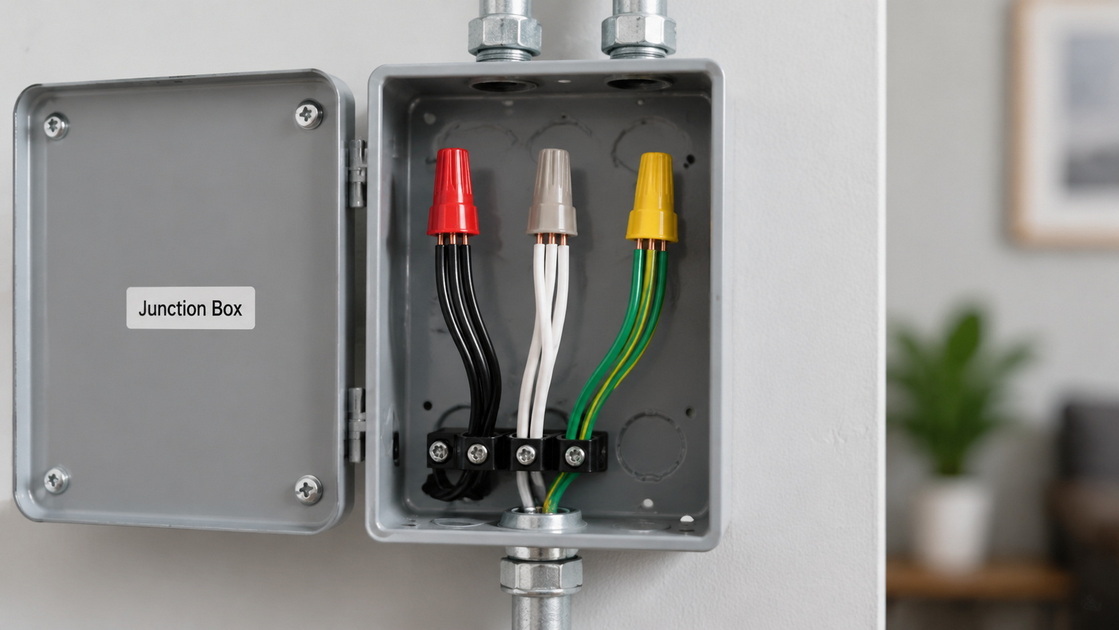
A junction box is an enclosure that protects and organizes electrical connections where multiple cables meet or branch. In residential, commercial and industrial projects, it keeps live conductors contained, reduces fire risk, and makes future maintenance much easier. [zeroinstrument]
For outdoor and harsh environments, junction boxes also act as environmental protection, guarding terminations against dust, water, UV and corrosive atmospheres. That's why electrical engineers and maintenance teams treat the choice and wiring of junction boxes as a critical reliability decision, not just a "small accessory." [lianjer]
Before you touch any conductor, you need a safety routine that reflects industry best practice and typical code requirements (such as NEC in the U.S. or IEC‑based standards internationally). [zeroinstrument]
Always do this before wiring a junction box:
1. Shut off power at the breaker feeding that circuit, not just at a switch. [reddit]
2. Test for absence of voltage with a non‑contact tester or multimeter on all conductors in the box. [reddit]
3. Confirm box accessibility – junction boxes must remain accessible (not buried behind drywall or permanently sealed). [facebook]
4. Verify box fill capacity – the box must be large enough for the number and size of conductors and connectors you plan to install. [youtube]
5. Use listed components only – approved wire nuts, terminals, cable glands and properly rated boxes (IP or NEMA). [youtube]
From an expert's standpoint, most unsafe boxes we see in the field come from skipping one of those five steps: especially working "live," overfilling small boxes, and using random, non‑listed connectors. [youtube]
Suggested visuals:
- Photo or diagram of a correctly wired junction box (hot/neutral/ground clearly grouped and labeled). [facebook]
- Short safety checklist graphic summarizing the five steps above.
To wire a junction box like a professional, assemble your tools first. [youtube]
Typical tools:
- Insulated screwdrivers for box cover and terminals. [youtube]
- Side cutters and needle‑nose pliers. [youtube]
- Wire stripper (automatic strippers save time in repetitive work). [youtube]
- Voltage tester or multimeter. [reddit]
Typical materials:
- Appropriately rated junction box (metal or non‑metallic, indoor or IP65+ outdoor, depending on application). [lianjer]
- Cable glands or conduits with fittings for entries and exits. [zeroinstrument]
- Wire connectors (wire nuts, push‑in connectors, or terminal blocks) listed for the conductor size and type. [youtube]
- Ground screw or grounding terminal bar for metal boxes. [tiktok]
In my own work with industrial clients, we also standardize on UV‑resistant and corrosion‑resistant enclosures for outdoor and coastal sites, for example stainless steel or well‑formulated coated steel junction boxes to prevent premature failure. [zeroinstrument]
This section assumes a typical home or light‑commercial AC circuit with one feed entering the box and two branch circuits exiting. [facebook]
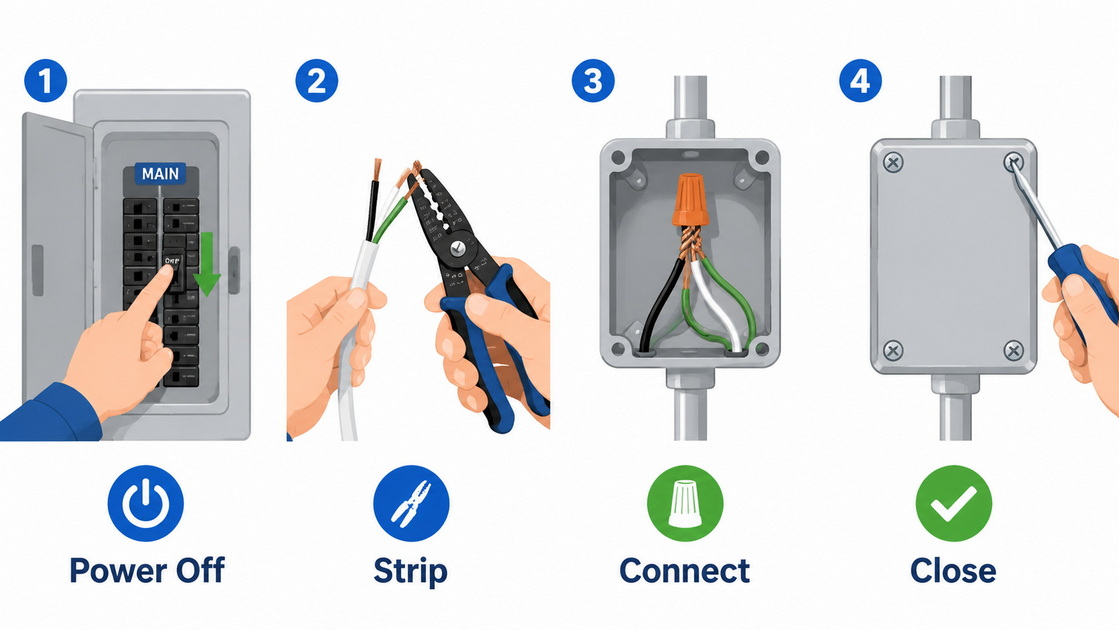
1. Choose the location where cables meet and where the box will remain accessible (e.g., above a ceiling panel, in a utility room). [lianjer]
2. Secure the box to framing or a stable surface using appropriate fasteners. [lianjer]
3. Plan cable routing so that conduits or cables enter via knockouts that support good bend radius and strain relief. [zeroinstrument]
Pro tip (from field electricians): Place entries at the bottom or sides of the box in outdoor installations to minimize water ingress. [zeroinstrument]
1. Install cable glands or connectors in the knockouts. [zeroinstrument]
2. Feed each cable into the box, leaving at least 6 inches of free conductor inside so you have room to work and to comply with typical code requirements. [youtube]
3. Tighten glands/connectors to provide mechanical strain relief and maintain IP or NEMA ratings. [zeroinstrument]
Some electricians use the "thumb rule" from video tutorials: the distance from the back of your fist to the tip of your thumb is about six inches, a quick way to gauge conductor length consistently. [youtube]
1. Use the wire stripper to remove about 12–13 mm (about ½ inch) to 1 inch of insulation, depending on connector requirements. [tiktok]
2. Group conductors by function: hot (often black/brown), neutral (white/blue), and ground (green/green‑yellow). [facebook]
3. Mark any re‑purposed conductor (e.g., a white used as hot in a switch loop) with colored tape as required by code. [reddit]
Correct identification is not just a paperwork issue; most shock accidents I've seen in maintenance logs come from misidentified "neutrals" that were actually energized. [reddit]
A junction box is essentially a protected set of splices. You want low‑resistance, mechanically secure connections that will not loosen with time or vibration. [facebook]
Typical pattern with one feed and two loads:
- Tie all grounds together with a wire nut or terminal block, and connect to the metal box's ground screw if it is a metal enclosure. [tiktok]
- Tie all neutrals together (incoming neutral plus branch neutrals) if they are on the same circuit. [facebook]
- Tie all hots together (incoming hot plus branch hots) for that circuit. [facebook]
Expert tips from electricians:
- Use the right‑size wire nut and twist until the individual conductors start twisting together under the nut; that's a good sign of a solid mechanical connection. [youtube]
- When the box serves two different circuits, you must separate neutrals by circuit as combining them can be a code violation and a safety issue. [youtube]
1. Gently fold the conductors back into the box, keeping hot, neutral and ground groups tidy and not forcing sharp bends. [zeroinstrument]
2. Ensure no bare conductor is exposed outside connectors and that no insulation is nicked or cut. [youtube]
3. Place the cover on the box and tighten the screws, checking that no wires are pinched by the cover. [youtube]
At walk‑through inspections, properly dressed conductors and clearly identified groups strongly influence whether work is perceived as "professional" and compliant. [facebook]
For applications in power, communication, industrial automation, building management, EV charging and energy storage, junction boxes often sit outdoors or in harsh industrial spaces. [lianjer]
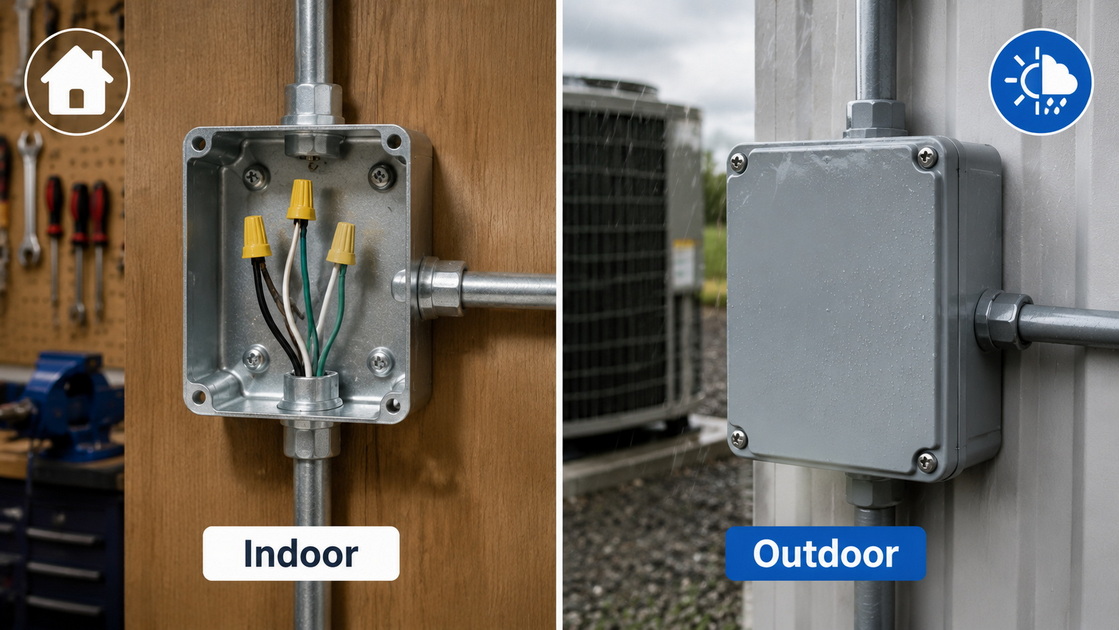
Key considerations from industry practice:
- Ingress protection (IP65 or higher) is recommended outdoors; IP67 or IP68 may be required where heavy spray or temporary submersion is possible. [zeroinstrument]
- Use materials such as stainless steel, aluminum alloy, or UV‑resistant plastics to withstand corrosion, temperature extremes and UV exposure. [zeroinstrument]
- Separate cable routing for power, control and communication to minimize EMI and simplify troubleshooting. [zeroinstrument]
Instrumentation junction boxes used for field transmitters and sensors also require clear labeling of each cable and terminal because they often serve dozens of points in a single enclosure. [scribd]
From a reliability engineer's perspective, grounding and condensation are two areas where good designs quietly avoid problems for years, while bad ones generate constant alarms and failures. [zeroinstrument]
Grounding and bonding best practices:
- Always install a dedicated ground screw or terminal in metal junction boxes and bond it to the grounding system. [tiktok]
- For shielded communication or instrumentation cables, typically ground the shield at a single point (often at the box entry or at the control panel) to prevent ground loops. [zeroinstrument]
Condensation and environmental control:
- Use breather or drain valves to equalize pressure and allow moisture to escape without compromising the IP rating. [zeroinstrument]
- Place desiccant packs (such as silica gel) inside outdoor or temperature‑swing enclosures to control humidity. [zeroinstrument]
- In marine or chemical environments, prefer 316 stainless steel or specially coated steel to resist aggressive corrosion. [zeroinstrument]
These practices are why well‑engineered junction boxes in outdoor process plants routinely operate for a decade or more with minimal intervention. [zeroinstrument]
Based on real‑world troubleshooting threads and field experience, here are the mistakes that frequently show up in failed or unsafe junction boxes. [reddit]
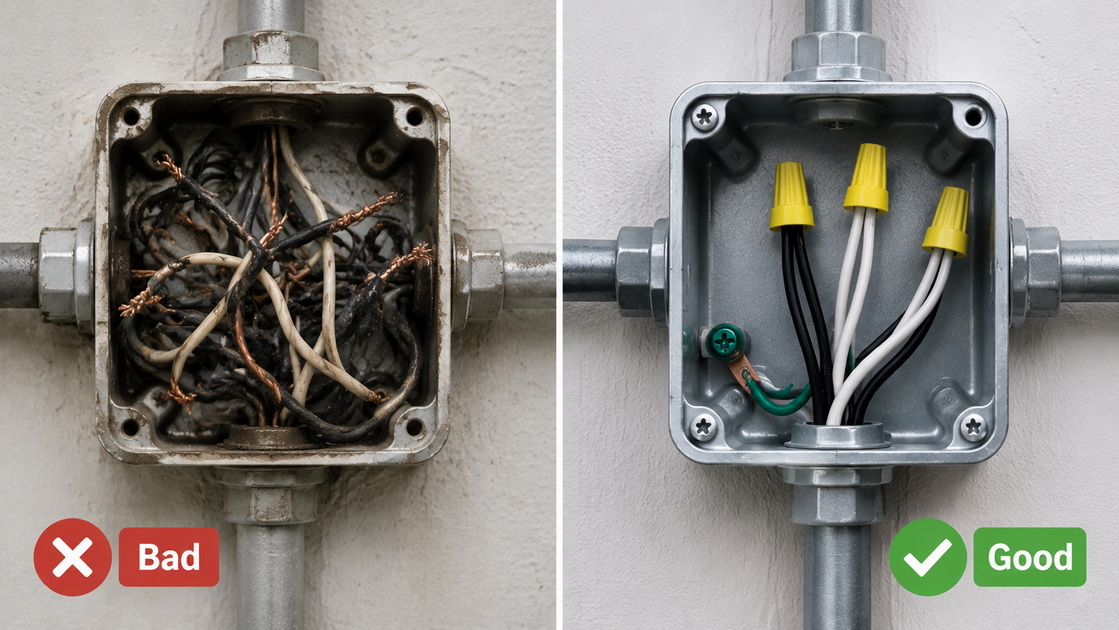
- "Switched neutral" circuits: Running the switch on the neutral instead of the hot, leaving fixtures or equipment unexpectedly energized and dangerous. [reddit]
- Overfilled boxes: Cramming too many conductors into a small box, leading to overheating, physical damage to insulation, and code violations. [youtube]
- No ground screw or bonding in metal boxes, which compromises fault clearing and shock protection. [tiktok]
- Using devices as junction points (e.g., using a receptacle as a neutral tie instead of proper pigtails) that can lead to failures when the device is replaced. [tiktok]
- No strain relief or improper cable glands, which allows movement to stress terminations and compromise IP ratings outdoors. [zeroinstrument]
Learning to spot these issues visually is one of the fastest ways to sharpen both DIY and professional inspection skills. [reddit]
Suggested visuals:
- "Good vs bad" comparison photos of junction box terminations. [tiktok]
In industrial and infrastructure projects, a junction box is a "small" component in the BOM, but it directly impacts uptime, safety, and maintenance cost. Here are practices adopted by experienced engineers and OEMs: [zeroinstrument]
- Standardize enclosure families (sizes, materials, cable entry layouts) to simplify design and spare parts management. [lianjer]
- Design with future expansion in mind, leaving extra space and spare terminals in critical boxes to avoid ad‑hoc modifications later. [reddit]
- Use clear, durable labeling on both cables and internal terminals, following plant or project standards. [zeroinstrument]
- Schedule periodic inspections of outdoor boxes, checking cable glands, gaskets, grounding and condensation devices for wear or damage. [zeroinstrument]
Manufacturers who specialize in electrical sheet‑metal junction box enclosures for power, communications, industrial automation, building systems, energy storage, EVs and pump systems typically design products around these same principles so that wiring inside the box is simpler and safer for installers. [lianjer]
If you are planning or maintaining electrical, communication, industrial automation, building, new energy storage, EV or pump systems, the reliability of every junction box connection starts with the right enclosure and internal layout. [lianjer]
Work with a specialized electrical sheet‑metal junction box manufacturer that can match enclosure material, protection level, internal layout and accessories (DIN rails, terminal blocks, gland plates) to your specific application and standards. By standardizing on robust, well‑engineered junction boxes, you make on‑site wiring safer, faster and more consistent across all your projects. [lianjer]
Yes. In most jurisdictions, any permanent splice must be inside an approved, accessible junction box or device box. [facebook]
No. Junction boxes must remain accessible for inspection and maintenance, often via a cover plate or access panel. [facebook]
This depends on the box size, conductor gauge and connector type; electrical codes define "box fill" calculations you must follow. [youtube]
If you understand local codes, can de‑energize and test circuits, and follow best practices, simple residential boxes are DIY‑friendly, but complex or high‑risk systems should be handled by licensed electricians. [reddit]
Generally, IP65 or higher is recommended outdoors; IP67 or IP68 may be needed in heavy spray or submersion conditions. [zeroinstrument]
1. "How To Wire Junction Boxes" – professional electrician video tutorial. <https://www.youtube.com/watch?v=14cAySsGBAk> [youtube]
2. "Junction Box Installation Best Practices for Safety" – field tips on grounding and pigtails. <https://www.tiktok.com/@rcielectricllc/video/7542990005753482510> [tiktok]
3. "Best Practices for Outdoor Instrumentation Junction Boxes – Cable Entry and Exit Requirements." <https://zeroinstrument.com/best-practices-for-outdoor-instrumentation-junction-boxes-cable-entry-and-exit-requirements/> [zeroinstrument]
4. "Junction Box Wiring Diagram (A0‑LA‑102A)" – sample multi‑signal wiring documentation. <https://www.scribd.com/presentation/454160939/2-1-Junction-Box-wiring-diagram-pptx> [scribd]
5. Lianjie – "Junction Box 2026" product overview. <https://www.lianjer.com/electrical-enclosure-manufacturer/products/junction-box/> [lianjer]
6. r/AskElectricians – "How do I wire this junction box" discussion on safe switched circuits. <https://www.reddit.com/r/AskElectricians/comments/19apso8/how_do_i_wire_this_junction_box/> [reddit]
7. Facebook group example – "Junction box wiring layout and safety connections." <https://www.facebook.com/groups/561434418544964/posts/1360836391938092/> [facebook]
8. Facebook reel – "Wiring a Junction Box: Tips and Mistakes to Avoid." <https://www.facebook.com/groups/electricaltechnicaltipsusa/posts/1192926352170898/> [facebook]

2026-07-26

2026-07-24


