


Views: 222 Author: Bohui Electric Publish Time: 2026-06-19 Origin: Site


Content Menu
● What Does a Junction Box Do?
● Why Junction Boxes Matter for Safety
● Key Functions of a Junction Box in Different Environments
>> Power distribution and buildings
>> Industrial and smart manufacturing
>> Telecom, networking, and data systems
>> Renewable energy and energy storage
● How Does a Junction Box Work?
● Types of Junction Boxes and Enclosures
● Best Practices for Junction Box Installation
● Common Junction Box Mistakes (From the Field)
● Where Junction Boxes Are Used Across Industries
● How a Professional Manufacturer Adds Value
● Practical Checklist: Choosing the Right Junction Box Enclosure
● When to Involve a Specialist Manufacturer
>> 1. Do I always need a junction box for wire splices?
>> 2. What's the difference between a junction box and a pull box?
>> 3. Are metal junction boxes better than plastic ones?
>> 4. Can a junction box be hidden behind a wall or ceiling?
>> 5. Why does moisture inside a junction box matter so much?
A junction box is the protected "meeting point" where multiple electrical wires are safely joined, routed, and distributed to devices like lights, outlets, control panels, and industrial equipment. In modern industrial, energy, and building systems, high‑quality metal junction box enclosures are critical for safety, reliability, and compliance—especially in demanding applications like power distribution, telecom networks, industrial automation, and energy storage. [nuwattlighting]
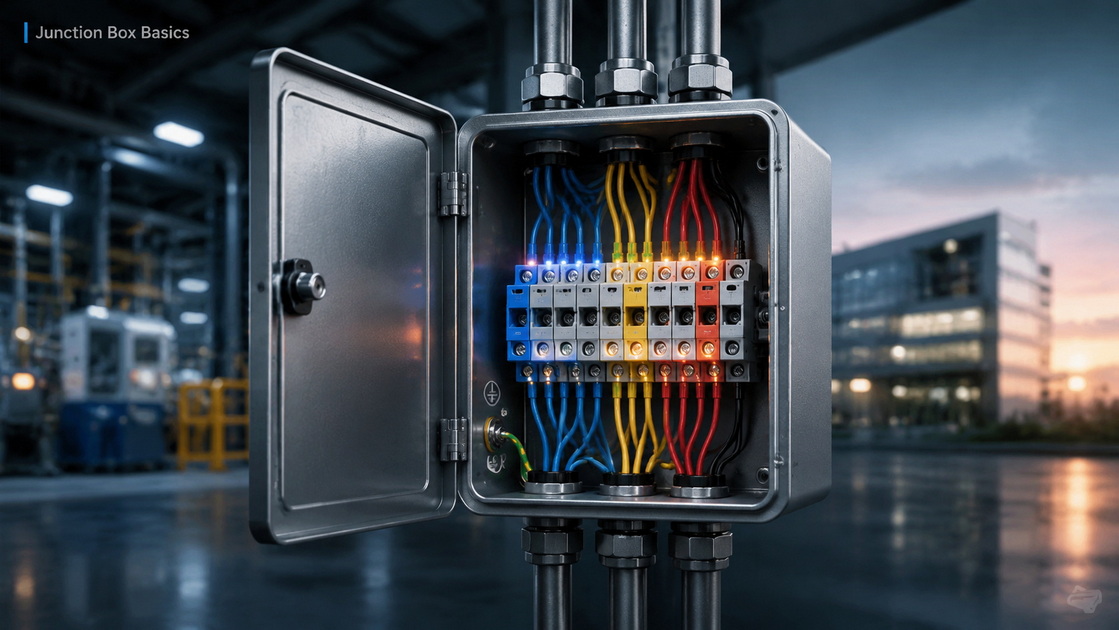
At its core, a junction box is a protective enclosure—typically plastic or metal—that houses electrical connections (wire splices) and branching points in a circuit. It keeps live conductors contained, organized, and accessible, instead of leaving open splices exposed in ceilings, walls, or equipment bays. [sintexonline]
In practical terms, a junction box:
- Protects wire splices from dust, moisture, mechanical damage, and accidental contact. [nuwattlighting]
- Reduces fire risk by containing sparks, overheating, or arcing if a connection fails. [reddit]
- Organizes wiring so cables can be branched, extended, or maintained safely over time. [reddit]
- Supports fixtures and equipment, such as lighting, switches, sensors, and control devices. [powermeanstx]
> From an industry perspective, junction boxes are not just "nice-to-have" accessories—they are required by electrical codes in almost every scenario where wires are spliced or terminated. [zh.wikipedia]
Loose connections generate heat and can arc, especially over years of operation or under vibration and load changes. If those splices are buried in insulation or near flammable materials, a single fault can escalate into a fire. [reddit]
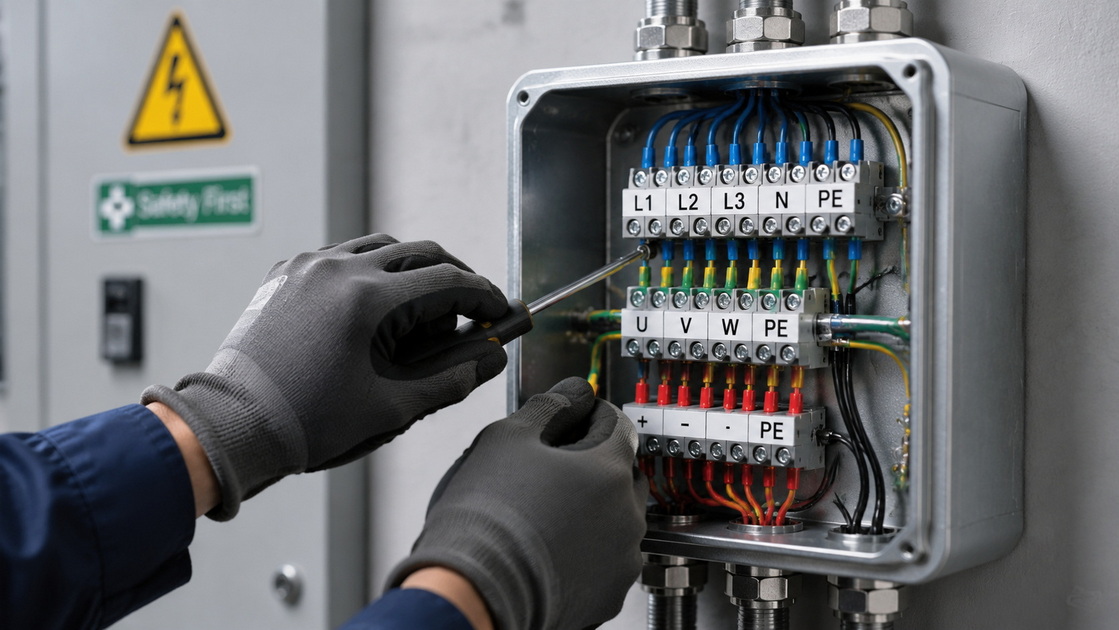
A properly installed junction box reduces that risk in several ways:
- Containment of faults – If a splice fails and arcs, the enclosure helps contain sparks and hot particles. [nuwattlighting]
- Grounding and bonding – In metal boxes, a fault to the enclosure body causes a ground fault that trips the breaker quickly instead of allowing a dangerous energized surface. [schnap.com]
- Insulation and separation – Insulated or metallic partitions prevent conductors from unintentionally touching each other or surrounding structures. [schnap.com]
In residential settings, codes often require every splice and device to sit inside a box; in commercial and industrial environments, junction and pull boxes are mandatory once conduit runs exceed certain bend limits or when multiple circuits are distributed. [reddit]
In homes, offices, and commercial buildings, junction boxes act as wiring hubs that fan out power from the main panel to lighting, outlets, HVAC, and emergency systems. They help: [sintexonline]
- Split a feeder circuit into several branch circuits for rooms and zones. [sintexonline]
- Provide accessible points for inspection and future upgrades (e.g., adding outlets). [reddit]
- Support ceiling lights, motion sensors, or other fixtures mechanically and electrically. [powermeanstx]
In industrial automation and smart factories, junction boxes are used extensively to terminate field devices and sensors back to control cabinets. Typical roles include: [eabel]
- Consolidating sensor cables (proximity, temperature, encoders) into multi-core runs back to PLCs.
- Serving as local distribution points for motors, pumps, and actuators on production lines. [eabel]
- Protecting signal integrity in harsh environments with vibration, dust, oil, or temperature swings. [eabel]
Metal sheet‑metal enclosures, like those produced by specialized manufacturers, are preferred where mechanical strength, EMC shielding, and thermal management matter.
For telecom and network infrastructure, junction boxes house joints for copper and fiber cables, as well as low-voltage power feeds. They help: [sintexonline]
- Maintain bend radius and strain relief for data cables.
- Protect sensitive terminations against moisture ingress, dust, and tampering in outdoor or roadside cabinets. [eabel]
- Provide clear labeling and routing for technicians during upgrades or fault isolation. [sintexonline]
In solar, wind, and energy storage systems, junction boxes are crucial at several points:
- PV junction boxes at the back of solar modules combine cell strings and integrate bypass diodes to prevent hot spots.
- DC combiner boxes aggregate multiple string inputs into a single feed to inverters or DC busbars. [eabel]
- Battery and ESS enclosures protect high‑current DC connections, monitoring devices, and safety components like fuses and disconnects. [sintexonline]
Here, robust metal junction box enclosures with IP‑rated sealing are essential due to outdoor exposure, temperature extremes, and high fault currents.
From an electrician's point of view, a junction box is where incoming and outgoing cables are joined using approved connectors—such as terminal blocks, wire nuts, spring clamps, or busbars. [schnap.com]
Typical workflow inside a junction box:
1. Incoming feed enters from the panel or upstream equipment.
2. Outgoing branch cables leave toward loads (lights, machines, outlets, sensors).
3. Conductors of the same circuit (phase, neutral, ground) are spliced or terminated together, never mixing different circuits improperly. [reddit]
4. Connections are secured, insulated, and strain-relieved to prevent tension on terminals.
5. The lid or door is closed and fastened, sealing the enclosure against dust and moisture according to its rating. [nuwattlighting]
Industrial and sheet‑metal enclosures often also include mounting plates, DIN rails, cable glands, and ventilation designs to support more complex control or monitoring hardware.
While the basic function is similar, choosing the right junction box type is critical for performance and safety in each application. [powermeanstx]
| Type / Feature | Typical Materials | Where Used | Key Benefits |
|---|---|---|---|
| Standard electrical junction box | Plastic or stamped metal | Residential and light commercial ceilings/walls | Low cost, easy installation |
| Industrial metal enclosure | Sheet steel, stainless steel, aluminum | Factories, process plants, panel rooms | High mechanical strength, EMC shielding, customization |
| Outdoor / weatherproof box | Powder-coated metal, reinforced plastic | Outdoor power, telecom, EV and pump controls | IP-rated sealing, corrosion resistance |
| Pull box / splice box | Larger metal enclosures | Long conduit runs, large cables | Space for pulling and bending cables without stress |
| Solar / PV junction box | UV‑resistant plastic with seals | Solar modules and rooftop arrays | Weatherproof DC connections, bypass diode integration |
When selecting an enclosure, engineers must consider size, material, ingress protection (IP), impact resistance, and code standards for the specific environment. [eabel]
Even the best enclosure fails if it is installed poorly. Experienced installers follow some core best practices: [ctconline]
1. Plan cable entry paths carefully
- Route conduit or cable so that entries are preferably from the bottom to reduce water ingress risk. [ctconline]
- Avoid drilling holes in the top of outdoor boxes whenever possible to prevent moisture accumulation. [ctconline]
2. Prevent moisture build‑up
- In wet or wash‑down areas, choose junction boxes with appropriate IP rating and gaskets. [ctconline]
- Where conduit can fill with condensation, a small drain hole at the conduit low point can prevent water from being pushed into the box. [ctconline]
3. Avoid overcrowding
- Use a box large enough to maintain free space around conductors and terminations to prevent overheating. [eabel]
- Respect box fill calculations and manufacturer recommendations.
4. Maintain accessibility and compliance
- Install junction boxes where they remain reachable for inspection and maintenance, not permanently hidden behind finishes. [eabel]
- Follow local electrical codes for grounding, bonding, and labeling. [reddit]
5. Use quality connectors and hardware
- Choose connectors rated for the voltage, current, and environment (e.g., vibration, temperature). [schnap.com]
- Tighten cord grips, cable glands, and terminal screws to manufacturer torque specs to reduce the risk of loose connections. [ctconline]
From the perspective of electricians and maintenance engineers, many failures trace back to predictable mistakes:
- Hidden or inaccessible boxes – Splices buried in ceilings or behind walls make troubleshooting painful and can violate code. [reddit]
- Mixing different circuits improperly – Tying neutrals from different circuits together in one box can confuse protective devices and create shock risks. [reddit]
- Overfilled boxes – Cramped wiring leads to insulation damage, overheating, and unreliable connections. [eabel]
- Improvised enclosures – Using tape‑wrapped splices or unapproved containers instead of a rated junction box undermines safety. [reddit]
Professionals emphasize that "the box is there for a reason": to manage inevitable changes—like remodels, equipment moves, or expansions—without compromising safety. [reddit]
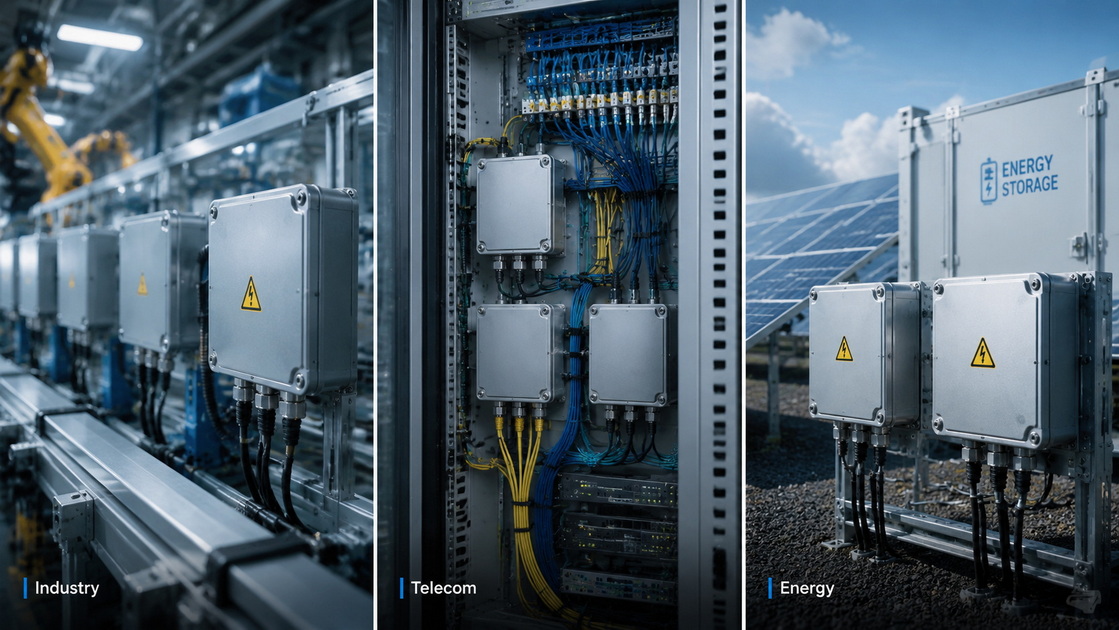
Modern infrastructure is dense with junction boxes, especially when you look behind the scenes:
- Power and utilities – Pole‑mounted and ground‑mounted enclosures distribute power and protect splices in overhead and underground networks. [sintexonline]
- Telecom and data centers – Connection points for trunk cables, power feeds to equipment racks, and transition boxes for different cable types. [sintexonline]
- Industrial automation – Local field junction boxes bring together sensors and actuators near machines, reducing cable runs back to the main panel. [sintexonline]
- New energy vehicles and charging – Enclosures for on‑board power distribution, chargers, and auxiliary systems.
- Water pumps and infrastructure – Pump controls, level sensors, and motor connections are often terminated in sealed junction boxes near the equipment.
In each of these domains, customized sheet‑metal enclosures allow engineers to match mounting, cable entry, thermal management, and aesthetic requirements for their specific system design.
From an industry expert point of view, the difference between commodity boxes and engineered metal enclosures is most visible in demanding projects. A specialized sheet‑metal enclosure manufacturer can:
- Provide custom dimensions, cut‑outs, and mounting options tailored to your devices, cable glands, and conduit layouts.
- Design enclosures that meet specific IP ratings, impact resistance, and corrosion protection suitable for outdoor, coastal, or industrial environments. [eabel]
- Integrate thermal management features (vents, heat‑sinks, double doors, sunshades) to protect sensitive electronics and power components.
- Support serial production for OEMs in power, telecom, industrial automation, and energy sectors, keeping quality consistent across thousands of units.
For engineering teams, this means you can treat the junction box not just as a protective container, but as an integral part of system architecture, safety, and serviceability.
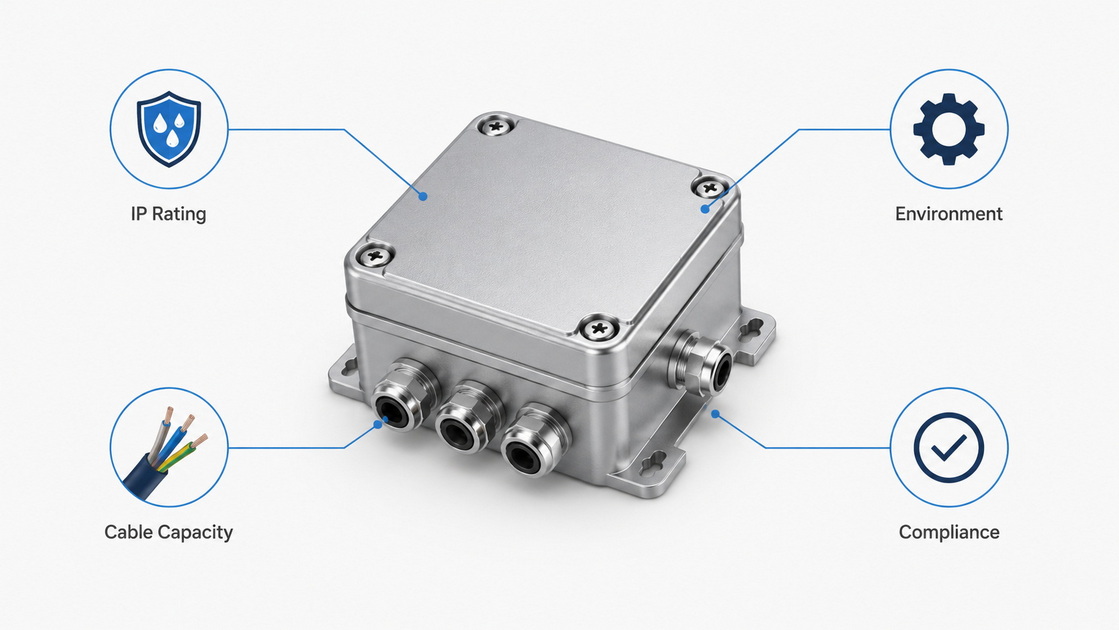
Before specifying a junction box, engineers and buyers can use this quick checklist:
1. Environment
- Indoor, outdoor, corrosive, high‑humidity, high‑temperature, or wash‑down?
- Need for UV resistance, chemical resistance, or EMC shielding? [sintexonline]
2. Mechanical requirements
- Risk of impact, vibration, or mechanical abuse?
- Mounting: wall, pole, floor, panel, or machine frame?
3. Size and layout
- How many cables and terminations today—and in the future?
- Need for DIN rails, mounting plates, viewing windows, or segregated compartments?
4. Protection and standards
- Required IP or NEMA rating for dust and water ingress? [eabel]
- Specific industry standards (e.g., utility, telecom, automotive, or energy storage requirements)?
5. Service and scalability
- Is there enough internal space and labeling for maintenance technicians?
- Can the enclosure design be reused or scaled across multiple projects?
Answering these questions early allows you to select or customize a junction box that supports your system's entire lifecycle, rather than becoming a bottleneck later.
In straightforward residential work, off‑the‑shelf plastic boxes are often enough. But in complex industrial, telecom, energy, or building projects, partnering with a professional sheet‑metal enclosure manufacturer is smart when: [nuwattlighting]
- Your design requires non‑standard sizes or complex cut‑outs for breakers, switches, displays, or cable entry.
- The environment is harsh (industrial, coastal, high‑temperature) and off‑the‑shelf products won't last.
- You need consistent branding and design across multiple installations or product lines.
- Your project spans multiple sectors—power distribution, communication networks, industrial automation, building management, or energy storage—where coordinated enclosure solutions simplify maintenance and spare parts.
Working with an experienced manufacturer helps ensure your junction box solution is safe, compliant, and optimized for your specific application, rather than being an afterthought.
Yes. In standard practice and codes, any electrical splice should be enclosed in an appropriate junction box or enclosure to protect the connection and reduce fire and shock risks. [zh.wikipedia]
A junction box contains splices where wires are joined, while a pull box is larger and mainly used to pull or redirect cables through long conduit runs without necessarily splicing them. [reddit]
Metal boxes provide better mechanical protection and can serve as part of the grounding path, making them ideal for industrial and commercial applications, while plastic boxes are lightweight and corrosion‑resistant for many indoor uses. [powermeanstx]
Generally no. Most electrical codes require junction boxes to remain accessible for inspection and maintenance, not permanently buried behind finishes. [reddit]
Moisture can corrode terminals, reduce insulation resistance, and in extreme cases create tracking paths and faults, which is why proper conduit routing, drainage, and IP‑rated enclosures are so important. [ctconline]
1. Nuwatt Lighting – "What Is a Junction Box? Uses & Purpose". https://www.nuwattlighting.com/blogs/news/what-is-a-junction-box
2. Sintex – "What Is a Junction Box Used For? Evaluating Commercial Uses". https://www.sintexonline.com/blog/what-is-a-junction-box-used-for-evaluating-commercial-uses/
3. CTC – "Best Practices for Junction Box Installation". https://ctconline.com/blog-archive/best-practices-for-junction-box-installation/
4. Schnap Electric – "What is an Electrical Junction Box? An Aussie's Guide to …". https://www.schnap.com.au/schnap-electric-products-blog/electrical-junction-box/
5. PowerMeans – "Electrical Junction Box Guide: Types, Uses & When to Call …". https://www.powermeanstx.com/post/electrical-junction-box-types/
6. Reddit r/AskElectricians – "Why do I need a junction box?". https://www.reddit.com/r/AskElectricians/comments/14bq3ym/why_do_i_need_a_junction_box/
7. Reddit r/electrical – "What is a J-Box actually used for?". https://www.reddit.com/r/electrical/comments/12hebcj/what_is_a_jbox_actually_used_for/
8. Eabel – "The Important Role of the Junction Box in Industrial Environments". https://www.eabel.com/the-important-role-of-the-junction-box-in-industrial-environments/
9. Wikipedia (Chinese). https://zh.wikipedia.org/zh-hans/%E6%8E%A5%E7%B7%9A%E7%9B%92
10. Ningbo Bohui Technology Co., Ltd – Company website. https://bohuitechnology.com

2026-07-26

2026-07-24


