


Views: 222 Author: Amanda Publish Time: 2026-03-26 Origin: Site


Content Menu
● Why Customer Experience Matters More Than Brochures
● How This Expert Ranking Was Built
● Key Evaluation Criteria Based on Real User Feedback
>> Durability and Corrosion Resistance On Site
>> Design Practicality and Ease of Installation
>> Batch‑to‑Batch Quality Consistency
>> Service, Support, and Problem Resolution
>> Lead Time, Delivery Reliability, and Packaging
>> Value for Money Over the Lifecycle
● Top Stainless Steel Wall Mount Enclosure Manufacturers in India
>> Tier 1 – Trusted for High‑Reliability and Demanding Environments
>> Tier 2 – Strong Local Performers with Competitive Pricing
>> Tier 3 – Niche and Application‑Specific Players
● Where Ningbo Bohui Electric Fits in Global Projects Involving India
● Practical Checklist for Evaluating Stainless Steel Wall Mount Enclosure Suppliers
● Common Failure Modes in Wall Mount Enclosures – and How Experts Avoid Them
● When to Use a Global Specialist Like Ningbo Bohui vs Local Indian Brands
● FAQs
>> 1. How do I choose between SS304 and SS316 for wall mount enclosures in India?
>> 3. What are the most important tests to ask for when buying stainless steel wall mount enclosures?
>> 4. How early should I involve an enclosure manufacturer in my project?
>> 5. Can I standardise on a single enclosure platform for multiple industries and countries?
Choosing the right stainless steel wall mount enclosure manufacturerin India is no longer just about catalog specs; it is about how these enclosures perform in real projects, under real stress, over many years. As a practitioner working with OEMs, EPC contractors, and panel builders across power distribution, telecom, water, and renewable energy projects, I have seen how the "right" enclosure supplier can quietly save thousands of dollars in downtime, rework, and site visits—while the "wrong" one becomes a recurring headache.
In this guide, I will walk you through top stainless steel wall mount enclosure manufacturers and suppliers in India, how customers actually experience their products on site, and how they compare when viewed through a practical, engineering‑driven lens. Along the way, I will also share where an experienced Chinese manufacturer like Ningbo Bohui Electric Co., Ltd. tends to complement or outperform local suppliers in global projects that involve India and other markets.

Most brochures look perfect. Every supplier claims "high‑quality stainless steel," "IP‑rated protection," and "long service life." But real customer experience often tells a different story:
- Coastal substations where cheap SS enclosures start rusting within 18–24 months.
- Solar and EV charging projects where poor sealing causes condensation, tripping protection devices.
- Water and wastewater plants where door alignment issues make field technicians hate certain brands.
The most valuable information comes from:
- Engineers and integrators reporting actual failure modes.
- Maintenance teams describing what breaks first and how often.
- Project managers measuring delays and hidden costs caused by enclosure issues.
That is the lens used in the ranking below.
To build a practical, experience‑driven view of the Indian stainless steel wall mount enclosure market, I combined several sources:
- Long‑term interactions with panel builders and system integrators in India‑related projects.
- Publicly available information on major brands' product ranges, certifications, and industry focus.
- Common issues repeatedly reported from the field: misalignment, corrosion, sealing, and delivery delays.
Key evaluation dimensions used:
1. Durability and corrosion resistance in real environments.
2. Design practicality and ease of installation for electricians and integrators.
3. Batch‑to‑batch quality consistency in large projects.
4. Service, technical support, and problem resolution.
5. Lead time, delivery reliability, and packaging.
6. Perceived value for money over the lifecycle, not just purchase price.
In coastal belts, chemical plants, and polluted urban environments, stainless steel grade, surface finish, and construction details decide whether your enclosure looks new after five years or becomes a maintenance liability after two.
What users actually notice:
- Whether SS304 or SS316 is truly used where specified.
- Quality of welds, passivation, and surface treatment.
- How gaskets, hinges, and locks perform after thousands of open‑close cycles and exposure.
- Presence of tea staining, pitting, or rust spots over time.
A brand that performs excellently in a dry indoor control room can fail quickly on an offshore platform or near a coastal highway. This is why expert buyers insist on real project references in similar environments, not just datasheets.
Frontline technicians rarely care how pretty the catalog looks. They care whether:
- There is enough wiring space around terminals and devices.
- Door opening angles and hinge positions make access comfortable.
- Mounting plates are rigid, well‑finished, and easy to remove.
- Knockouts or gland plates are placed logically for cable routing.
In India, many contractors emphasize:
- Standardisation across sizes to simplify panel shop workflows.
- Ergonomic handle and lock designs that are easy to operate even with gloves.
- Good documentation and CAD models to integrate enclosures early into panel layouts.
Here is where a specialized enclosure manufacturer like Ningbo Bohui Electric, with deep experience in wall mount enclosures and custom cut‑outs, tends to resonate with integrators who prioritize installation efficiency and consistency across global projects.
On small jobs, minor variations might be tolerated. On utility‑scale solar parks, metro rail projects, or nationwide telecom rollouts, consistency becomes a strategic requirement.
Experienced buyers pay close attention to:
- Whether panel gaps, door alignment, and welding quality remain consistent across lots.
- Whether the paint or finish tone shifts between batches, especially when stainless is combined with coated components.
- Whether dimensions and hole patterns match the drawings precisely, every time.
A manufacturer that combines automated fabrication, mature QC processes, and stable supplier chains will outperform low‑cost workshops when your order runs into hundreds or thousands of enclosures.
Even the best manufacturer occasionally faces a defect or a logistics issue. The real difference lies in how they respond:
- Do they acknowledge and analyse the root cause quickly?
- Do they send replacement parts or units promptly?
- Do they provide engineering support when on‑site conditions differ from the original design?
For global OEMs and EPC companies, responsiveness and technical maturity often matter more than squeezing the last 2–3% off the unit price.
Stainless steel wall mount enclosures are often on the critical path of project execution:
- Panels cannot be built and wired without enclosures.
- Site teams cannot start installation without delivered cabinets.
Experienced project managers look at:
- Whether the supplier keeps promised delivery dates, especially for made‑to‑order sizes.
- How secure and protective the packaging is during long‑distance land and sea transportation.
- The supplier's ability to handle schedule changes, rush orders, and phased deliveries.
The cheapest enclosure is often the most expensive—if it leaks, corrodes, or cracks and causes downtime.
Smart buyers calculate:
- Total cost of ownership (TCO): purchase price + installation + maintenance + downtime risk.
- Likely service life of the enclosure in the actual environment.
- Cost of replacing enclosures mid‑life vs investing in better designs and materials upfront.
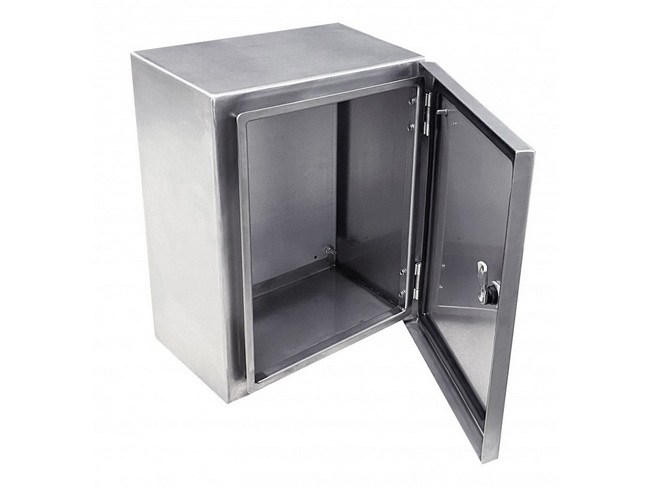
Below is a practical, tier‑based view of stainless steel wall mount enclosure suppliers in India, focusing on wall‑mount form factors and industrial applications. These tiers are indicative and should be validated against your specific project needs and latest market data.
> Note: Company names below are real market players in India's industrial enclosures space. Always verify the latest product ranges and certifications directly with the manufacturers.
These manufacturers are typically preferred for high‑risk, long‑life projects in sectors like power, oil & gas, and large infrastructure.
- Rittal India (Rittal India Pvt. Ltd.)
- Known for premium enclosure solutions with strong presence in India.
- Widely used in power distribution, data centers, and process industries.
- Field feedback often highlights excellent build quality, door sealing, and accessories ecosystem.
- Pricing is on the higher side, but many customers justify it by reduced lifecycle risk.
- Schneider Electric (India operations, including wall mount and Spacial ranges)
- Offers stainless steel wall mount enclosures as part of comprehensive LV and automation solutions.
- System integrators appreciate the compatibility with Schneider components and accessories.
- Strong technical support and global certifications make them a go‑to option for multinational projects.
- ABB India (enclosure solutions within its electrification portfolio)
- Integrated solutions combining enclosures with protection and switching devices.
- Typically selected by customers who desire a single‑brand solution for critical installations.
- Frequently used in utilities, rail, and industrial automation with high expectations on reliability.
These companies tend to provide solid quality and good value, particularly for industrial and commercial applications where ultra‑premium pricing is not required.
- Aditya Engineers / local enclosure fabricators in industrial clusters
- Often flexible in custom sizes, cut‑outs, and finishes.
- Attractive pricing for volume orders.
- Customer experiences vary more from shop to shop, depending on automation level and QC culture.
- Local panel‑shop‑owned enclosure brands (e.g., in Pune, Ahmedabad, Chennai clusters)
- Good fit for regional projects needing quick deliveries and moderate customization.
- On‑site feedback often praises responsiveness and face‑to‑face communication, while pointing out occasional variations in finishing.
These manufacturers focus on special environments or tight industry niches rather than broad mass‑market enclosures.
- Specialized stainless enclosure suppliers working with:
- Food & beverage (hygienic design, easy cleaning).
- Pharmaceuticals and clean room environments.
- Marine and offshore platforms.
For these niches, customers often accept higher prices in exchange for design insight and compliance with strict hygiene or corrosion requirements.
As Ningbo Bohui Electric Co., Ltd., your positioning is clear: you are a specialized manufacturer of wall mount enclosures and other electrical sheet‑metal housings, supplying multiple sectors including power, telecom, networking, industrial automation, building systems, energy storage, EV, and water systems.
From an expert perspective, this gives you several natural advantages when you compete or collaborate around India‑focused projects:
- Deep product focus on wall mount enclosures rather than generic sheet‑metal items.
- Experience in multi‑industry requirements, helping you adapt designs for different standards and environmental classes.
- Ability to offer OEM and private‑label solutions for Indian panel builders, EPCs, or global brands who want a consistent enclosure platform across markets.
You can position yourself as:
- A Tier 1/Tier 2 technical partner when the project is global and quality‑driven, but local suppliers are constrained.
- A design and manufacturing specialist that helps Indian customers upgrade from commodity enclosures to optimized, application‑specific wall mount designs.
To maximize practical value, here is a step‑by‑step checklist you can use in RFQ and technical evaluation:
1. Environment and lifetime definition
- Define whether your site is indoor/outdoor, coastal, industrial pollution class, or high‑humidity.
- Set a target service life (e.g., 10–15 years) for the enclosures.
2. Material and construction verification
- Ask for material certificates for stainless steel grades (SS304, SS316).
- Inspect weld quality, corner finishing, gasket seating, and door stiffness on samples.
3. Design and ergonomics assessment
- Check clear internal depth after mounting devices, not just nominal depth.
- Ensure cable entry options (gland plates or knockouts) match your installation practice.
- Test door opening angle, handle comfort, and locking mechanisms.
4. Quality and consistency checks
- Request photos or visit a plant to see fabrication lines and QC checkpoints.
- Ask for defect rate data or rework statistics if available.
5. Service and support evaluation
- Evaluate quotation response time and technical clarity.
- Clarify warranty terms, replacement policies, and escalation contacts.
6. Total cost of ownership (TCO) analysis
- Estimate cost per year of service, not just upfront price.
- Factor in potential downtime and labour for replacement or repairs.
Experienced engineers repeatedly see the same failure modes:
- Gasket hardening or compression set, leading to water ingress.
- Door sagging due to undersized hinges or thin doors.
- Condensation inside the enclosure causing corrosion or device failure.
- Fastener corrosion, especially when mixed metals are used without proper isolation.
How experts mitigate these issues:
- Choosing enclosures with high‑quality gaskets, tested for UV and temperature cycling.
- Specifying reinforced doors and adequate hinges for larger wall mount units.
- Using pressure‑compensating vents, heaters, or desiccants in high humidity or daily temperature swing environments.
- Ensuring fasteners, hinges, and locks are compatible materials (e.g., stainless or appropriately coated).
This is where an experienced manufacturer can add real engineering value by proposing design tweaks based on field feedback.
There is no "one‑size‑fits‑all" answer. A practical rule of thumb used by many OEMs:
- Choose reputable local Indian brands when:
- Project is domestic, lead times are tight, and moderate environmental conditions apply.
- You need fast site support and frequent small‑batch deliveries.
- Choose or combine with global specialists like Ningbo Bohui Electric when:
- You require uniform designs across multiple countries, including India.
- Enclosures must meet higher technical standards, complex customisation, or export compliance.
- You are building branded equipment that will be installed in varied international environments and must maintain consistent look, feel, and durability.
A hybrid strategy—using global specialists for critical or export‑bound systems and local suppliers for low‑risk, domestic‑only installations—is often the most cost‑effective.
If you are planning a new project that will rely heavily on stainless steel wall mount enclosures—whether in power distribution, telecom, industrial automation, building systems, energy storage, EV charging, or water management—do not treat the enclosure as a trivial commodity.
Instead, collaborate early with a specialised manufacturer.
If you want expert support on:
- Selecting the right enclosure material and design for your environment.
- Customising cut‑outs, dimensions, and mounting layouts for your panels.
- Balancing performance and cost across multi‑country deployments that include India.
You can reach out to Ningbo Bohui Electric Co., Ltd. and request engineering‑level consultation, drawings, and samples for your next project.
Contact us to get more information!
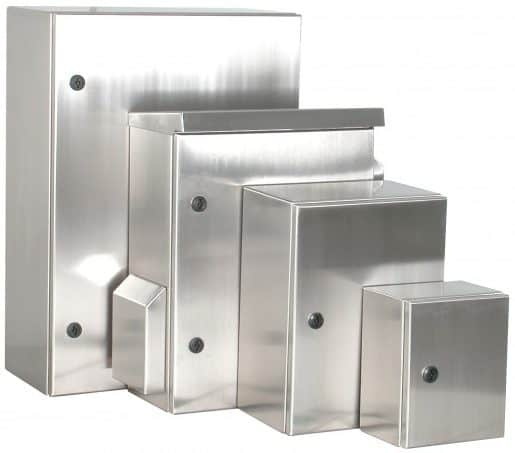
SS304 is suitable for most industrial indoor and many outdoor applications, but in coastal, marine, or heavy chemical environments, SS316 usually offers better resistance to pitting and crevice corrosion. When in doubt, consider your project's expected service life and the cost of replacing failed enclosures; if the risk and cost of early failure are high, SS316 is often justified.
Not always. Global brands typically offer strong engineering, consistent quality, and global approvals, making them ideal for critical or export‑oriented projects. However, good Indian manufacturers can provide faster deliveries, competitive pricing, and flexible customisation for domestic projects. The best choice depends on your project risk, environment, and lifecycle requirements.
At a minimum, you should verify IP rating, impact resistance (IK where applicable), and material grade certification. For harsh environments, ask whether the manufacturer has conducted salt spray tests, UV aging tests for gaskets, and thermal cycling evaluations. Sample inspections and site references in similar conditions are often more revealing than certificates alone.
Ideally, involve your enclosure manufacturer during the early design phase, when panel layouts and cable routing are still flexible. Early collaboration allows you to optimise dimensions, mounting arrangements, and ventilation or condensation management, reducing rework and last‑minute changes. It also helps in locking realistic lead times into your project schedule.
Yes, many OEMs and EPC firms do exactly this by partnering with a specialised enclosure manufacturer. By standardising on a common wall mount enclosure platform—with variations in size, material, and accessories—they reduce engineering complexity, spare parts inventory, and long‑term maintenance costs. When projects span India and other markets, working with a manufacturer experienced in international standards and logistics, such as Ningbo Bohui Electric, can streamline this strategy.
1. Rittal India Pvt. Ltd. – Industrial Enclosure Solutions
2. Schneider Electric India – Enclosures and Thermal Management
https://www.se.com/in/en/work/products/product-launch/enclosures/
3. ABB India – Electrification and Enclosure Products
https://new.abb.com/products/low-voltage
4. General guidance on stainless steel selection for corrosive environments – Nickel Institute
https://nickelinstitute.org/en/stainless-steel
5. Industry best practices for IP and IK ratings in electrical enclosures – IEC Standards Overview
6. Ningbo Bohui Electric Co., Ltd. – Wall Mount Enclosure and Sheet Metal Housings

2026-07-26

2026-07-24


