


Views: 222 Author: Amanda Publish Time: 2026-03-18 Origin: Site


Content Menu
● How This Customer-Centric Ranking Was Built
● Key Rating Criteria from the Customer's Point of View
● What Real Canadian Customers Say About Enclosure Suppliers
● Canada's Leading Stainless Steel Enclosure Manufacturers and Suppliers
>> 1. Hammond Manufacturing – Established Canadian Reference for Wall Mount Enclosures
>> 2. Protocase – Rapid Prototyping and Engineer-Friendly Custom Enclosures
>> 3. International Brands via Canadian Distribution – Rittal, nVent HOFFMAN, Fibox and Others
>> 4. Canadian Stainless Steel Fabrication Specialists
● Where an OEM Partner Like Ningbo Bohui Electric Fits into the Canadian Market
● Expert-Level Design and Selection Considerations for Stainless Steel Wall Mount Enclosures
>> Material and Finish Choices
>> Interior Layout and Mounting
>> Compliance and Documentation
● Practical Steps to Choose the Right Stainless Steel Wall Mount Enclosure Supplier in Canada
● FAQs
>> 1. What is the main advantage of stainless steel wall mount enclosures versus painted carbon steel?
>> 2. When should I specify 316 stainless steel instead of 304?
>> 3. Can I combine Canadian brands with an overseas OEM manufacturer in one project?
>> 4. How important is NEMA/IP rating for wall mount enclosures?
>> 5. What should I look for in an OEM enclosure partner?
When electrical engineers, system integrators, and plant managers in Canada choose stainless steel wall mount enclosures, they are rarely buying "just a box." They are buying long-term reliability in harsh weather, hygiene compliance on demanding food lines, and peace of mind for mission-critical automation systems. From my experience working with OEMs across power, communications, industrial automation, and energy storage, the real differentiator is not the datasheet—it is what happens after the enclosure is installed, rewired twice, pressure-washed, and exposed to Canadian winters.
This article takes a customer-centric, expert view of the top stainless steel enclosure manufacturers and suppliers in Canada, with a special focus on wall mount enclosures used in power distribution, networking, water pumps, EV infrastructure, and smart manufacturing lines. You will see real-world evaluation criteria, experience-based pros and cons, and how international OEM partners such as Ningbo Bohui Electric Co., Ltd. can fit into this ecosystem as reliable custom manufacturers.

Instead of simply listing catalog brands, this ranking framework combines three layers of insight:
- End-user experience from Canadian plants, utilities, and integrators
- Industry expert assessment of engineering quality, standards compliance, and lifecycle cost
- Market visibility of key enclosure manufacturers and suppliers that are actually used in Canadian projects
Over the years I have seen the same patterns repeat: some brands win on convenience and distribution reach, some on ruggedness in harsh environments, and some on highly flexible custom designs that OEMs can badge with their own name. This article reflects those patterns, rather than generic marketing copy.
When Canadian users talk about stainless steel wall mount enclosures, their language is rarely about "SKUs" and "model codes." They talk about failures, delays, and surprises—good and bad. Based on those conversations, the main evaluation dimensions are:
1. Reliability in Real Operating Conditions
How often does water ingress, corrosion, or door misalignment occur over 3–5 years of operation in outdoor or washdown environments?
2. Corrosion Resistance and Durability
Are 304 or 316 stainless options available, and how well do they hold up under salt spray, cleaning chemicals, and condensation?
3. Ease of Customization and Engineering Support
Can the supplier adjust door cutouts, gland plates, locking systems, and interior mounting options without excessive lead time or engineering fees?
4. Compliance and Certifications
Do enclosures meet NEMA 3/4/4X/12 and IP66 or higher where required, and can the supplier support UL, cUL, CSA, or CE compliance for final assemblies?
5. Delivery Performance and Supply Stability
Are common wall mount sizes available quickly, and can the supplier handle sudden schedule changes or repeat orders without supply chain drama?
6. After-Sales Support and Problem Resolution
When something goes wrong—mis-cut opening, missing accessory, or sealing issue—does the supplier respond fast, take ownership, and provide a practical remedy?
7. Value for Money Over the Lifecycle
Not just initial unit price, but total cost when you add maintenance, replacement, downtime risk, and installation labor.
These criteria have been translated into the ranking and commentary for each representative manufacturer below.
Before we get into specific names, it is useful to summarize the recurring pain points I hear from Canadian engineers and maintenance teams:
- "The enclosure rusted far sooner than expected."
Often due to lower-grade stainless, poor surface treatment, or contamination during fabrication and welding.
- "Water got in, and we only discovered it during a failure."
Inadequate gasketing, poor gland sealing, or improper door compression.
- "The cutouts didn't match the layout drawing, so we had to rework on-site."
Lack of robust engineering review and clear communication in the design stage.
- "Lead times slipped and delayed commissioning."
Especially problematic on large projects with tight timelines and seasonal construction windows.
- "Support disappeared after shipment."
No clear point of contact, slow response to technical questions, or blame passed between distributor and factory.
On the positive side, when customers rave about a supplier, they emphasize:
- Proactive engineering guidance during design reviews
- Clean, consistent fabrication quality that installers trust
- Transparent lead times and quick reaction when plans change
- A feeling of partnership, not just transactional sales
Below are representative manufacturers and suppliers that frequently appear in Canadian projects, with a specific lens on wall mount enclosures where possible. This list combines multinational brands, Canadian manufacturers, and the role of specialized OEMs like Ningbo Bohui Electric as behind-the-scenes producers of custom enclosures.
Why engineers choose them
Hammond Manufacturing, headquartered in Canada, is a long-established enclosure manufacturer with a broad catalog of wall mount stainless steel enclosures, free-standing cabinets, and industrial boxes widely available through distributors. For many Canadian engineers, Hammond is the default choice when they need a reliable, standardized enclosure quickly and prefer a familiar brand.
Typical customer experience
- Reliable catalog items for standard electrical and electronic control panels
- Easy sourcing through mainstream distributors and online channels
- Straightforward documentation and dimensional drawings
Hammond shines in applications where standardization and availability matter more than deep customization. If you need a typical NEMA 4X stainless steel wall mount enclosure in a standard size, you can often source it locally, which simplifies procurement.
Where it may not be ideal
- Deeply customized designs (complex cutouts, unique door configurations, integrated brackets) can be harder or more expensive compared to custom fabricators or OEMs.
- Highly specialized sectors (e.g., unique battery storage systems or fully bespoke EV charging cabinets) may benefit from more flexible custom partners.
Why Protocase is popular with design engineers
Protocase, a Canadian company, is well known for rapid custom enclosure prototyping, including sheet metal and rack solutions. While they are not limited to stainless steel, they are often selected by R&D teams and OEMs who need custom designs with fast iteration rather than large-scale standardized production.
Customer-centric strengths
- Engineer-friendly online tools and design support
- Very fast prototype and small-batch lead times
- Flexibility in cutouts, mounting options, and custom configurations
In product development cycles, this approach allows teams to validate wall mount enclosure layouts, door swing ranges, and cable routing before locking in volume production with either Protocase or a cost-optimized manufacturing partner.
Limitations from a plant perspective
- Cost per unit may be higher for long-term volume production compared to specialized OEM manufacturers in lower-cost regions.
- For ruggedized high-volume deployments, teams often transition designs to an OEM partner once the design stabilizes.
Many Canadian users rely on global enclosure brands—such as Rittal, nVent HOFFMAN, Fibox, and others—distributed through Canadian channels. These brands are strong in:
- Standardized wall mount stainless steel enclosures with broad accessory ecosystems
- Extensive NEMA/IP-rated product lines for diverse industries
- Detailed technical documentation and tested compatibility with common components
For multi-site or multinational projects, using a brand with global presence can simplify corporate standards and documentation. However, that convenience can come at a higher unit cost and sometimes less flexibility around custom mechanical features.
Beyond catalog brands, Canada has numerous fabricators specializing in stainless steel products—tanks, cabinets, railings, and industrial equipment. Some also produce custom wall mount enclosures for local customers.
These companies are attractive when:
- You need local on-site surveys, fitment checks, or joint plant visits
- Your project requires bespoke structural features, heavy-duty mounting, or unique environmental conditions
- You prefer having a nearby partner for quick modifications and repairs
The trade-off is that not all fabricators have the same experience with electrical standards, NEMA/IP ratings, or the detailed engineering required to integrate cable glands, door hardware, and internal mounting systems. Vetting for specific enclosure expertise is essential.
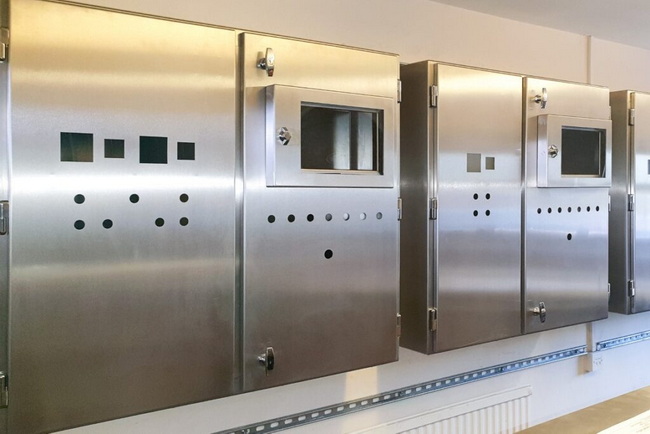
From an expert buyer's perspective, there is a third pillar besides local brands and global catalog providers: specialized OEM manufacturers that produce wall mount enclosures for international customers, often under private label or as custom solutions.
Ningbo Bohui Electric, for example, is a professional manufacturer of wall mount enclosures and other electrical sheet metal housings, serving power, communications, networking, industrial automation, building systems, energy storage, EV infrastructure, and water pump control applications. Partnering with such an OEM is particularly attractive when:
- You need a customized wall mount enclosure family with consistent design language and mounting pattern across multiple markets.
- Unit volumes justify a tailored design rather than "forcing" your layout into standard catalog boxes.
- You want to optimize total cost while still maintaining high standards of stainless steel quality, sealing performance, and compliance.
In this model, Canadian brands, distributors, or integrators can:
- Use rapid prototyping with local partners or in-house design
- Finalize mechanical and electrical layouts
- Then transition to an OEM like Ningbo Bohui Electric for scalable production with repeatable quality and competitive cost.
To go beyond simple "brand picking," here are expert-level selection points that significantly affect performance and cost.
- 304 vs 316 stainless steel:
304 is usually sufficient for indoor and many outdoor applications; 316 is preferred for coastal, chemical, or aggressive washdown environments.
- Surface finish:
Brushed or satin finishes can hide scratches better; smoother finishes may resist contamination buildup in hygienic environments.
- Continuous vs segmented gaskets:
Continuous gaskets typically provide better sealing consistency and fewer leak paths than segmented ones.
- Compression and hinge quality:
High-quality hinges and latches maintain door alignment, which is crucial for long-term sealing.
- Back panel design:
Adequate spacing for cable bending radius, terminal blocks, and future expansion matters as much as the enclosure dimensions.
- Mounting options:
Consider both wall mounting and potential pedestal or frame mounting if your application may evolve.
- Clear statements of NEMA/IP ratings, material specifications, and applicable standards
- Availability of 3D models and detailed drawings to allow electrical and mechanical teams to collaborate efficiently
For project teams and buyers, here is a structured approach that aligns with real customer experience:
1. Define the Environment and Standards
- Indoor/outdoor, washdown, coastal, temperature extremes
- Required NEMA/IP ratings and any UL, cUL, CSA, or industry-specific standards
2. Classify the Project Type
- One-off or small batch, rapid deployment
- Long-term program with standardized designs across many sites
3. Match Project Type to Supplier Category
- Standard catalog boxes from brands like Hammond or global brands for simple needs
- Rapid prototyping specialists for early-stage design
- Stainless fabricators or OEM manufacturers (such as Ningbo Bohui Electric) for custom, scalable solutions
4. Evaluate Suppliers Against Customer-Focused Criteria
- Check actual lead times versus promises
- Ask for failure case examples and how they were handled
- Review sample builds or site references when possible
5. Plan for Lifecycle Support
- Confirm spare parts, design continuity, and revision management
- Ensure documentation remains consistent over product revisions
If you are planning a new project or standardizing enclosure platforms across multiple Canadian sites, consider these next steps:
- Prepare a brief enclosure requirements checklist (environment, standards, sizes, customization needs, volumes).
- Reach out to both a local catalog brand and at least one OEM manufacturing partner to compare solutions on lifecycle cost and flexibility.
- If you work with international OEMs like Ningbo Bohui Electric, share your preferred Canadian standards and any existing enclosure designs for evaluation.
A strong move is to request a small pilot batch from your shortlisted suppliers, install them in representative locations, and review performance over a defined period before committing to a full rollout.
Contact us to get more information!
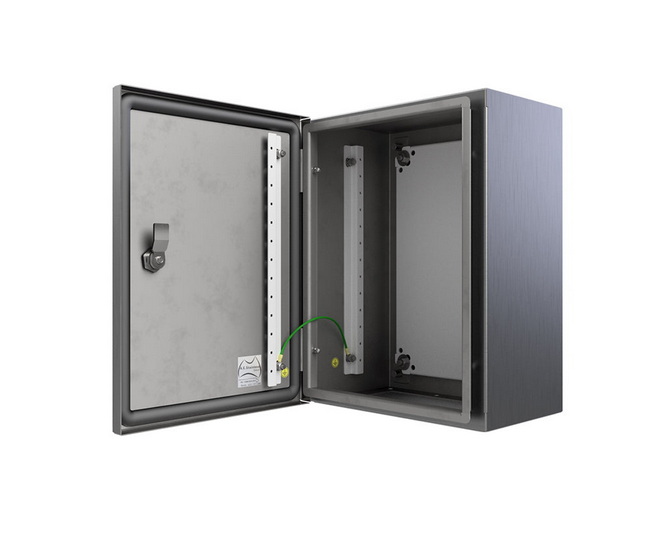
The main advantage is superior corrosion resistance and longer service life, especially in outdoor, washdown, or chemically aggressive environments. Stainless steel also maintains a cleaner appearance and is easier to justify in life-cycle cost calculations when downtime is expensive.
You should choose 316 stainless steel when your enclosures face coastal salt spray, harsh chemicals, or the most demanding washdown conditions, such as certain food and beverage or pharmaceutical environments. For mild indoor or standard outdoor conditions, 304 is often sufficient and more cost-effective.
Yes. Many integrators use Canadian brands for urgent needs or small jobs and rely on overseas OEM partners (such as Ningbo Bohui Electric) for volume production of custom designs. The key is to maintain consistent engineering standards and documentation across all sources.
NEMA/IP rating is critical because it defines protection against dust, water, and environmental factors. For outdoor and industrial applications, ratings like NEMA 3/4/4X/12 and IP66 or higher are common. Always match the rating to the real-world environment instead of assuming "stainless steel" alone is enough.
Look for proven experience in electrical enclosures, clear understanding of NEMA/IP and regional standards, robust engineering support, quality stainless steel sourcing, and transparent lead times. A good OEM partner communicates like an extension of your own engineering team and is willing to co-develop solutions rather than just taking orders.
1. TBK Metal – "The Guide to Top 20 Stainless Steel Fabrication Companies in Canada" – https://www.tbkmetal.com/stainless-steel-fabrication-companies-in-canada/
2. SJ Enclosure – "Top 9 Sheet Metal Enclosure Manufacturers Worldwide (2026 Guide)" – https://sjenclosure.com/top-sheet-metal-enclosure-manufacturers-worldwide/
3. Saipwell – "10 Best Electrical Enclosure Manufacturers of 2024" – https://www.saipwell.com/blog/10-best-electrical-enclosure-manufacturers-of-2024/
4. IQS Directory – "Ontario Electronic Enclosure Manufacturers" – https://www.iqsdirectory.com/electronic-enclosures/canada/ontario/
5. E-Abel – "Top 5 Outdoor Electrical Enclosure Manufacturers in Canada" – https://www.eabel.com/top-5-outdoor-electrical-enclosure-manufacturers-in-canada/

2026-07-26

2026-07-24


