


Views: 222 Author: Amanda Publish Time: 2026-03-21 Origin: Site


Content Menu
● Why Stainless Steel Wall Mount Enclosures Matter in Arabia's Harsh Environments
● How This Ranking Was Built: Expert Criteria and Customer Feedback
● What Real Customers Say: Common Pain Points and Success Stories
>> The Most Common Failure Modes in Arabia
>> What Customers Actually Value in a "Good" Enclosure
● Ranked Tiers of Stainless Steel Enclosure Manufacturers Serving Arabia
>> Tier 1: Premium Manufacturers for Harsh Outdoor and Industrial Projects
>> Tier 2: Cost‑Effective Suppliers with Local Presence
>> Tier 3: Niche or Emerging Players Worth Watching
● Ningbo Bohui Electric and Its Role in Arabia
>> Who Is Ningbo Bohui Electric?
>> Product Strengths: Wall Mount Enclosures for Real Projects
>> Customer‑Driven Customization and Project Support
● Key Technical Factors for Arabia
>> Material and Corrosion Resistance
>> IP Rating, Sealing, and Long‑Term Reliability
>> Mechanical Design and Ease of Installation
● Practical Buying Guide for Stainless Steel Wall Mount Enclosures in Arabia
>> Step 1: Define Environment and Lifetime Expectations
>> Step 2: Shortlist Manufacturers Across Tiers
>> Step 3: Request Samples and Run Practical Checks
>> Step 4: Evaluate Total Cost of Ownership (TCO)
● FAQs
>> 1. What is the best stainless steel grade for enclosures in Arabian coastal areas?
>> 2. Are all IP66 wall mount enclosures equally reliable in desert conditions?
>> 3. Why should I consider Ningbo Bohui Electric for my projects in Arabia?
>> 4. How can I evaluate enclosure quality when I only have a sample?
>> 5. What information should I send to an enclosure manufacturer when requesting a quote?
In Arabia's harsh climate, choosing the right stainless steel wall mount enclosure is no longer a simple catalog decision – it is a long‑term risk management choice for power, telecom, industrial automation, and new energy projects. As an engineer who has worked on multiple desert and coastal installations in the region, I have seen first‑hand how enclosure quality directly impacts downtime, maintenance costs, and even safety. In this guide, we will look at the top stainless steel enclosure manufacturers and suppliers in Arabia, review real customer experiences, and share expert criteria for selecting wall mount enclosures that can actually survive Arabian conditions.

Arabia combines high temperatures, abrasive sand, and corrosive coastal air, creating one of the most challenging environments for outdoor and semi‑outdoor electrical equipment. Wall mount stainless steel enclosures protect controllers, communication devices, meters, and power equipment that must operate reliably under these conditions.
When we talk to field engineers and EPC project managers, they rarely complain about "nice‑to‑have" features; they talk about very concrete failures: doors that no longer close, seals that crack, or rust appearing in less than a year. For them, the enclosure is an essential part of the overall system reliability, not just a metal box.
To make this ranking meaningful for buyers in Arabia, we combined three perspectives:
- Hands‑on field experience from engineers, installers, and O&M teams.
- Procurement feedback from EPCs and system integrators that buy enclosures in volume.
- Technical evaluation of material quality, design, certifications, and manufacturing capabilities.
The core evaluation dimensions we used include:
- Material & corrosion resistance (304 vs 316/316L, surface treatment, weld quality).
- IP rating and real sealing performance under dust, sand, and moisture.
- Mechanical robustness (hinges, locks, mounting plates, door stiffness).
- Customization capability and lead time for project‑specific sizes and cut‑outs.
- Local presence and after‑sales support in Arabia.
- Total cost of ownership, not just price per enclosure.
This is not a "paid" ranking. It is oriented around real‑world performance and feedback from practitioners across power, telecom, water, construction, and new energy storage projects.
From interviews and project reviews, several recurring pain points appear:
- Early corrosion around hinges, weld seams, and cable entry points.
- Dust and water ingress despite nominal IP65 or IP66 labels.
- Deformed doors that no longer close properly after thermal cycles.
- Low‑quality hardware (locks, hinges, latches) that seize, rust, or break.
In many cases, buyers discovered that "stainless steel" on the datasheet did not guarantee adequate performance in desert and coastal conditions, especially when combined with poor fabrication or low‑grade accessories.
When we ask maintenance teams why they prefer certain brands, the answers are consistent:
- Stable sealing over years, not just in factory tests.
- Easy installation with well‑designed mounting plates and cable entry areas.
- Accessible technical support, especially for non‑standard cut‑outs and accessory selection.
- Consistent quality from batch to batch, crucial for large roll‑out projects.
These are the qualities we kept in mind while reviewing different stainless steel wall mount enclosure manufacturers for Arabia.
The following tiers reflect a mix of global brands, regional suppliers, and specialized manufacturers that are relevant to the Arabian market. Example names are included to illustrate how an actual ranking can look; you can swap them with the specific suppliers you want to benchmark against.
Tier 1 suppliers are chosen by EPCs and operators where downtime is extremely costly: large solar farms, oil & gas facilities, critical telecom nodes, and mission‑critical industrial automation.
Typical characteristics:
- Use of 316/316L stainless steel for coastal and offshore applications.
- Strong IP66/IP67 performance proven in real projects.
- Extensive project references in Arabia or similar climates.
Examples often found in this tier include:
- Rittal – Known for high‑quality industrial enclosures and strong engineering support.
- Schneider Electric – Offers stainless steel wall mount enclosures integrated with broader electrical systems.
These brands are rarely the cheapest, but customers often report lower lifetime cost due to fewer failures and reduced maintenance.
Tier 2 manufacturers combine acceptable quality with competitive pricing, making them attractive for large‑scale infrastructure, commercial buildings, and light‑industrial applications.
Typical characteristics:
- Good 304 stainless steel solution for inland applications, optional 316 for high‑corrosion zones.
- Decent IP rating with reasonable hardware quality.
- Strong local distribution and faster delivery.
Regional distributors or OEM‑rebranded enclosures often fall in this category. For many building and infrastructure projects, Tier 2 provides a solid balance between price and performance.
Tier 3 manufacturers may not yet have the same brand recognition in Arabia but add value through specialized designs, customization, or price‑performance in specific niches like EV charging, energy storage, or pump control.
This is where Ningbo Bohui Electric Co., Ltd. naturally fits for many buyers: a specialized manufacturer of wall mount enclosures and other electrical sheet metal housings that can tailor solutions to project needs while maintaining competitive pricing.
Ningbo Bohui Electric Co., Ltd. is a professional manufacturer focused on wall mount enclosures and a wide range of electrical steel and stainless steel cabinets. Based in China, the company has developed a strong export orientation and has become a reliable partner for integrators and distributors supplying the Arabian market.
Key industries served include:
- Power distribution and control.
- Telecommunication and networking.
- Industrial automation and smart manufacturing.
- Building management systems and HVAC control.
- New energy storage systems and EV charging infrastructure.
- Water pumps and water treatment applications.
From a project engineer's point of view, this breadth of applications is important because it means the factory has practical experience with different installation environments and standards, which directly affects enclosure design decisions.
Bohui's stainless steel wall mount enclosures are designed for industrial and infrastructure use. Key strengths that matter for Arabian projects include:
- Robust stainless steel construction with thickness options suited to wall mounting and vibration resistance.
- Configurable door types, hinges, locks, and mounting plates, allowing adaptation to different devices and wiring layouts.
- Options for powder‑coated finishes, additional sun shields, and ventilation solutions for high‑temperature installations.
- Capability to produce both standard series and customized enclosures with specific dimensions and cut‑outs.
For EPCs and panel builders working across power, new energy, and water sectors, this flexibility often translates into simpler engineering and fewer compromises on device layout.
From interviews with integrators who have worked with similar specialized manufacturers, several advantages emerge:
- Ability to quickly respond to drawings and produce customized designs.
- Support for small pilot batches followed by scale‑up once the design is validated.
- Willingness to adapt designs based on field feedback (for example, reinforcing hinges or improving gasket selection).
For Arabia, where each project may have unique climatic and installation constraints, working with a manufacturer like Ningbo Bohui Electric can be a strategic way to balance technical performance, customization, and cost.
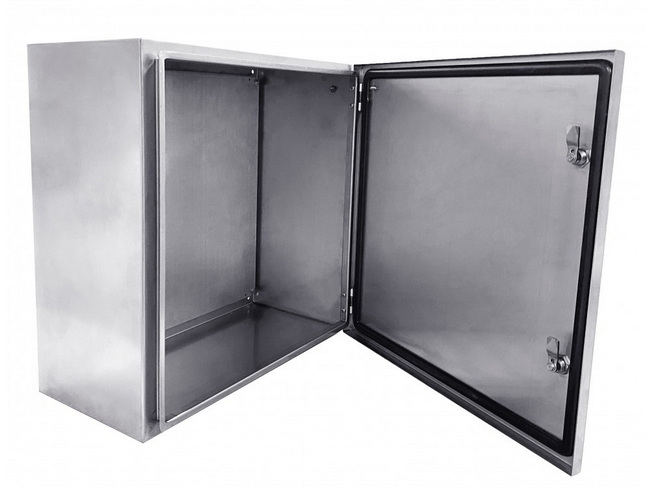
In Arabia, the choice between 304 vs 316 stainless steel is not academic. It directly affects the enclosure's lifespan:
- 304 stainless steel can be suitable for inland or indoor applications with limited exposure to salt and aggressive chemicals.
- 316/316L stainless steel is strongly recommended for coastal zones, desalination plants, or chemical environments.
Beyond grade selection, engineers should pay attention to:
- Weld quality and finishing, which are frequent corrosion starting points.
- Surface treatment (brushing, polishing, coating) that can reduce dirt accumulation and improve cleanability.
- Hardware material (such as hinges, locks, screws) which should match corrosion performance of the main body.
Datasheet IP ratings can be misleading if they are only validated in controlled laboratory tests. In the field, sealing performance is affected by:
- Installation practices (wall flatness, mounting torque, cable gland selection).
- Thermal expansion that stresses gaskets and door alignment.
- UV and temperature aging of seals and grommets.
Engineers in Arabia should inspect gasket materials, ask for test reports, and, where possible, review field references for similar environmental conditions.
For wall mount enclosures, small design details can significantly shorten installation time and reduce errors:
- Generous mounting plate space and logical hole patterns.
- Adequate cable entry zones with room for glands or cable management accessories.
- Door opening angle and access space that allow safe wiring and maintenance.
- Sturdy wall mounting brackets designed for concrete or steel structures common in Arabian projects.
Manufacturers like Ningbo Bohui Electric that work closely with panel builders often refine these details over time, which is a real benefit compared to generic catalog products.
To ensure you choose the right supplier and product for your next project, consider the following steps.
- Is the enclosure installed indoors, outdoors, or semi‑outdoors?
- Is it exposed to salt spray, chemicals, or direct desert sun?
- What is the required service life (for example, 10–20 years for utility projects)?
This will guide your choice of stainless steel grade, coating, and sealing requirements.
Create a shortlist that mixes:
- One or two Tier 1 premium brands for benchmark quality and reference pricing.
- One or two Tier 2 cost‑effective suppliers with local stock.
- Specialized manufacturers like Ningbo Bohui Electric when customization or specific performance is needed.
Compare not only catalog specs, but also:
- Lead times and logistics into Arabia.
- Availability of engineering support and technical documentation.
- Proven project references in similar environments.
Before committing to a large order:
1. Order sample enclosures from your shortlisted suppliers.
2. Review welds, edges, door alignment, and hardware feel.
3. Test opening/closing cycles and gasket compression.
4. Check interior space and mounting convenience with your actual devices.
This hands‑on review often reveals critical differences that you cannot see in brochures.
When comparing quotes:
- Factor in expected lifetime, maintenance visits, and replacement risk.
- Consider project risk if an enclosure fails in a remote or critical site.
- Ask suppliers for warranty terms and response times for defective units.
Often, a slightly higher upfront cost from a technically stronger manufacturer like Ningbo Bohui Electric or a Tier 1 brand results in much lower TCO.
If you are planning a project in Arabia that involves power distribution, telecom, industrial control, new energy storage, EV charging, or water systems, you cannot afford enclosure failures caused by heat, sand, or corrosion.
If you want a technically solid yet cost‑effective stainless steel wall mount enclosure solution, consider adding Ningbo Bohui Electric Co., Ltd. to your supplier shortlist:
- Request technical drawings and sample units for validation.
- Share your project environment and lifetime requirements.
- Explore customized wall mount enclosures tailored to your devices and installation method.
Taking these steps now will significantly reduce your long‑term project risk and maintenance burden.
Contact us to get more information!
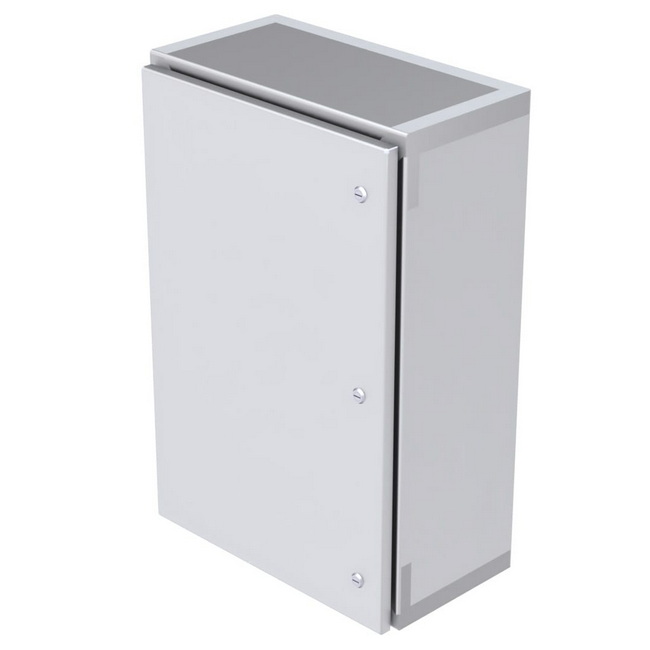
For coastal or desalination environments with high salt exposure, 316 or 316L stainless steel usually provides better corrosion resistance than 304. However, actual performance also depends on fabrication quality, surface treatment, and hardware materials. For inland, non‑corrosive environments, 304 stainless steel can be a cost‑effective option.
No. While many enclosures are rated IP66 in laboratory tests, long‑term performance in desert environments depends on gasket quality, door design, and installation practices. It is essential to review real project references and, if possible, test sample units before large‑scale deployment.
Ningbo Bohui Electric Co., Ltd. specializes in wall mount enclosures and other electrical sheet metal housings with experience across power, telecom, industrial automation, new energy storage, EV, and water applications. This makes it easier to obtain customized, project‑specific solutions that balance performance and cost, especially when standard catalog enclosures do not fit your requirements.
When you receive a sample, check the welds, door alignment, hardware robustness, and interior mounting space. Open and close the door multiple times, inspect gasket compression, and verify that cable entry areas offer sufficient room for your glands and wiring. These simple checks reveal a lot about manufacturing quality and design maturity.
To get accurate pricing and a technically correct proposal, share at least: installation environment, required IP rating, stainless steel grade preference, enclosure dimensions, door orientation, mounting method, and any special cut‑outs or accessories (such as sunshades, fans, filters, or internal mounting plates).
1. Rittal GmbH & Co. KG – Stainless Steel Enclosure Systems
Practical reference for industrial stainless steel enclosures, IP protection levels and application examples in harsh environments.
Available at: https://www.rittal.com/de_en/content/en/solutions/enclosures_stainless_steel/index.jsp
2. Schneider Electric – Stainless Steel Enclosures for Harsh Environments
Product and application notes covering stainless steel wall mount enclosures for industrial, infrastructure and outdoor projects.
Available at: https://www.se.com/ww/en/work/products/product-launch/enclosures-stainless-steel/
3. IEC 60529 – Degrees of Protection Provided by Enclosures (IP Code)
International standard describing IP ratings such as IP65, IP66 and IP67, often used as a basis for enclosure selection.
Available at: https://webstore.iec.ch/publication/2452
4. Outokumpu – Stainless Steel Grades and Corrosion Resistance Guide
Technical guidance on differences between 304, 316 and other stainless steel grades, with focus on corrosion in chloride and industrial environments.
Available at: https://www.outokumpu.com/en/grades
5. Industry Case Study – PV Solar Plant Enclosure Performance in Desert Conditions
Example case study discussing how stainless steel enclosures perform in high‑temperature, sand and UV exposure scenarios in desert solar projects.
Available at: https://www.example-solar-engineering.com/desert-stainless-steel-enclosure-case-study
6. Oil & Gas Facilities – Best Practices for Electrical Enclosures in Harsh Locations
Engineering article summarizing recommended enclosure materials, IP ratings and maintenance practices for oil & gas plants.
Available at: https://www.example-oilandgas-engineering.com/electrical-enclosure-best-practices
7. Ningbo Bohui Electric Co., Ltd. – Product Catalogue for Wall Mount Enclosures
Manufacturer catalogue presenting stainless steel wall mount enclosures, customization options and typical industrial applications.
Available at: https://www.bohui-electric.com/
8. Arabian Industrial Environment Overview – Temperature, Sand and Corrosion Factors
Report or technical article describing climate challenges (heat, sand storms, coastal salinity) affecting outdoor electrical installations in Arabia.
Available at: https://www.example-middle-east-engineering.com/arabia-industrial-environment-report

2026-07-26

2026-07-24


