


Views: 212 Author: Bohui Electric Publish Time: 2026-07-07 Origin: Site


Content Menu
● How To Evaluate A Qualified Electrical Enclosure Supplier
● Australia's Position In The Electrical Enclosure Value Chain
● Transparent Selection Criteria For This 2026 List
● Top Electrical Enclosure Manufacturers And Suppliers Serving Australia (2026)
>> 1. Ningbo Bohui Electric Co., Ltd (China – Agile OEM Partner For Australian Projects)
>> 2. B&R Enclosures Pty Ltd (Australia)
>> 3. CORN Enclosure Solutions Pty Ltd (Australia)
>> 4. ERNTEC Electronics Technologies (Australia)
>> 5. ROLEC / ROLEC‑OKW Australia New Zealand
>> 6. Global Brands Active In Australia (Rittal, etc.)
● Comparative Snapshot: Key Manufacturers Serving Australian Projects
● Technical Considerations For Electrical Enclosures In Australia
● Buyer's Guide: How Professional Procurement Teams Should Source Enclosures
>> Step 1: Verify Certifications And Compliance
>> Step 2: Request And Benchmark Samples
>> Step 3: Audit Quality Control And Process Capability
>> Step 4: Evaluate Logistics And After‑Sales Support
>> Step 5: Use External Data And Associations
● Common Sourcing Pitfalls – And How To Avoid Them
>> "Internal" Pitfall Rarely Discussed Publicly
● Conclusion And Call To Action
● FAQ: High‑Level Questions Procurement Teams Often Ask
>> 1. How can I confirm a supplier's ISO certification has not expired or been faked?
>> 2. What IP rating should I specify for outdoor enclosures in harsh Australian environments?
>> 3. When does it make sense to combine a local Australian supplier with an offshore OEM partner?
>> 5. What external data sources can strengthen my supplier business case to internal stakeholders?
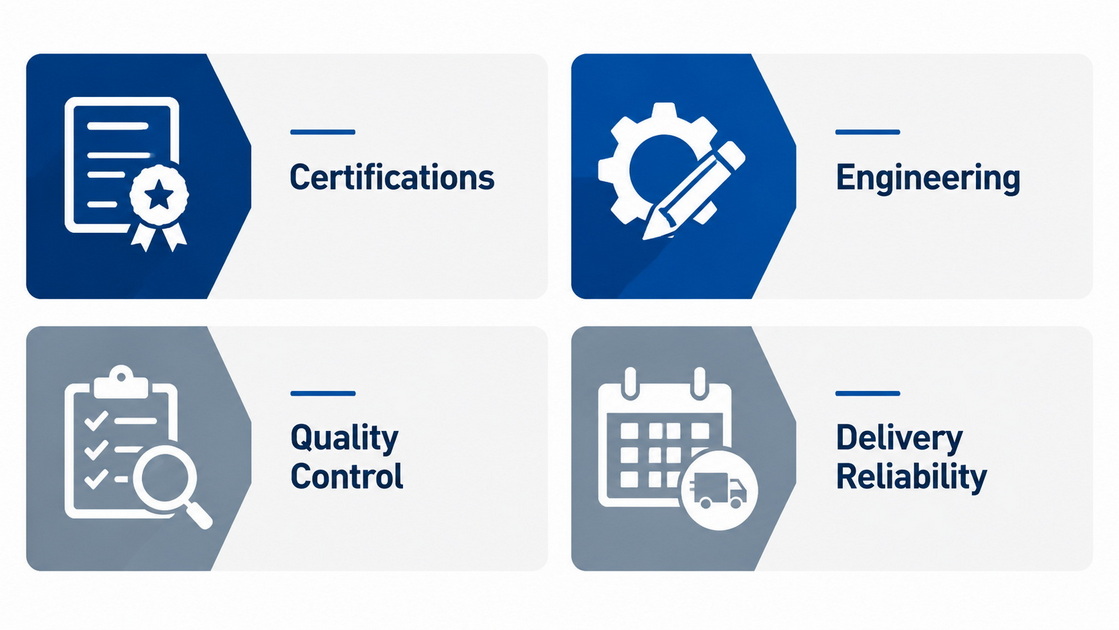
Before shortlisting any electrical enclosure manufacturer in Australia or offshore, a professional buyer should screen suppliers on four key dimensions: certifications, engineering depth, quality control, and delivery reliability. [saipwell]
- Factory certifications and compliance
- Prioritize ISO 9001 for quality management and, where relevant, ISO 14001 for environmental management and ISO 45001 for occupational health and safety. [accio]
- For hazardous locations, check compliance with IEC, AS/NZS, IECEx or ATEX for explosion‑proof enclosures, and CE / RoHS for export to Europe and other regulated markets. [ensun]
- R&D and engineering capability
- Evaluate whether the supplier can design around different protection types (IP/NEMA ratings), materials (stainless steel, aluminum, fiberglass, polycarbonate), and form factors (small junction boxes to full‑size modular cabinets). [saipwell]
- Ask for examples of custom projects (for solar farms, EV charging, data centers, or water treatment) and how quickly they can turn a concept into a validated sample. A responsive factory should be able to industrialize new enclosure designs within 30–45 days.
- Quality control (QC) and traceability
- Robust suppliers implement incoming material inspection, in‑process checks (welding, bending, coating), and final IP/functional tests, backed by documented procedures aligned with ISO 9001. [accio]
- QC should include raw‑material batch traceability, non‑conformance reports, and corrective action records that you can audit during factory visits or remote audits.
- Delivery stability and project management
- For critical infrastructure, you need evidence of stable lead times, clear production planning, and the ability to ramp up volume without compromising quality. [ensun]
- Mature suppliers provide Gantt‑style production schedules, safety‑stock strategies for repeat projects, and dedicated account managers who can coordinate engineering, production, and logistics.
These criteria are the backbone of the selection methodology used in this guide to identify leading electrical enclosure suppliers relevant to the Australian market.
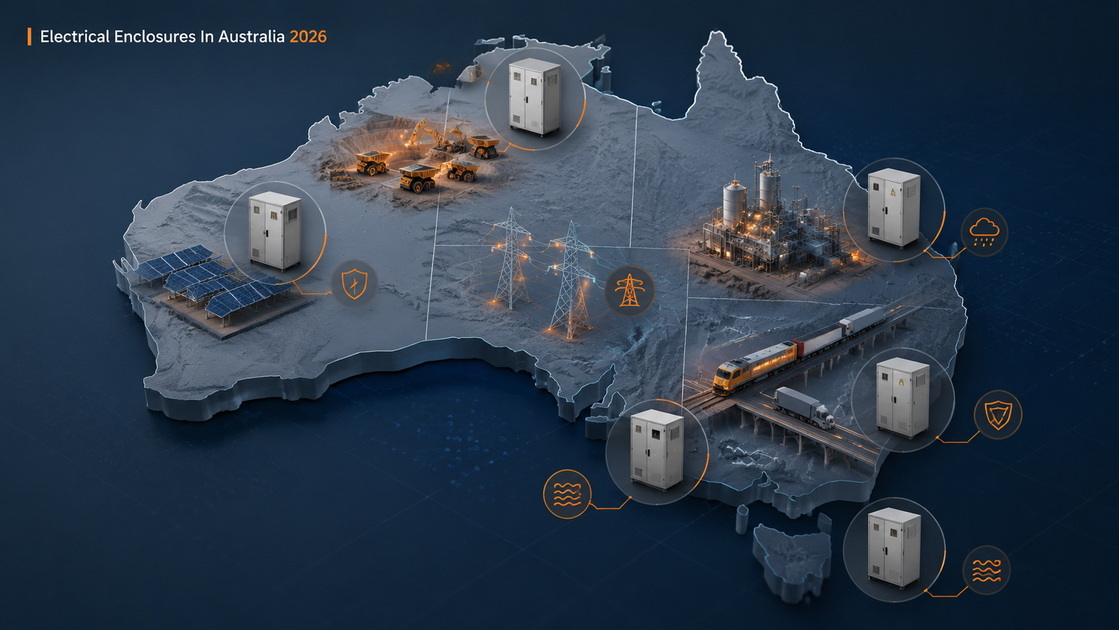
Australia is a mature and demanding market for electrical enclosures, driven by power generation and distribution, mining, oil and gas, transport infrastructure, and fast‑growing renewable energy projects. [ensun]
According to a 2026 market outlook, the Australian electric enclosure market is expected to add more than 80 million USD in value between 2026 and 2031, supported by grid modernisation, Industry 4.0 adoption, and large‑scale solar and wind deployments. Local demand is also shaped by stringent compliance with IEC and AS/NZS standards, which push manufacturers and importers to offer robust, corrosion‑resistant and weather‑proof solutions that can withstand coastal, arid and high‑UV environments. [ensun]
For global buyers, sourcing from or for Australia means working with suppliers who understand:
- IP66+ outdoor performance in harsh climates.
- Regulatory frameworks (IEC, AS/NZS, CE, UL, sometimes IECEx).
- Application‑specific needs in mining, food & beverage, water, and transport. [electronicsonline.net]
This guide focuses on manufacturers and solution providers that are either based in Australia or demonstrably strong partners for projects serving the Australian market. It combines local Australian enclosure specialists with an agile offshore OEM factory to balance quality, cost, and customization.
Core selection criteria:
1. Regulatory and certification alignment
- Ability to deliver enclosures complying with IEC / AS‑NZS standards for the Australian market, often in combination with CE, UL, or other international approvals. [ecdonline.com]
2. Product and application coverage
- Portfolio spanning wall‑mounted boxes, floor‑standing cabinets, modular systems, and application‑specific solutions (renewables, EV charging, network/IT, industrial controls). [electronicsonline.net]
3. Demonstrated production capacity and stability
- Evidence of consistent annual enclosure output, stable workforce, and mature sheet‑metal or fabrication capability (press brakes, laser cutting, powder coating, assembly). [ecdonline.com]
4. OEM/ODM customisation ability
- Capability to provide drawing support, rapid sampling, flexible MOQs, and end‑user branding (labels, cut‑outs, busbar arrangements, mounting kits). This is particularly important for system integrators and emerging brands.
5. Market reputation and export readiness
- Track record in key verticals such as power distribution, mining, water infrastructure, industrial automation, and data/telecom, plus experience with export documentation and logistics.
> Note: Companies are listed with a focus on relevance to Australian projects, OEM/ODM capacity, and suitability as long‑term partners for professional procurement teams.
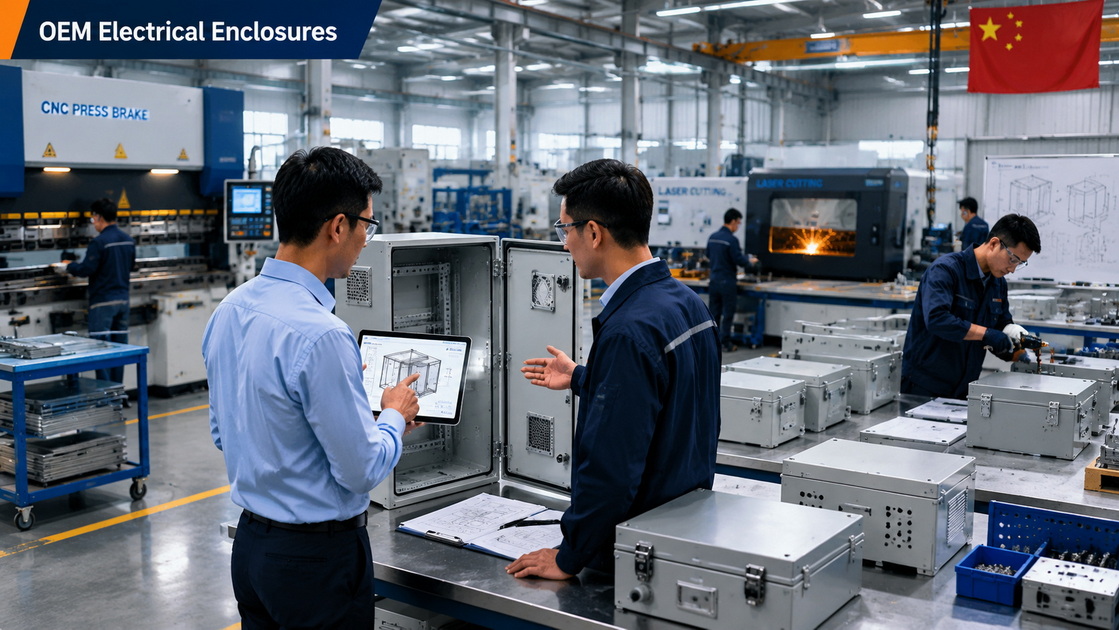
Although located in Ningbo, China, Ningbo Bohui Electric Co., Ltd is strategically positioned as a high‑value OEM/ODM partner for Australian system integrators and panel‑builders seeking custom electrical enclosures at competitive cost. [saipwell]
- Company profile and markets
- Bohui is a professional manufacturer of industrial electrical enclosures, including wall‑mount enclosures, sloping‑roof cabinets, free‑standing cabinets, modular enclosures, junction boxes, pushbutton enclosures, EV charger housings, network cabinets, and fully custom designs. [saipwell]
- Its enclosures are widely used in power, communications, networks, industrial intelligent manufacturing, construction, new energy storage, new energy vehicles, and water pump systems, with exports to North America, Europe, New Zealand, Southeast Asia, South America, the Middle East, India, and Africa. [saipwell]
- R&D and customization depth
- Bohui maintains an experienced engineering team in sheet‑metal enclosure design and can typically develop new custom products within about 40 days from requirement confirmation, which is competitive for OEM projects. [saipwell]
- The factory supports fast sampling within around 5 days and allows flexible small‑batch orders, making it attractive for small and mid‑sized brands validating new enclosure lines or project‑specific designs. [saipwell]
- Production capacity and delivery
- Advanced equipment and mature production processes enable Bohui to respond quickly to orders and scale from pilot to mass production once samples are approved, helping customers secure stable delivery for large‑volume orders. [saipwell]
- Established long‑term partnerships with raw‑material suppliers support competitive pricing and supply stability. [saipwell]
- Quality and reliability
- Bohui applies comprehensive quality inspection from raw‑material intake through final product delivery to ensure mechanical robustness and durability of its enclosures. [saipwell]
- The company emphasizes its role not just as a product vendor but as a technical partner, providing industry‑specific enclosure solutions (such as EV charging boxes, modular electrical enclosures, solar lighting and video surveillance enclosures). [saipwell]
For Australian buyers, Bohui is particularly suitable as a high‑value, flexible OEM base when you want to launch private‑label enclosures or need tailored cabinet designs that local suppliers may price at a premium.
B&R Enclosures is recognised as one of Australia's largest manufacturers of electrical enclosures, switchboard systems, racks, and cabinets, with a reported production of more than one million enclosures and accessories per year. [ecdonline.com]
- Core strengths
- Extensive local manufacturing footprint focused on heavy‑duty enclosures for industrial, infrastructure, and commercial projects, with a strong presence in switchboard building systems and 19‑inch rack solutions. [ecdonline.com]
- Deep understanding of Australian standards and environmental conditions, offering IP‑rated enclosures engineered for harsh climates and demanding applications.
- Applications and markets
- Serves power distribution, resources, utilities, data and communications, and transport sectors, making it a natural partner for large EPCs and utility‑scale projects within Australia. [ecdonline.com]
- OEM/ODM profile
- While B&R is widely used as a brand in its own right, it can support project‑based customisation and engineered‑to‑order solutions for large‑scale infrastructure contracts.
CORN Enclosure Solutions focuses specifically on electrical enclosures for industrial applications and is known for its capability to deliver both standard and custom designs compliant with Australian and international standards. [ensun]
- Product focus
- Offers steel and stainless‑steel enclosures, custom panels, and IP‑rated cabinets, including IP68 options for particularly demanding environments. [ensun]
- Solutions range from standard wall‑mount boxes to tailored cabinets with cut‑outs, mounting plates, and specific gland‑entry arrangements.
- Strengths for buyers
- Emphasis on compliance with Australian standards, plus a customer‑centric approach suitable for integrators who need efficient local communication and shorter lead times than offshore sourcing. [ensun]
ERNTEC specialises in enclosure solutions for electrical and electronic systems, offering a wide range of small to large custom enclosures and related hardware. [ensun]
- Portfolio and capabilities
- Covers small PCB housings, 19‑inch subracks, and full‑size cabinets, with options in aluminium, steel, and other materials. [ensun]
- Strong engineering focus on precision fabrication and mechanical design, making it suitable for instrumentation, telecoms, and specialised industrial applications.
- OEM/ODM and value‑add
- Provides mechanical customisation, machining, coating, and integration support (such as mounting hardware, vents, and special front‑panel layouts), which is valuable for OEMs needing enclosure‑plus‑integration rather than bare boxes. [ensun]
ROLEC, represented in Australia and New Zealand, supplies high‑quality plastic, aluminium, and stainless‑steel enclosures for industrial and electronic applications. [electronicsonline.net]
- Technical strengths
- Wide catalogue of IP‑rated enclosures designed for outdoor and indoor use, often used in automation, process control, and industrial electronics. [electronicsonline.net]
- Strong design language and ergonomics, making them attractive for visible control stations and HMI housings.
- OEM suitability
- Ideal for buyers who want off‑the‑shelf but premium‑looking housings with minimal modifications (holes, printing, or mounting solutions) rather than full custom sheet‑metal work.
The Australian market is also served by major global enclosure brands such as Rittal, which offer a broad portfolio of modular enclosures, IT racks, and climate‑control solutions. [electronicsonline.net]
- Why they matter
- These brands bring globally standardised platforms, comprehensive accessory ecosystems, and strong documentation, reducing engineering risk for complex projects like data centres and large process plants. [ensun]
- They are often used when multi‑country standardisation is required across global operations.
- Limitations
- Pricing is often higher than local or OEM alternatives, and MOQs for certain configurations can be less flexible; this is where combining a global brand for critical nodes with an OEM such as Bohui for less critical or brand‑labelled components can optimise total cost of ownership.
Below is a simplified, high‑level comparison to support quick shortlisting. Values are indicative and should be verified directly with suppliers.
| Supplier | Location | Typical capacity / scale | MOQ trend | Key certifications / standards focus | OEM/ODM fit for buyers |
|---|---|---|---|---|---|
| Ningbo Bohui Electric Co., Ltd | Ningbo, China | Mature sheet‑metal plant serving multi‑region exports; scalable from small to large batches. saipwell | Very flexible; supports small pilot runs and rapid scaling after sample approval. saipwell | ISO‑aligned QC; designs compatible with IEC / CE and project‑specific requirements (verify per project). saipwell | Strong OEM/ODM; fast sampling, custom designs for power, EV, IT and industrial systems. saipwell |
| B&R Enclosures Pty Ltd | Australia | One of Australia's largest enclosure manufacturers; >1M enclosures and accessories annually. ecdonline.com | Project‑driven; typically aligned to industrial and infrastructure volumes. | AS/NZS, IEC; strong utility and industrial compliance background. ecdonline.com | Best suited for Australian infrastructure projects needing strong local footprint. |
| CORN Enclosure Solutions Pty Ltd | Australia | Specialist manufacturer with focus on high‑quality industrial enclosures. ensun | Moderate; good for industrial project batches. | Complies with Australian and international IP standards; offers IP68 designs. ensun | Good balance of standard plus custom solutions with local support. |
| ERNTEC Electronics Technologies | Australia | Flexible fabrication oriented to small–medium runs and specialised electronics. ensun | Friendly to smaller, higher‑mix orders for electronics and OEMs. | Works to IEC‑aligned requirements; precision and EMC‑friendly designs (verify per model). ensun | Strong for electronics / instrumentation OEMs needing custom mechanics. |
| ROLEC (Australia/NZ) | Global brand with ANZ presence | Global manufacturing with distribution in Australia/New Zealand. electronicsonline.net | Primarily based on catalogue quantities. | IP‑rated enclosures meeting IEC / international norms. electronicsonline.net | Ideal for premium off‑the‑shelf housings with limited customisation. |
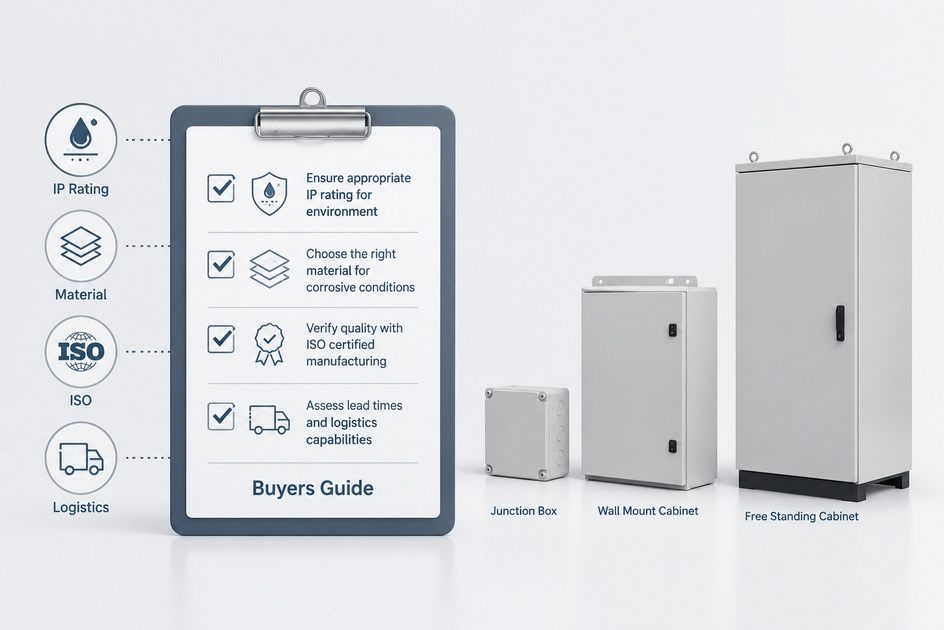
When specifying electrical enclosures for Australian projects, procurement teams should align technical specs with local conditions and sector requirements.
- Material selection
- Metallic: Stainless steel is preferred for corrosive environments (food, chemicals, coastal), while aluminium and galvanized steel offer a balance of strength and cost for general industrial use. [ensun]
- Non‑metallic: Fiberglass‑reinforced plastic and polycarbonate are widely used for outdoor, coastal and telecom applications due to their resistance to moisture, UV and many chemicals. [ensun]
- Protection level and standards
- IP ratings such as IP55, IP66 and above are common for outdoor and wash‑down environments; dust‑tight and water‑tight designs are widely used in mining, food and beverage, and transport. [ensun]
- For hazardous areas (oil & gas, certain mining operations), explosion‑proof enclosures complying with IECEx / ATEX are essential. [ensun]
- Form factor and configuration
- Small and compact enclosures are typical for junction boxes and small control stations, while free‑size or full‑size cabinets house larger assemblies such as switchgear and control panels. [ensun]
- Modular and configurable systems are increasingly popular in smart factories and renewable plants because they simplify expansion and upgrades. [ensun]
- ISO certificates
- Ask suppliers to provide ISO 9001 (and other relevant ISO) certificates with certificate numbers, issuing body, and expiry dates. [standardmachining]
- Cross‑check authenticity through the International Accreditation Forum (IAF) database or the accreditation body's website; never rely solely on PDF scans. [standardmachining]
- Product‑level approvals
- For critical projects, request test reports or declarations of conformity for IP, IK, CE, RoHS, or explosion‑proof standards as applicable.
- Define a standardised sample checklist (material thickness, coating quality, gasket compression, hinge robustness, door alignment, machining accuracy, and documentation).
- For offshore OEMs such as Bohui, leverage fast sampling (around 5 days) to compare multiple design iterations before locking specifications. [saipwell]
- Ask for process flow diagrams and QC checkpoints from raw‑material incoming inspection to final packing. [accio]
- During remote or on‑site audits, verify:
- Material certificates.
- IP / functional test equipment and records.
- Handling of non‑conforming products and corrective actions. [accio]
- For Australian local suppliers, confirm warehousing, regional stock, and service coverage.
- For offshore suppliers, verify:
- Transit times to Australian ports, INCOTERMS, and preferred forwarders.
- Packaging standards (corrosion protection, stacking, labelling).
- Ability to provide spare parts and quick‑turn reworks if a design needs minor changes.
- Leverage market overviews, such as the Australia Electric Enclosure Market Outlook 2031, to validate whether a supplier is active in key verticals and aligned with market trends. [ensun]
- Reference local directories like ElectronicsOnline's enclosure category, and industry associations in power or mining, to cross‑check brand presence and customer references. [electronicsonline.net]
- Under‑specifying material and coating
- Selecting lower‑grade steel or inadequate powder coating for coastal and mining regions can lead to premature corrosion and high lifetime costs. [ensun]
- Mitigation: Demand detailed material specs (e.g., stainless steel grade, coating system, salt‑spray test hours) and tie them into contracts.
- Ignoring thermal management and space for future expansion
- Cabinets without sufficient space or ventilation for future devices can lead to overheating and expensive retrofits.
- Mitigation: Require thermal calculations and leave at least 20–30% spare internal volume for future upgrades.
A widely acknowledged but seldom written‑about issue in OEM enclosure sourcing is silent design drift: after the first few compliant batches, some factories gradually modify non‑visible details (gasket quality, coating thickness, hardware grades) to save cost, without formally updating drawings.
- How to prevent it
- Lock a controlled technical file (drawings + BOM + QC checklist) as part of the purchase agreement.
- Implement periodic golden‑sample revalidation: every 6–12 months, randomly pull a batch and compare against the original approved sample for material, coating, hardware and documentation.
- Tie price‑adjustment discussions to documented cost drivers rather than allowing hidden design changes.
Australia is a sophisticated, standards‑driven market for electrical enclosures, shaped by harsh environmental conditions and demanding sectors such as power, mining, transport and renewables. To secure long‑term, low‑risk supply, procurement managers should combine rigorous certification checks, structured sampling and QC audits with a balanced supplier portfolio that includes both local manufacturers and high‑value OEM partners like Ningbo Bohui Electric Co., Ltd. [ensun]
If you are planning your next RFQ or framework agreement for electrical enclosures into or within Australia, consider shortlisting 2–3 local Australian manufacturers plus 1–2 export‑ready OEMs, then running a structured pilot project to validate quality, communication efficiency, and total landed cost over at least two full production cycles.
Request the ISO certificate with the certification number and issuing body, then search that number on the issuing certification body's website or via the IAF global database; verify the scope, validity period, and that the site address matches the factory you're auditing. [standardmachining]
For most outdoor industrial and infrastructure installations, IP66 is a common baseline, offering protection against powerful water jets and dust; more extreme sites (e.g., coastal, mining with high wash‑down pressure) may need higher IP or additional mechanical protection depending on risk assessment. [ensun]
Many procurement managers use local manufacturers such as B&R or CORN for critical, time‑sensitive or highly regulated components while partnering with an OEM like Ningbo Bohui for cost‑optimised or private‑label ranges; this hybrid strategy balances lead time, compliance, and total cost of ownership. [ecdonline.com]
Check whether they offer modular or configurable systems, support for integrated cable management and cooling, and experience with housing IoT devices, communication modules, and automation hardware; market reports highlight modular/configurable systems as a fast‑growing segment in Australia. [ensun]
Citing independent sources such as Bonafide Research's Australia Electric Enclosure Market Outlook 2031 and referencing directories or association listings (e.g., ElectronicsOnline's enclosure suppliers) can validate market growth assumptions and demonstrate that shortlisted suppliers operate in recognised industry segments. [electronicsonline.net]

2026-07-26

2026-07-24


