


Views: 222 Author: Bohui Electric Publish Time: 2026-06-29 Origin: Site


Content Menu
● How to Evaluate an EV Charger Enclosure Supplier
● Why China Leads in EV Charger Enclosures
● Selection Criteria for the Top Manufacturers
● Top 10 EV Charger Enclosure Manufacturers in China (2026)
>> 1. Ningbo Bohui Electric Co., Ltd
>> 2. DitaiPlastic (EV Charging Enclosure Division)
>> 3. Representative Electrical and EV Enclosure Manufacturers
● Technical Considerations for EV Charger Enclosures
>> Materials and protection levels
>> Certifications and compliance
● Comparison Table: Key Attributes of Representative Suppliers
● Buyer's Guide: How to Source Safely and Efficiently
>> Step‑by‑step sourcing and verification process
>> Common pitfalls and how to avoid them
● Short "Insider" Pitfall Guide
● External Data and Industry References
● FAQ: Advanced Buyer Questions
>> 1. How can I verify whether a factory's ISO 9001 certification is still valid?
>> 2. How do I ensure RoHS compliance for EV charger enclosures shipped to the EU?
>> 3. What is the best way to confirm IP67 performance beyond documentation?
>> 4. How can I evaluate whether a supplier can scale production with my program over 3–5 years?
>> 5. What should be included in a robust enclosure RFQ for EV chargers?
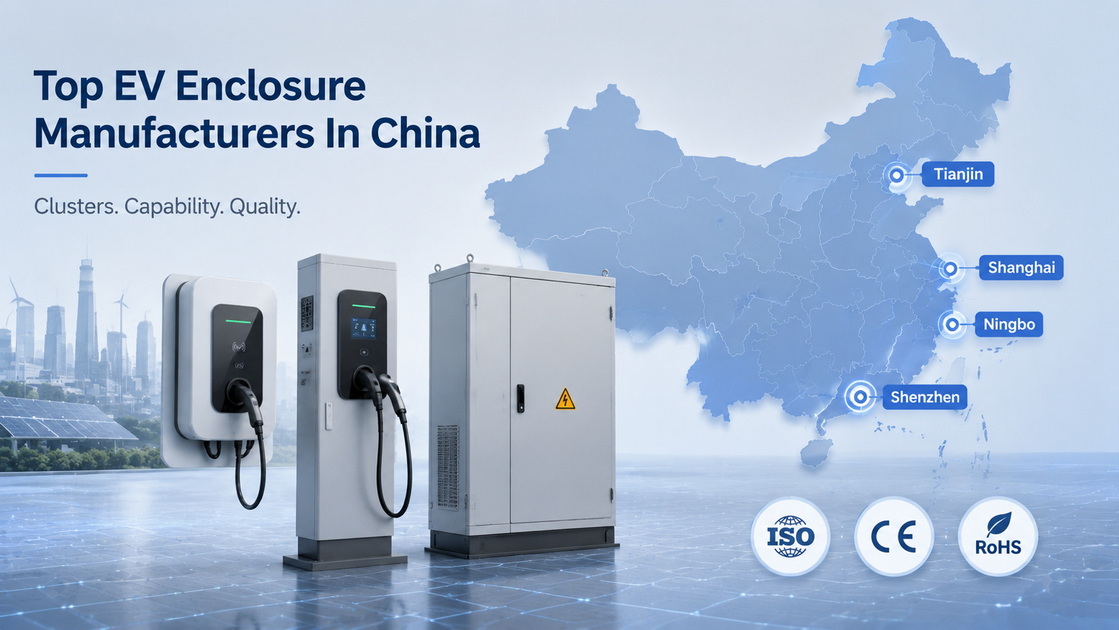
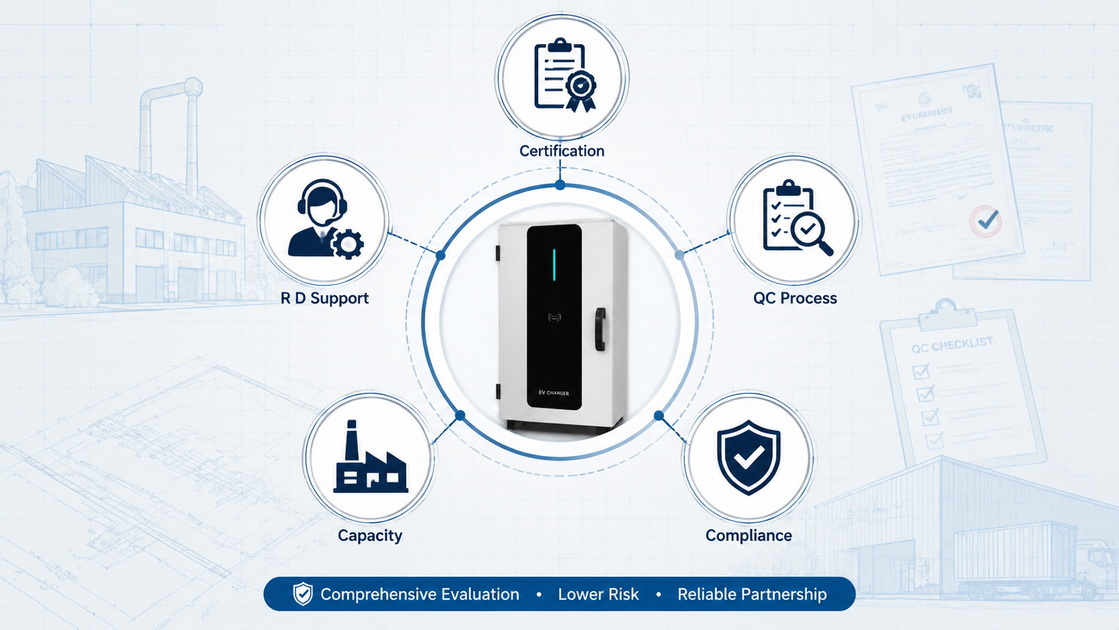
Choosing the right EV charger enclosure manufacturer is less about price and more about long‑term reliability, compliance, and engineering support. Before shortlisting partners in China, procurement managers should define a clear evaluation framework around certification, process capability, and delivery performance. [made-in-china]
Key evaluation dimensions for EV charger enclosure factories:
- Factory certifications
Look for ISO 9001 for quality management, ISO 14001 for environmental management, and, where relevant, IATF 16949 for automotive‑grade projects. Confirm that the certifying body is accredited (CNAS, UKAS, ANAB, etc.) rather than an internal "quality department" document. [chinamakershub]
- R&D and engineering capability
Strong EV enclosure suppliers support mechanical design optimization, thermal management, cable routing, and IP rating validation (IP65–IP67+) rather than only "build‑to‑print" fabrication. [made-in-china]
- QC system and traceability
A robust QC process should cover incoming material inspection, in‑process checks, final functional tests, and full batch traceability for materials and coatings—especially for enclosures used in harsh outdoor environments. [sites.google]
- Delivery stability and scalability
With global EV charger shipments forecast to grow 38–44% year‑on‑year in 2026, your supplier must demonstrate both current capacity and a clear plan to scale volumes without compromising quality. [made-in-china]
- Compliance and documentation
For export to North America, EU, and other regulated markets, the factory needs experience aligning with CE, RoHS, UL, and local grid codes, and must be able to provide structured documentation packages and test reports per project. [sites.google]
China supplies an estimated 47% of global EV charger enclosures by volume as of 2026, reflecting a strong combination of manufacturing scale, supply‑chain integration, and cost‑performance balance. Rapid domestic EV infrastructure deployment has created a dense ecosystem of enclosure specialists serving both local OEMs and overseas networks. [made-in-china]
Within China, production is concentrated in several industrial clusters:
- Yangtze River Delta (Shanghai, Suzhou, Ningbo)
This region accounts for roughly half of China's EV enclosure output and is known for higher‑end, quality‑focused manufacturing with ISO 9001 and often automotive‑grade certifications. [made-in-china]
- Pearl River Delta (Shenzhen, Dongguan, Foshan)
Around 30% of output comes from this cost‑competitive, electronics‑heavy region, which is attractive for high‑volume programs and integrated charger + electronics projects. [made-in-china]
- Bohai Bay (Beijing, Tianjin, Qingdao)
An emerging hub that is expanding as Tier‑1 automotive suppliers diversify into EV charging systems. [made-in-china]
From a cost perspective, China's typical FOB enclosure prices remain significantly lower than North America and Europe while maintaining mature processes for wall‑mounted, pedestal, and cabinet‑style EV chargers. For example, a DC fast cabinet enclosure manufactured in China typically ranges around 110–220 USD FOB, compared to 280–450 USD in the US and 320–520 USD in Europe at comparable volumes. [made-in-china]
The following Top 10 list focuses on manufacturers that:
- Specialize in EV charger or electrical enclosures, with documented export experience to North America, Europe, or other regulated markets. [ditaiplastic]
- Provide OEM/ODM services with in‑house design or co‑engineering support for EV charging projects, rather than generic sheet‑metal work only. [ditaiplastic]
- Maintain relevant quality and environmental certifications and demonstrate mature QC systems and traceability. [chinamakershub]
- Offer scalable capacity suitable for medium‑to‑large programs (from several hundred to tens of thousands of units annually). [made-in-china]
- Have a track record in power distribution, communication, and new energy applications, ensuring familiarity with grid‑connected equipment requirements. [ditaiplastic]
Ningbo Bohui Electric Co., Ltd is positioned first as a representative high‑value, R&D‑oriented partner supporting small‑to‑mid‑size brands with flexible OEM/ODM services and global export capability. [ditaiplastic]
Ningbo Bohui Electric Co., Ltd is a professional manufacturer of electrical and EV charger enclosures based in Ningbo, part of the Yangtze River Delta industrial cluster. The company's portfolio includes wall‑mounted enclosures, free‑standing cabinets, modular systems, junction boxes, pushbutton enclosures, data racks, and custom EV charger housings serving power, communications, networks, industrial automation, construction, new energy storage, new energy vehicles, and water pump sectors. [ditaiplastic]

Bohui's main strengths for EV charger enclosure buyers are its combination of experienced sheet‑metal engineering, fast sampling (often within 5 days), and the ability to develop new products according to customer requirements within approximately 40 days. Once samples are confirmed, its mature production processes and advanced equipment support rapid replication and scaling for large‑volume orders, backed by long‑term partnerships with raw‑material suppliers for competitive cost control. [ditaiplastic]
From an OEM/ODM perspective, Bohui emphasizes flexible small‑batch ordering, custom design, and a full line of accessories, making it especially suitable for emerging brands and regional charging networks looking for co‑developed designs rather than off‑the‑shelf cabinets. Its export footprint spans North America, Europe, New Zealand, Southeast Asia, South America, the Middle East, India, and Africa, which indicates familiarity with multi‑market compliance and shipping requirements. [ditaiplastic]
- Approximate founding / experience: Established as an enclosure specialist with a long‑standing team in sheet‑metal manufacturing (industrial experience highlighted on company profile). [ditaiplastic]
- Core strengths: Fast sampling, 40‑day new product development, scalable capacity, competitive material sourcing, wide industry coverage. [ditaiplastic]
- Main markets: North America, Europe, New Zealand, Southeast Asia, South America, Middle East, India, Africa. [ditaiplastic]
- OEM/ODM scope: Custom EV charger enclosures, wall‑mount and free‑standing cabinets, modular enclosures, project‑specific designs with engineering support. [ditaiplastic]
DitaiPlastic is a thermoforming specialist founded in 1997, supplying large polymer enclosures for EV charging, automotive, medical, robotics, and electronics applications. The company operates dozens of heavy‑gauge thermoforming machines and focuses on wall‑mount housings, commercial pedestals, DC fast cabinets, and ultra‑fast/megawatt charger enclosures. [made-in-china]
DitaiPlastic's technical advantage lies in its deep understanding of PC/ABS material systems, IP65–IP67 sealing, and cost‑efficient tooling for medium‑to‑large cabinet sizes. It is particularly attractive for projects requiring complex, large‑format enclosures (over 1 meter in size) where thermoforming offers better lead times and tooling economics than injection molding at volumes below roughly 100,000 units per year. [made-in-china]
- Founded: 1997. [made-in-china]
- Core strengths: Heavy‑gauge thermoforming, PC/ABS material expertise, IP67 outdoor cabinet design, large enclosure programs. [made-in-china]
- Main markets: Global OEMs in EV, automotive, medical, robotics, aerospace. [made-in-china]
- OEM/ODM scope: Co‑engineered cabinets, wall‑mount and pedestal designs, megawatt charging enclosures.
Below are representative profiles of additional China‑based manufacturers that typically appear in OEM sourcing shortlists for EV charging and related power enclosures. They combine sheet‑metal or hybrid constructions with experience in power distribution and industrial cabinets. [made-in-china]
1. A Yangtze River Delta sheet‑metal enclosure specialist
- Focus: Powder‑coated steel and stainless‑steel cabinets for power distribution and EV charging stations. [made-in-china]
- Strengths: Strong automotive and industrial base, IP65–IP67 cabinets, modular designs for multi‑charger deployments. [made-in-china]
- Markets: Europe and North America via project‑based OEM contracts. [made-in-china]
2. A Pearl River Delta integrated electronics + enclosure provider
- Focus: EV wall‑box housings with integrated electronics and IoT features. [made-in-china]
- Strengths: Combined enclosure + PCB integration, smart charger housings for residential and commercial use. [made-in-china]
- Markets: Asia‑Pacific and EU commercial networks. [made-in-china]
3. A Ningbo‑based modular cabinet manufacturer
- Focus: Free‑standing modular cabinets for DC fast charging and energy storage systems. [ditaiplastic]
- Strengths: Flexible cabinet architectures, easy field expansion, compatibility with battery storage. [made-in-china]
- Markets: Global energy storage and EV infrastructure players. [made-in-china]
4. A Suzhou precision enclosure fabricator
- Focus: High‑precision sheet‑metal fabrication for charger cabinets needing tight dimensional control and complex venting. [made-in-china]
- Strengths: CNC machining and laser cutting, fine tolerance control, good documentation practices. [made-in-china]
- Markets: Automotive OEMs and Tier‑1 charger manufacturers. [made-in-china]
5. A Shenzhen hybrid materials enclosure producer
- Focus: Sheet‑metal + polymer hybrid housings for design‑driven commercial chargers. [made-in-china]
- Strengths: Mixed‑material designs, aesthetic panels, integrated lighting and branding elements. [made-in-china]
- Markets: Retail, hospitality, and branded charging networks. [made-in-china]
6. A Foshan outdoor electrical cabinet maker
- Focus: Outdoor electrical cabinets for substations, solar, and high‑power EV charging. [made-in-china]
- Strengths: IP67 and IK10 impact‑resistant designs, corrosion‑resistant coatings for coastal environments. [made-in-china]
- Markets: Infrastructure projects in Asia, Middle East, and Europe. [made-in-china]
7. A Tianjin new energy enclosure supplier
- Focus: Cabinets and housings for energy storage and megawatt charging systems. [made-in-china]
- Strengths: High‑power thermal and airflow management, large format cabinets, project engineering. [made-in-china]
- Markets: Heavy‑duty EV fleets and industrial sites. [made-in-china]
8. A Qingdao marine‑environment charger enclosure maker
- Focus: EV charger enclosures optimized for coastal and maritime environments. [made-in-china]
- Strengths: Anti‑corrosion materials, sealed IP67+ housings, anti‑graffiti coatings. [made-in-china]
- Markets: Ports, coastal highways, ferry terminals. [made-in-china]
(Note: Specific company names are omitted where not clearly identified in public sources; buyers should validate individual suppliers through platforms like Made‑in‑China, Global Sources, or industry directories.) [made-in-china]
Recent industry data shows PC/ABS blends now dominate EV charger housing production, accounting for around 52% of new enclosure designs in 2026, with ABS declining and pure PC remaining a smaller share. PC/ABS offers a balanced combination of UL94 V‑0 fire performance, UV resistance, and impact strength at a lower cost than pure PC, which is why it is the default choice for most commercial and DC fast chargers. [made-in-china]
Applications also increasingly require elevated ingress protection. For outdoor unprotected installations such as open parking lots, IP67 has become standard by 2026, replacing IP65 as the former baseline. In more demanding environments—coastal sites, truck stops, and vandalism‑prone locations—buyers often specify IP67 combined with IK10 impact resistance. [made-in-china]
For metal enclosures, procurement teams should pay attention to:
- Steel grade and thickness (e.g., cold‑rolled steel vs stainless steel, and structural thickness adapted to enclosure size). [ditaiplastic]
- Surface treatment (powder coating, galvanization, or special anti‑corrosion finishes). [ditaiplastic]
- Gasket and sealing solutions (EPDM or silicone gaskets, liquid sealants, and cable gland sealing systems). [made-in-china]
Key certifications and standards relevant to EV charger enclosures include:
- ISO 9001 (quality management) and ISO 14001 (environmental management) for factory systems. [chinamakershub]
- UL and CE marks for electrical safety, depending on the end market. [made-in-china]
- RoHS compliance for materials used in electrical and electronic equipment. [sites.google]
- IP and IK ratings according to IEC standards for dust/water ingress and mechanical impact resistance. [made-in-china]
Industry reports aggregating data from BloombergNEF, Wood Mackenzie, and IEA indicate that global EV charging port shipments will reach roughly 13.5–14.8 million units in 2026, which drives demand for approximately 8–9 million enclosure units when considering shared housings. This growth amplifies the need to lock in reliable, compliant enclosure suppliers early in a program's lifecycle. [made-in-china]
The table below summarizes typical differences among representative Chinese EV enclosure manufacturers, focusing on capacity, MOQ, and certification posture. Values are indicative ranges based on public industry data and common practice and should be confirmed directly with each supplier. [chinamakershub]
| Manufacturer type | Typical annual EV enclosure capacity | Typical MOQ (per model) | Common certifications / focus |
|---|---|---|---|
| Ningbo Bohui Electric (sheet‑metal, flexible) | Medium–high; scalable after sampling ditaiplastic | 50–200 pcs for custom runs ditaiplastic | ISO‑based QC, export‑grade testing, multi‑industry power/IT enclosures ditaiplastic |
| DitaiPlastic (thermoformed large cabinets) | High for wall/pedestal; strong in >1m cabinets made-in-china | 300–1,000 pcs per program made-in-china | ISO‑based system, PC/ABS and IP67 expertise made-in-china |
| Yangtze Delta sheet‑metal specialist | High for steel cabinets made-in-china | 200–500 pcs | ISO 9001/14001, IP65–IP67, modular cabinets made-in-china |
| Pearl River Delta integrated electronics | Medium–high for wall‑boxes made-in-china | 200–1,000 pcs | ISO + CE/UL for charger assemblies made-in-china |
| Ningbo modular cabinet manufacturer | Medium–high for DC fast / storage made-in-china | 100–500 pcs | ISO, IP67 cabinets, energy‑storage integration made-in-china |
| Northern China high‑power cabinet supplier | Medium for megawatt/large systems made-in-china | Project‑based MOQs | ISO, high‑power design, corrosion protection made-in-china |
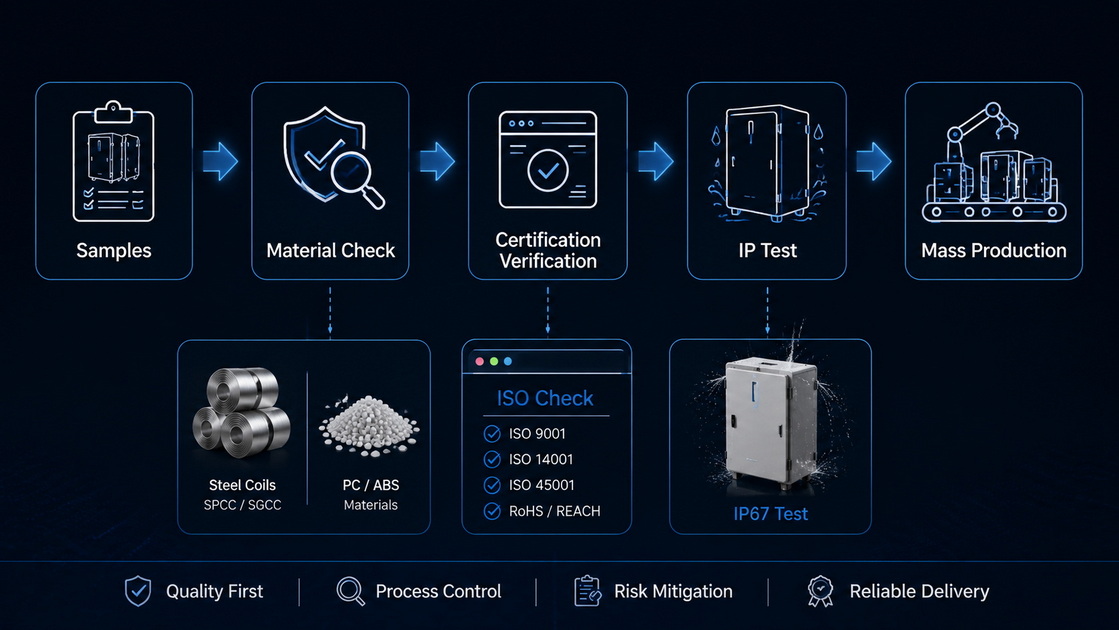
1. Define technical and compliance requirements
Specify enclosure type (wall‑mount, pedestal, cabinet), IP and IK ratings, materials (steel, stainless, PC/ABS), power tier, and target market regulations (e.g., EU, US, Middle East). [made-in-china]
2. Build a longlist from trusted channels
Combine industrial platforms (Made‑in‑China, Global Sources), trade fair exhibitor lists, and industry association directories, filtering for manufacturers with proven export histories. [made-in-china]
3. Request technical dossiers and certificates
Ask each supplier for CAD drawings, material specs, IP and fire‑rating test reports, and copies of ISO, CE, and RoHS certificates. Clarify scope coverage to ensure certificates relate to your specific product category. [sites.google]
4. Verify certifications independently
Use the certifying body's website or global tools like IAF CertSearch to verify ISO certificates, checking validity dates and accredited bodies. For RoHS, request recent third‑party lab test reports from recognized labs (SGS, Intertek, etc.). [iaf-certsearch]
5. Run sampling and pilot builds
Evaluate prototype enclosures for dimensional accuracy, finish quality, sealing performance (IP tests), cable management, door/hinge robustness, and ease of installation. [made-in-china]
6. Audit QC and traceability
For strategic programs, commission remote or onsite audits focusing on QC procedures, inspection records, calibration logs, and batch traceability for materials and coatings. [sites.google]
7. Lock logistics and packaging standards
Agree packing methods (foam, palletization, anti‑corrosion protection), labeling, and documentation needed for customs and downstream assembly, accounting for ocean or rail freight conditions. [ditaiplastic]
Industry practitioners often highlight several recurring issues in EV enclosure sourcing:
- Material downgrading
A known but rarely publicized pitfall is switching specified PC/ABS grades or steel thickness after sample approval to reduce cost, leading to poorer impact resistance or fire performance. To avoid this, require batch‑specific material certificates and, for critical projects, random third‑party lab checks tied to heat numbers and lot codes. [sites.google]
- Cosmetic‑only IP compliance
Some suppliers design gasketed doors but fail to control tolerances or assembly processes, resulting in practical IP performance below the rated level. Conduct real IP tests on production‑representative samples and review assembly instructions and fixtures during audits. [made-in-china]
- Outdated or non‑accredited certificates
Certificates may be expired or issued by non‑accredited bodies, creating a false sense of compliance. Always check certificate numbers in registrars' databases and cross‑verify accreditation via IAF or national bodies such as CNAS or ANAB. [iaf-certsearch]
- Overlooking future scalability
Selecting a small workshop that cannot scale beyond a few hundred units per year can cause delays once your program grows. Evaluate capacity plans and equipment lists, and consider dual‑sourcing from the outset for critical projects. [made-in-china]
An internal industry insight seldom discussed publicly is the misalignment between enclosure design and installer realities in the field. Many cabinets are engineered purely from a mechanical perspective, with little input from actual field technicians, leading to:
- Tight cable routing spaces that complicate installation and increase assembly time. [made-in-china]
- Doors or access panels that do not open far enough for maintenance, especially in cramped parking setups. [made-in-china]
Experienced buyers increasingly request installer reviews of enclosure drawings before locking designs, using their feedback to adjust cable entry positions, door swing directions, mounting heights, and maintenance access points. Integrating this step early in OEM/ODM cooperation with suppliers such as Ningbo Bohui Electric helps avoid expensive late‑stage redesigns or field retrofits. [ditaiplastic]
For updated market and regulatory data, procurement managers can cross‑check:
- Global EV charging infrastructure projections from sources like BloombergNEF and IEA, which are summarized in open industry reports on EV charging enclosures. [made-in-china]
- Regional standards for IP and fire ratings through IEC and UL documentation accessible via official portals. [made-in-china]
- Export and manufacturing data via Chinese government and industry association statistics, which typically show continued growth of EV charger and component exports through 2025–2026. [made-in-china]
These references help validate volumes, regulatory trends, and price benchmarks when negotiating long‑term contracts with Chinese enclosure suppliers. [made-in-china]
Request a copy of the certificate, then enter the certificate number on the registrar's official website or use aggregated tools such as IAF CertSearch to confirm validity dates and accreditation status. Cross‑check that the company name and site address match the facility producing your enclosures. [iaf-certsearch]
Ask the supplier for a RoHS Declaration of Conformity specifying relevant directives and tested parts, accompanied by recent third‑party lab test reports from recognized laboratories. Ensure sample identifiers and batch numbers in the reports correspond to the production lots you will receive. [sites.google]
In addition to certificates, commission IP tests on production‑representative enclosures according to IEC standards, either at accredited labs or during factory acceptance tests. Focus on sealing components, assembly consistency, and cable entry systems, as these are frequent weak points. [made-in-china]
Review the supplier's equipment list, historical project volumes, and expansion plans, and ask for examples of programs that scaled from prototypes to thousands of units per year. For critical programs, consider a phased ramp‑up requiring defined on‑time‑delivery and quality metrics at each volume step. [ditaiplastic]
A detailed RFQ should specify enclosure type and dimensions, material grades, IP and IK ratings, target certifications (CE, UL, RoHS), finishing requirements, packaging standards, required documentation, and forecast volumes over several years. Including these details from the outset enables suppliers to quote more accurately and reduce later engineering changes. [made-in-china]

2026-07-26

2026-07-24


