


Views: 222 Author: Bohui Electric Publish Time: 2026-04-24 Origin: Site


Content Menu
● Understanding Plastic vs Metal Electrical Boxes
● Key Material Differences: Strength, Fire, and Safety
>> Mechanical Strength and Impact Resistance
>> Electrical Safety and Grounding
● Environmental Resistance: Indoor, Outdoor, and Harsh Conditions
>> Corrosion and Weather Exposure
>> Protection Ratings and Long-Term Sealing
● Installation, Maintenance, and UX for Electricians
● Application-Based Recommendations
>> Where Plastic Electrical Boxes Make Sense
>> Where Metal Wall Mount Enclosures Are the Better Choice
● Expert Perspective: Why We Specialize in Metal Wall Mount Enclosures
● Practical Selection Checklist: Plastic vs Metal Box
● Comparison Table: Plastic vs Metal Electrical Boxes
● Real-World Example: EV Charging and New Energy Systems
● How Ningbo Bohui Supports Your Wall Mount Enclosure Projects
● Conclusion and Call to Action
● Frequently Asked Questions (FAQ)
>> 1. Are plastic electrical boxes safe for outdoor installations?
>> 2. Do metal electrical boxes always need grounding?
>> 3. Why do many industrial projects avoid plastic boxes?
>> 4. Can I replace existing plastic boxes with metal wall mount enclosures?
>> 5. What protection rating should I choose for an outdoor metal wall mount enclosure?
When you choose between a plastic electrical box and a metal electrical box, you are not just picking a material—you are deciding how well your system will perform and survive in real-world conditions over the next 10–20 years. From my experience working with industrial customers in power distribution, new energy, and automation projects, metal wall mount enclosures usually win for demanding applications, while plastic boxes retain a niche in light-duty and residential environments. [lianjer]
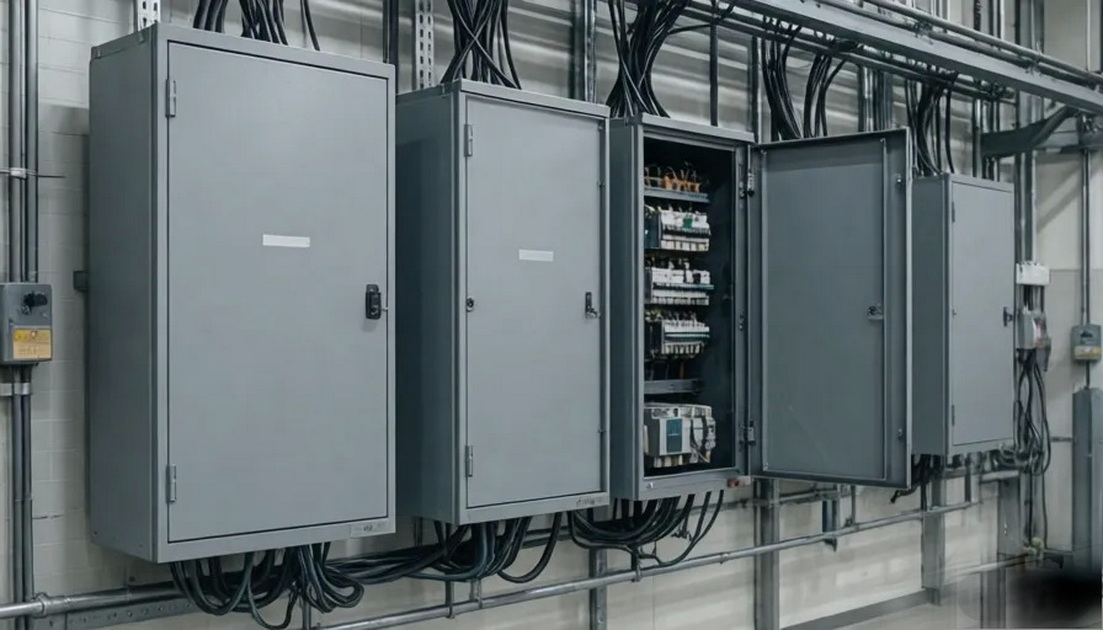
A plastic electrical box is typically made from PVC or ABS and is common in residential installations where loads are moderate and the environment is relatively benign. A metal electrical box or metal wall mount enclosure is usually manufactured from steel or aluminum and is standard in commercial, industrial, and outdoor systems that require high durability and safety. [powersolutionme]
From an industry perspective, plastic boxes are chosen for low cost, quick installation, and non-conductive safety in simple indoor circuits. Metal boxes and cabinets are preferred where mechanical strength, grounding, fire resistance, and long-term reliability are critical, such as power distribution, EV charging, and industrial control panels. [armorlogix]
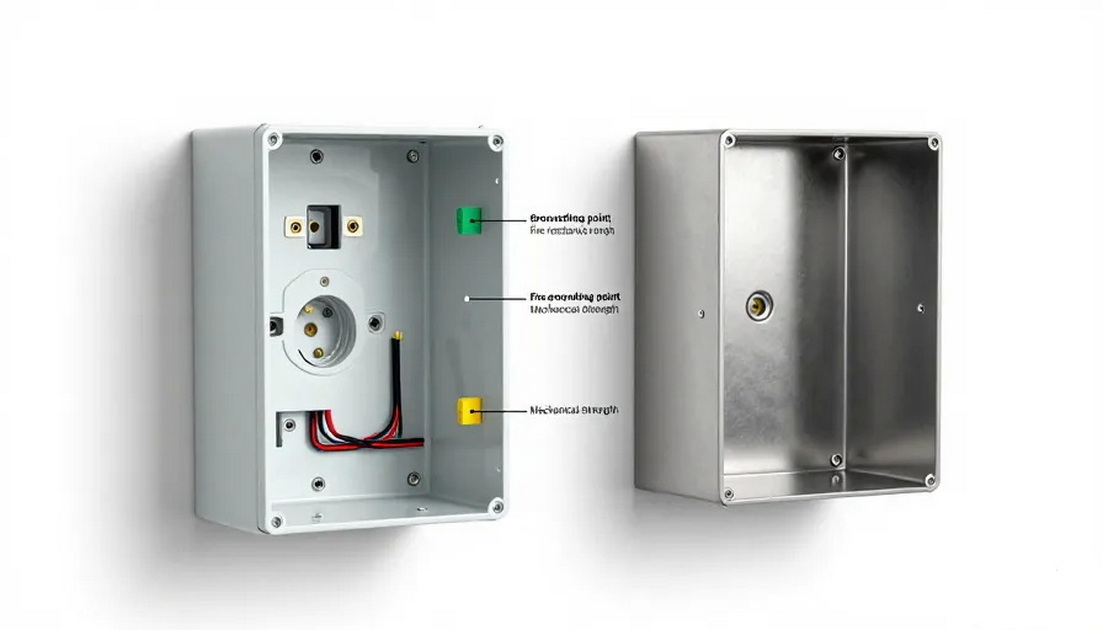
- Metal electrical boxes (steel or aluminum) offer superior impact resistance and maintain their structure under mechanical stress, vibration, or accidental knocks. [lianjer]
- Plastic boxes resist corrosion and do not dent, but they can crack under pressure, especially if fasteners are overtightened or the box is exposed to impacts. [powersolutionme]
In applications like wall-mounted control cabinets, motor pump starters, or factory network nodes, I repeatedly see metal enclosures continue to perform even after minor collisions with forklifts or tools, whereas plastic enclosures often require replacement once cracked. [armorlogix]
- Metal enclosures are non-combustible and maintain structural integrity under higher temperatures, giving an additional margin of safety in fault conditions such as short circuits or overloaded conductors. [lianjer]
- Plastic boxes may soften or deform when exposed to sustained heat, which can compromise conductor spacing or cable support.
For power distribution and energy storage systems, this fire behavior is not a minor detail—it can be the difference between a contained incident and a cascading failure.
- Metal boxes conduct electricity and therefore must be properly grounded using bonding screws or jumpers, forming part of the protective earth path. [viox]
- Plastic boxes are non-conductive, so they do not need grounding and cannot become live in the same way if a conductor comes loose. [timkylecompany]
Many electricians choose plastic boxes in basic residential work because skipping box grounding saves time, but in professional industrial and commercial environments, metal enclosures with verified grounding are the norm for safety and compliance.
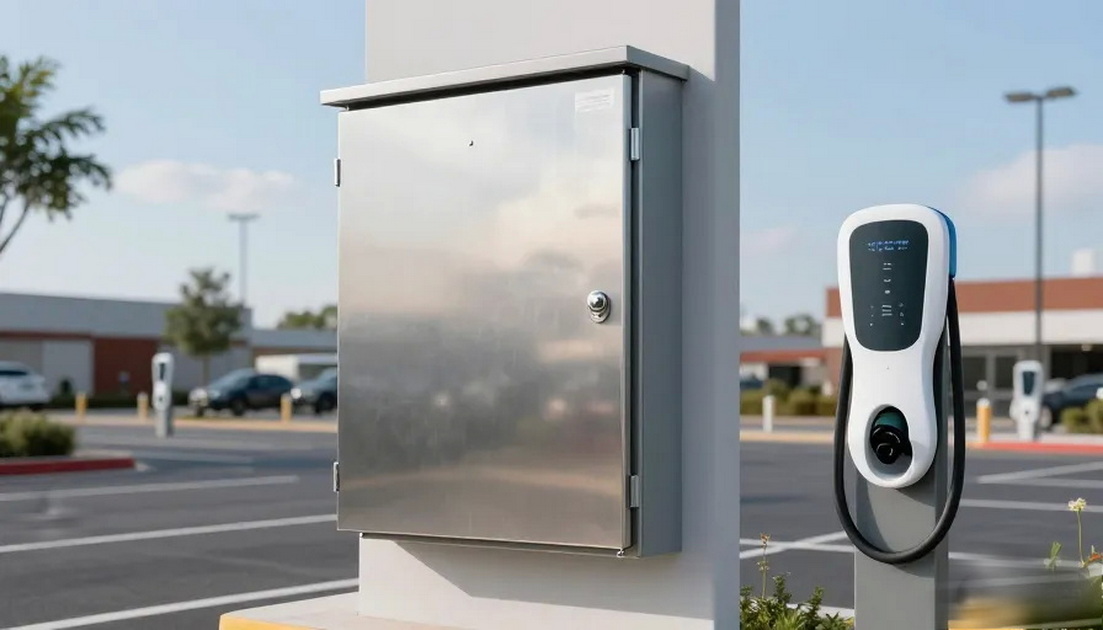
- Aluminum and properly coated steel enclosures deliver strong corrosion resistance and are commonly used in damp, coastal, or chemically aggressive environments. [armorlogix]
- Plastic enclosures naturally resist rust and many chemicals, but UV exposure and extreme temperature cycling can accelerate aging and brittleness over time. [powersolutionme]
For outdoor wall mount enclosures on rooftops, pump stations, and EV chargers, IP- and NEMA-rated metal enclosures dominate because they pair impact resistance, secure locking, and environmental sealing. Plastic weatherproof boxes exist, but they are more often used for lighter outdoor loads such as garden lighting and small outlets. [chintglobal]
Modern wall mount enclosures—especially in power and automation—are specified with IP or NEMA ratings to guarantee protection against dust and water. High-quality metal enclosures with correct gaskets can maintain these ratings for years even under vibration and thermal cycling, which is crucial for: [chintglobal]
- Outdoor EV charging cabinets
- Solar combiner boxes and energy storage BMS cabinets
- Industrial PLC and network control cabinets
In my experience, customers who initially choose plastic for cost reasons often return to metal IP65/IP66 enclosures after experiencing gasket failures or UV damage in plastic housings. [chintglobal]
Plastic boxes are lighter and easier to cut or modify on-site, which makes them popular for fast residential work. They often come with integrated clamps and do not require grounding, which saves minutes per box. [timkylecompany]
Metal boxes, especially sheet metal wall mount enclosures, require:
- Proper mounting hardware and sometimes additional support
- Correct cable gland selection and punching
- Reliable grounding of the box and doors
However, for professional electricians and integrators, this extra effort is offset by predictable performance, better cable management space, and secure mounting.
From a lifecycle perspective:
- Metal enclosures tolerate multiple rewiring cycles, additional holes, and equipment upgrades with less risk of fracture. [lianjer]
- Plastic boxes are more sensitive to repeated mechanical changes; each rework increases the chance of cracking or losing screw retention. [powersolutionme]
For customers planning future system expansion—for example, adding extra drives, communication modules, or power meters—starting with a properly sized metal enclosure reduces long-term total cost.
Plastic electrical boxes can be 2–3 times cheaper than metal boxes on a per-unit basis, sometimes even more in small residential junctions. This direct cost advantage explains their wide use in housing projects and DIY installations. [youtube]
But experienced contractors and industrial users increasingly evaluate:
- Total cost of ownership, including failures, downtime, and replacement
- Safety margin under overload and fault conditions
- Brand reputation and compliance in tendered projects
As a result, in high-value applications—automated production lines, building management systems, EV charging stations, and new energy storage—metal wall mount enclosures are seen as the baseline standard, not an upgrade. [chintglobal]

Plastic boxes are still a rational choice when:
- The environment is dry, indoor, and low-risk (typical residential rooms)
- Circuit loads are moderate and wiring is simple
- Budget and speed of installation are the primary constraints
In these cases, users benefit from lightweight boxes, easier handling, and no need for grounding the box itself. [timkylecompany]
Metal wall mount enclosures are usually the best-fit solution in:
- Power distribution panels and switchgear
- Industrial automation and smart manufacturing lines
- Data, network, and communication cabinets
- New energy storage, solar, and EV charging control cabinets
- Pump control and HVAC systems in commercial buildings
Here, mechanical strength, fire performance, security, and long service life are simply more important than the small initial cost difference. [chintglobal]
Ningbo Bohui Electric (Ningbo Bohui Technology Co., Ltd.) has more than 20 years of experience in designing and manufacturing high-quality sheet metal distribution boxes and wall mount enclosures for power, industrial automation, construction, communications, and new energy fields. [bohuitechnology]
From this manufacturing and project background, several practical insights consistently appear:
- Customers in power, EV, and industrial automation switch from plastic to metal after the first major failure or system upgrade.
- For international projects, CE certifications and IP65 protection levels on metal enclosures are often mandatory in tender documents. [bohuitechnology]
- Custom sheet metal design allows precise adaptation to application needs: cable entries, mounting plates, EMC requirements, and inspection windows.
This is why we focus on metal wall mount enclosures as the core product platform, while helping integrators select appropriate plastic accessories when they make sense in secondary circuits.
Below is a quick decision framework that we often use with engineering teams:
1. Define environment
- Indoor, residential, dry → plastic may be acceptable
- Outdoor, industrial, dusty, or damp → favor metal with IP/NEMA rating
2. Assess electrical load and risk
- Low current, simple circuits → plastic or metal
- High current, motor loads, VFDs, or power electronics → metal
3. Consider safety and compliance
- No formal inspection → either, based on risk tolerance
- Required CE, IP, or industrial standards → typically metal enclosures
4. Plan for maintenance and upgrades
- Fixed system, unlikely to change → plastic possible
- Expected expansion, multiple rewires → metal enclosure recommended
5. Evaluate lifecycle cost
- Short-term, low-value project → upfront savings may favor plastic
- Long-term asset (10+ years) → metal usually more economical over life
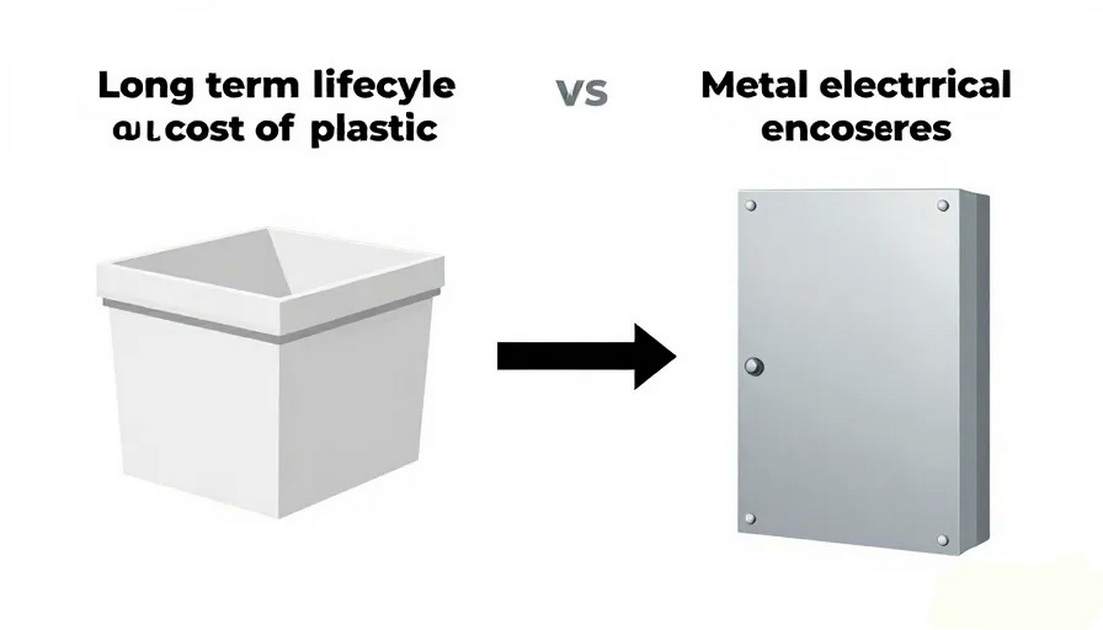
| Criteria | Plastic Electrical Box | Metal Electrical Box / Wall Mount Enclosure |
|---|---|---|
| Mechanical strength | Moderate, can crack under impact or overtightening lianjer | High, resists impact and deformation in demanding environments lianjer |
| Fire performance | Can soften or deform at elevated temperatures lianjer | Non-combustible, better structural integrity in faults lianjer |
| Electrical behavior | Non-conductive, no box grounding required lianjer | Conductive, must be properly grounded lianjer |
| Corrosion and weather | Good corrosion resistance, UV aging risk outdoors powersolutionme | Strong with coated steel or aluminum, widely used outdoors lianjer |
| Installation speed | Fast, lightweight, easy to cut and handle lianjer | Slightly slower; requires grounding and more robust mounting |
| Typical applications | Residential junctions, light-duty indoor circuits lianjer | Power distribution, automation, EV, pumps, industrial control powersolutionme |
| Cost | Lower upfront cost per unit lianjer | Higher unit cost but better lifetime value in harsh use armorlogix |
| Future upgrade flexibility | Limited, repeated work risks cracking lianjer | High, suitable for multiple rewires and expansion lianjer |
In EV charging stations and new energy storage systems, the trend is clearly toward metal wall mount enclosures with defined IP/NEMA ratings to protect sensitive power electronics and communication modules. These systems must resist: [eabel]
- Outdoor weather, dust, and water ingress
- Impact and tampering risks in public areas
- Thermal stress from continuous high current operation
Using plastic boxes in these contexts creates significant risk of premature failure, safety events, or non-compliance with national and international standards.
By contrast, custom-designed metal enclosures allow engineers to integrate thermal management, cable routing, EMC shielding, and service access, creating a robust platform for long-term operation.
As a dedicated sheet metal enclosure manufacturer with export experience to markets like the United States, Australia, the Middle East, and Southeast Asia, Ningbo Bohui offers: [bohuitechnology]
- Customized metal wall mount enclosures for power, communication, industrial automation, building management, and new energy applications
- Designs that meet CE and IP65 requirements for challenging environments [bohuitechnology]
- Engineering support to help you migrate from plastic boxes to robust metal cabinets when your project scale and risk profile demand it
Whether you are upgrading an existing system from plastic boxes or designing a new industrial control cabinet, partnering with an experienced metal enclosure manufacturer greatly reduces technical and project risk.
For light-duty residential installations, plastic electrical boxes remain a practical, low-cost choice. For critical systems—industrial automation, energy, EV charging, and building infrastructure—metal electrical boxes and wall mount enclosures provide the reliability, safety, and long-term value that professional users expect. [chintglobal]
If you are planning a new wall mount enclosure project or considering upgrading from plastic to metal enclosures, we recommend discussing your specific environment, standards, and expansion plans with a specialist team like Ningbo Bohui's engineering department. [bohuitechnology]
Contact our team to review your drawings or application and get a customized metal wall mount enclosure proposal that matches your electrical, mechanical, and environmental requirements.
Plastic weatherproof boxes exist and can be used outdoors for small loads such as wall lights or garden outlets, but they are less suited for heavy-duty or high-impact applications. For critical outdoor systems, metal enclosures with appropriate IP or NEMA ratings are generally recommended. [armorlogix]
Yes, metal boxes conduct electricity and must be properly bonded to the grounding system to avoid shock hazards if a conductor comes loose. This is a standard requirement in professional installations. [viox]
Industrial projects face higher mechanical stress, electrical load, and safety requirements, so they prioritize durability, fire performance, and secure locking, which are strengths of metal enclosures. Plastic boxes are more likely to crack or degrade under such conditions. [chintglobal]
Yes, in many cases you can upgrade to metal enclosures, but you must consider mounting, cable lengths, and grounding changes. Working with a manufacturer or integrator experienced in retrofit projects, such as Ningbo Bohui, helps ensure a smooth transition. [bohuitechnology]
For typical outdoor industrial environments, IP65 or higher is often recommended to protect against dust and water jets. Specific requirements may vary based on local code, weather conditions, and whether the enclosure is fully exposed or partially sheltered. [chintglobal]
1. Lianjie. "Plastic vs Metal Electrical Box: What's Best?"
<https://www.lianjer.com/plastic-vs-metal-electrical-box/> [lianjer]
2. Power Solution ME. "Metal vs. Plastic Electrical Back Boxes: Which One is Best for Your Project?"
<https://powersolutionme.com/blog/metal-vs-plastic-electrical-back-boxes-which-one-is-best-for-your-project/> [powersolutionme]
3. Armorlogix. "Plastic vs. Metal NEMA Enclosures."
<https://armorlogix.com/plastic-vs-metal-nema-enclosures/> [armorlogix]
4. CHINT Global. "What are the Considerations for Outdoor Wall Mount Enclosures?"
<https://www.chintglobal.com/global/en/about-us/news-center/blog/outdoor-wall-mount-enclosures.html> [chintglobal]
5. CHINT Global. "What Is Wall Mounting Enclosure Used for?"
<https://www.chintglobal.com/global/en/about-us/news-center/blog/wall-mounting-enclosure.html> [chintglobal]
6. Tim Kyle Electric. "Metal or Plastic for Your Home's Electrical Box?"
<https://timkylecompany.com/electrical-panel/metal-or-plastic-for-your-homes-electrical-box/> [timkylecompany]
7. Ningbo Bohui Technology Co., Ltd. "Metal Box Enclosures and Sheet Metal Distribution Boxes – About Us."
<https://bohuitechnology.com> [bohuitechnology]
8. E-abel. "EV Charging Enclosures and Control Panels – NEMA & IP Rated Solutions."
<https://www.eabel.net/knowledge-of-electrical-enclosures-en/ev-charging-enclosures-and-control-panels-nema-ip-rated-solutions/> [eabel]

2026-07-26

2026-07-24


