


Views: 222 Author: Amanda Publish Time: 2026-02-11 Origin: Site


Content Menu
● NEMA vs UL Ratings: Core Differences
>> Certification and Testing Approach
● How NEMA and UL Type Ratings Align
>> Common Non‑Hazardous Enclosure Types
● Why These Ratings Matter in Real Projects
● Application Scenarios: When to Choose NEMA vs UL
>> When NEMA Ratings Are Typically Enough
>> When UL Type Ratings Are Preferred or Required
● Practical Steps to Select the Right Enclosure
>> 2. Identify the Main Threats
>> 3. Check Compliance Requirements
>> 4. Map to NEMA and UL Types
>> 5. Select Material and Design Details
● Example: Industrial Automation and New Energy Storage
>> Indoor Battery Management and Control Cabinets
>> Outdoor Energy Storage Systems and Power Conversion
>> EV Charging and Building Power Distribution
● How a Professional Enclosure Manufacturer Can Help
● Take the Next Step: Get Expert Help for Your NEMA and UL Enclosures
● FAQs: NEMA vs UL Enclosure Ratings
>> 1. Are NEMA and UL enclosure ratings interchangeable?
>> 2. Do NEMA ratings guarantee UL listing?
>> 3. Which rating should I choose for outdoor installations?
>> 4. Is a higher Type number always better?
>> 5. How do I know if I need a UL Type enclosure?
Choosing between NEMA vs UL enclosure ratings is a critical decision that directly affects equipment safety, compliance, and long‑term reliability in power, communication, industrial automation, building, and new energy storage applications. Understanding the differences in standards, testing, and typical use cases will help you specify the right electrical enclosure and avoid costly failures or non‑compliance.

NEMA (National Electrical Manufacturers Association) is a U.S. trade association that develops standards for electrical equipment, including NEMA 250 for enclosure types and environmental protection. NEMA standards describe how an enclosure should perform against dust, water, corrosion, and other environmental factors, but they do not require third‑party certification.
UL (Underwriters Laboratories) is a global, independent safety science company that writes standards and performs third‑party testing and certification for electrical products and enclosures. UL enclosure Type ratings are defined mainly in UL 50 and UL 50E, which specify construction and environmental performance tests.
The key point is that NEMA mainly defines design and performance expectations, while UL combines standards with independent testing and ongoing factory surveillance.
- NEMA ratings
- Self‑declared by the manufacturer based on their own design and testing methods.
- No mandatory third‑party audit or factory inspection is required.
- UL Type ratings
- Require formal third‑party testing by UL or another accredited lab, plus ongoing inspections.
- Manufacturers must submit samples and maintain compliance with specific construction details and materials.
In practice, if you need independent proof that an enclosure meets a specific environmental or safety performance level, UL Type ratings usually carry more regulatory and customer weight than self‑declared NEMA ratings.
NEMA and UL both define Type numbers (Type 1, 3, 3R, 4, 4X, 12, etc.) that describe environmental protection, especially for non‑hazardous locations. In many cases, their Type descriptions are similar or functionally equivalent, but they are not officially interchangeable in every standard or specification.
| Type | NEMA focus (non‑hazardous) | UL Type focus (non‑hazardous) |
|---|---|---|
| 1 | Indoor, basic protection against contact and falling dirt. | Indoor, protection against access to live parts and falling dirt. |
| 3 / 3R | Outdoor, weather‑resistant against rain, sleet, and wind‑blown dust (3R emphasizes rain). | Outdoor weather protection with construction and test methods defined by UL 50/50E. |
| 4 | Indoor/outdoor, protection against wind‑blown dust and splashing or hose‑directed water. | Similar performance, with water spray and gasket leakage validated by UL tests. |
| 4X | Type 4 plus corrosion resistance for harsh or coastal environments. | Same Type 4X concept, with verified corrosion and sealing performance. |
| 12 / 12K | Indoor, dust‑tight, protection against dripping and light splashing of non‑corrosive liquids. | Indoor protection against dust, lint, fibers, and light splashing under UL 50E tests. |
Many engineers use a NEMA–UL equivalency chart to map approximate protection levels, but they still select the exact rating demanded by code, OEM specifications, or the end user.
Choosing between NEMA vs UL enclosure ratings affects multiple dimensions of a project:
- Regulatory compliance
Projects subject to UL listing, municipal inspections, or customer QA often specify a UL Type‑rated enclosure.
- Safety and uptime
Incorrect ratings can lead to water ingress, corrosion, or dust accumulation, causing short circuits, equipment damage, and unplanned downtime.
- Industry‑specific requirements
Power distribution, telecom, data centers, industrial automation, EV charging, and energy storage increasingly require documented environmental ratings aligned with NEMA 250 and UL 50/50E.
For example, a stainless steel NEMA/UL Type 4X enclosure is often specified for outdoor coastal EV charging stations or water treatment plants where salt spray and wash‑down are expected.
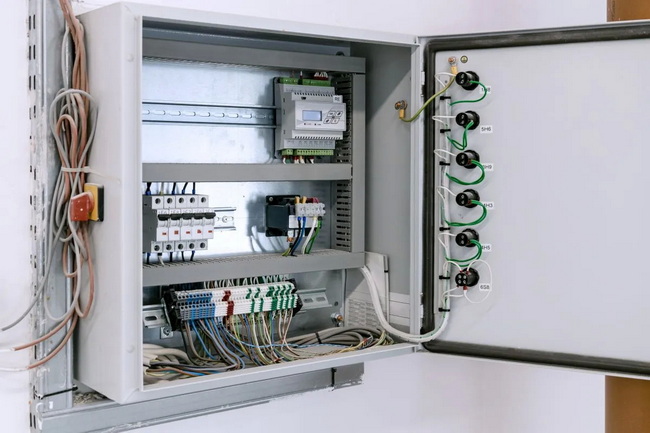
In some projects, a NEMA rating is sufficient and provides a cost‑effective solution:
- Internal plant upgrades where:
- Local standards do not explicitly require UL listed enclosures.
- The engineering team accepts manufacturer self‑declaration backed by internal testing.
- OEM and export projects where the buyer only specifies a NEMA Type (for example, a “NEMA 12 panel for indoor machine control”).
In these scenarios, a well‑designed NEMA‑rated enclosure can deliver reliable performance without the added cost of third‑party certification.
UL Type ratings are preferred or required when:
- Projects require UL‑listed panels or systems (for example, UL 508A industrial control panels) where the enclosure Type is part of the approval.
- Public infrastructure, commercial buildings, and critical systems need independent third‑party verification.
- Customers demand traceable test reports and periodic factory inspection as part of their vendor qualification.
When there is any uncertainty or mixed requirements, specifying an enclosure that is both NEMA‑rated and UL Type certified is often a robust solution that satisfies all stakeholders.
You can follow a simple five‑step process to select the right NEMA or UL Type enclosure for your application.
Clarify whether the enclosure will be installed indoors or outdoors, and identify conditions such as ambient temperature, presence of water, dust, oil, chemicals, or corrosive atmosphere. This environmental profile becomes the foundation for all later decisions.
Determine the primary risks that the enclosure must withstand, such as:
- Falling dirt only (Type 1)
- Weather and rain (Type 3 or 3R)
- Hose‑directed water and wash‑down (Type 4 or 4X)
- Airborne dust and fibers (Type 12 or 13)
- Corrosion and salt exposure (Type 4X)
Matching the enclosure Type to the dominant hazard ensures better protection and optimizes cost.
Review local electrical codes, customer specifications, and insurance requirements:
- If they reference UL listing, UL 508A panels, or specific UL Types, prioritize UL Type enclosures.
- If they only reference NEMA 250 Types, you may have flexibility to choose between NEMA‑only or NEMA + UL Type solutions.
Documenting these requirements early avoids redesigns and approval delays later in the project.
Use a NEMA–UL equivalency chart as a guide to map your environmental needs to likely Type numbers. Confirm:
- Which NEMA Type(s) address your conditions.
- Whether a corresponding UL Type is required or recommended.
Then select the exact Type number defined in the standard or specification you must follow.
Once the rating is fixed, choose suitable enclosure materials and construction details:
- Carbon steel for general industrial environments.
- Aluminum for reduced weight and good corrosion resistance.
- Stainless steel for aggressive, corrosive, or hygienic environments.
Also confirm gasket design, door hardware, mounting options, cable entry, and any ventilation or cooling requirements to support your devices and operating conditions.
In industrial smart manufacturing and energy storage systems, enclosures must handle combined challenges such as dust, vibration, wash‑down, and sometimes outdoor solar exposure.
Indoor battery management systems, data center equipment, and industrial control cabinets often use NEMA/UL Type 1 or 12 enclosures. These ratings focus on protecting personnel from live parts and preventing dust and light splashing from reaching sensitive electronics.
Outdoor energy storage containers and power conversion skids require weather‑resistant, corrosion‑resistant enclosures. Depending on the site, Type 3R, 4, or 4X performance can be appropriate to handle rain, snow, and wash‑down, or to mitigate the impact of coastal environments.
EV charging infrastructure and outdoor power distribution for commercial buildings frequently specify UL Type 3R or 4 enclosures. These ratings help ensure that breakers, contactors, and communication devices remain protected against rain and hose‑directed water.
In all these cases, working with a manufacturer that understands both NEMA and UL rating systems allows you to balance cost, performance, and compliance more effectively.
A specialized enclosure manufacturer plays a crucial role in transforming rating theory into reliable, real‑world solutions:
- Providing engineering support to interpret NEMA and UL requirements in the context of your specific project.
- Recommending the correct NEMA and/or UL Type based on environmental conditions, electrical layout, and industry standards.
- Designing and producing custom carbon steel, aluminum, or stainless steel enclosures to fit your equipment footprint and wiring scheme.
- Supplying drawings, material certificates, and rating documentation to support inspections and project approval.
For industries such as power distribution, telecom networks, industrial automation, building management, new energy storage, EV charging, and water projects, a knowledgeable manufacturing partner significantly reduces technical and compliance risk.
If you are planning projects in power systems, communication networks, industrial automation, building management, new energy storage, EV charging, or water applications, the right enclosure decision can determine the safety, reliability, and lifecycle cost of your equipment. Work with a professional enclosure manufacturer that understands both NEMA and UL rating systems, provides engineering support, and can deliver customized solutions matched to your real‑world environment. Contact our team today to discuss your drawings, technical requirements, and timelines, and get a tailored NEMA/UL enclosure solution that keeps your systems protected and your project on schedule.
Contact us to get more information!
Not always. Many NEMA and UL Type numbers provide similar environmental protection, but NEMA ratings are self‑declared while UL Types require third‑party certification. Specifications usually state exactly which system to follow, so you should comply with the one that is explicitly required.
No. A NEMA rating only indicates that the manufacturer claims the enclosure meets NEMA 250 criteria. UL listing requires independent testing, adherence to UL standards, and ongoing factory surveillance, which is a separate process from NEMA self‑declaration.
Outdoor applications often require Type 3 or 3R, 4, or 4X, depending on exposure to rain, snow, hose‑directed water, and corrosion. The correct choice depends on the actual site environment, local codes, and any specific customer requirements documented in the project specification.
No. Different Types are designed for different conditions, and a higher number does not automatically mean better protection in every scenario. For example, Type 4 focuses on hose‑directed water, while Type 12 focuses on indoor dust and light splashing; the right choice depends on your actual risks.
You should consider a UL Type enclosure if local regulations, customer specifications, or insurance requirements mention UL listing, UL 508A panels, or specific UL Type ratings. In those cases, selecting an enclosure that carries the appropriate UL Type mark will support compliance and simplify inspections.
1. https://library.e.abb.com/public/de77c7d173b840549bf684af347b4cc6/Technical_Note_025_Enclosure_ratings_UL_type_vs_NEMA.pdf
2. https://www.huimfg.com/blog/nema-ul-equiivalency
3. https://mencom.com/infographics/UL-NEMA-Ratings.pdf
4. https://www.cimon.com/blog/nema-ul-type-ratings
5. https://www.gesafety.com/engineering/hazard.shtml
6. https://www.gibsonstainless.com/about-gibson/ul-environmental-type-ratings/
7. https://www.bppmfg.com/enclosure-ratings-ul-type-vs-nema-whats-the-difference/
8. https://www.spire-is.com/what-are-the-national-electrical-manufacturers-association-nema-enclosure-types-for-non-hazardous-locations/
9. https://keystonecompliance.com/electrical-enclosure-ratings-overview/
10. https://www.westtoolenclosures.com/differences-between-nema-ul-type-4-enclosure
11. https://valveman.com/nema-ratings-explained
12. https://www.ul.com/services/environmental-rated-accessories-enclosures
13. https://svf.net/application/files/6617/0896/0006/Standards__NEMA_UL_and_CSA_Ratings.pdf
14. https://www.nemaenclosures.com/media/pdf/NE-NEMA-vs-UL-012314.pdf

2026-07-26

2026-07-24


