


Views: 212 Author: Bohui Electric Publish Time: 2026-07-15 Origin: Site


Content Menu
● Understanding Outdoor Electrical Enclosures
● Plan The Circuit Before You Touch Any Wires
● Tools, Materials, and Components You'll Need
● Safety Fundamentals Before Wiring
● Step‑By‑Step: How To Wire An Outdoor Electrical Enclosure
>> Step 1: Mount and Prepare the Enclosure
>> Step 2: Plan Cable Entry and Strain Relief
>> Step 3: Establish Grounding and Bonding
>> Step 4: Route, Cut, and Strip Conductors
>> Step 5: Make Reliable Connections Inside the Enclosure
● Cable Management: Order Inside, Durability Outside
● Weatherproofing and Final Closure
● Testing and Commissioning the Enclosure
● Advanced Considerations for Harsh Outdoor Environments
● When to Involve a Licensed Electrician
● User Feedback: Practical Lessons from Real Installations
● Practical Summary Table: Key Wiring Elements
● FAQs
>> 1. Can I run standard indoor cable directly into an outdoor enclosure?
>> 2. Do all outdoor enclosures need a separate grounding rod?
>> 3. How often should I inspect an outdoor electrical enclosure?
>> 4. What is the biggest mistake people make when wiring outdoor boxes?
>> 5. Can control signals and power conductors share the same enclosure?
Working with an outdoor electrical enclosure is one of those projects where design quality, installation skill, and long‑term reliability all meet in a single metal box. As a junction box and enclosure manufacturer serving power, communications, industrial automation, and new energy projects, we see every day how good wiring decisions can extend the life of equipment and protect people in harsh environments. [gnswireless]
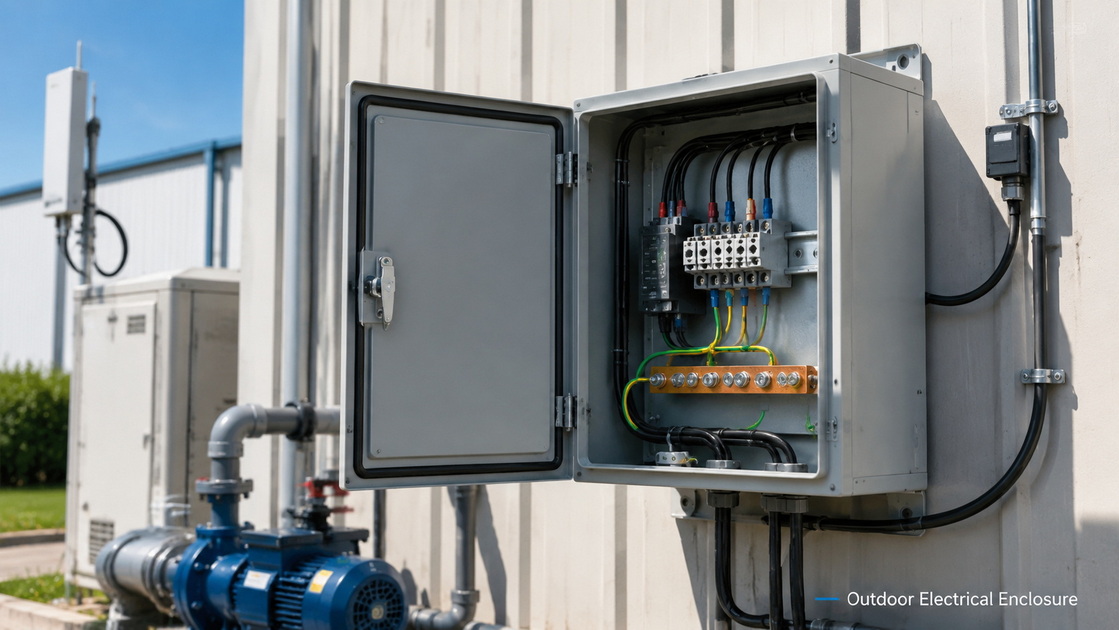
An outdoor electrical enclosure is a protective housing that keeps live components, terminations, and controls safe from rain, dust, UV, corrosion, and mechanical impact. Typical applications include distribution boxes for pumps, control panels for industrial machines, network junction points, EV charging support equipment, and small power cabinets for buildings or outdoor lighting. [zablecable]
Before touching a tool, always confirm:
- Applicable local electrical codes and standards
- Environmental exposure (sun, rain, salt, chemicals, vibration)
- The enclosure's rating (e.g., NEMA, IP) and material (steel, stainless, aluminum) [gnswireless]
For projects in power, communication, industrial manufacturing, and new energy storage, robust metal enclosures with proper gasketing and surface treatment typically provide better long‑term stability than thin plastic alternatives. [zablecable]
Good wiring starts with a clear single‑line plan on paper or in CAD. [nassaunationalcable]
Key planning steps:
- Define the load type: outlets, motors, pumps, control circuits, low‑voltage signals
- Determine voltage and phase: 120 V single‑phase, 240 V, or other
- Estimate current and select appropriate conductor size and protection [wikihow]
- Decide the routing method: buried cable, conduit, wall‑mounted runs, or pole‑mounted lines [dulley]
For outdoor use, many jurisdictions require specific cable types (e.g., UF, wet‑location THWN in conduit) and minimum burial depths for underground runs. Under‑sized conductors and poorly planned routes are two of the most common failure points we see in user feedback from pump stations and outdoor equipment cabinets. [nassaunationalcable]
A safe, durable enclosure wiring job depends on appropriate outdoor‑rated components. [nante]
Typical materials:
- Outdoor‑rated enclosure (NEMA / IP rating appropriate to the environment) [gnswireless]
- Circuit protection: breakers or fuses sized to the load [nassaunationalcable]
- Outdoor‑rated wiring (UF, THWN in PVC/metal conduit, or equivalent) [wikihow]
- Weatherproof cable glands or conduit fittings for entry points [nante]
- Termination hardware: Wago‑type connectors, terminal blocks, or properly rated lugs [youtube]
- Grounding hardware: grounding bar, wire, clamps, and bonding jumpers [gnswireless]
- Basic tools: wire strippers, screwdrivers, pliers, voltage tester, torque screwdriver [dulley]
A field‑tested best practice from outdoor cable specialists is to combine mechanical strain relief with sealed entries at every point where a cable transitions from open environment into a metal box. [nante]
Working inside an outdoor enclosure always involves increased risk because moisture, conductive dust, and metal housings all amplify the consequences of mistakes. [wikihow]
Always:
- De‑energize the circuit and verify with a voltage tester before opening the enclosure [wikihow]
- Lock out and tag out upstream sources on industrial sites
- Use insulated tools and appropriate personal protective equipment
- Keep the work area dry and free from standing water or conductive debris [dulley]
Experienced electricians repeatedly emphasize that many DIY accidents come from skipping basic verification: assuming the circuit is off without testing, or rushing ground connections at the end instead of treating them as a primary safety element. [youtube]
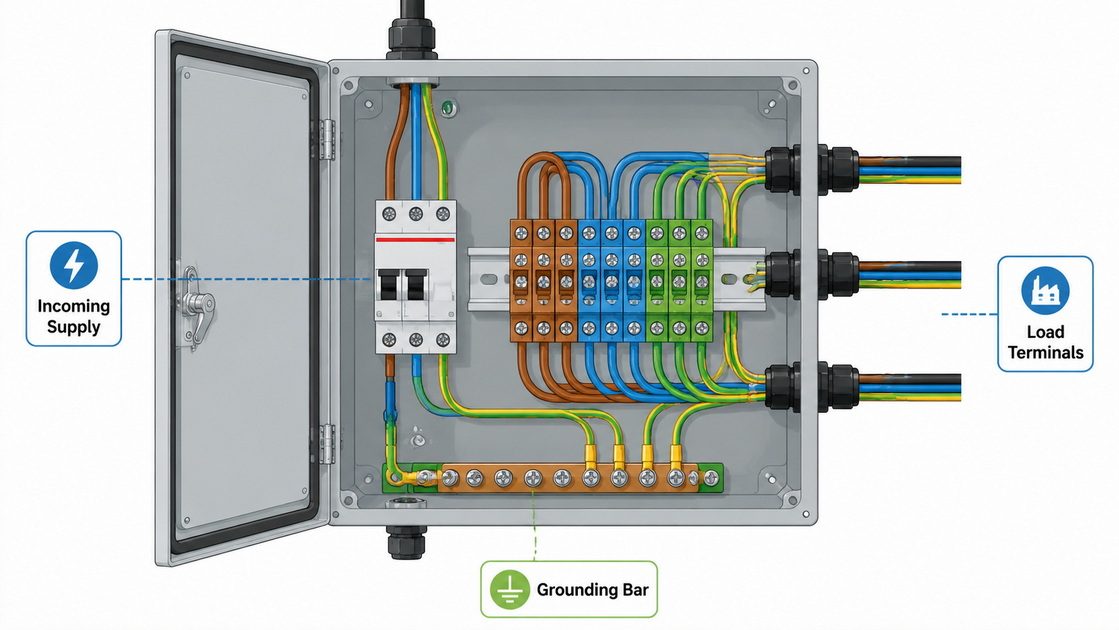
Start by mounting the enclosure securely on a wall, frame, pole, or dedicated support. [dulley]
- Use corrosion‑resistant hardware and brackets
- Maintain clearances required by local rules for working space and accessibility [nassaunationalcable]
- Check that the door opens fully and the gasket seats evenly all around [zablecable]
For metal junction boxes used in industrial and building applications, rigid mounting reduces vibration and protects terminal integrity over years of operation.
Each cable entering the enclosure should pass through rated glands or conduit fittings. [nante]
- Mark and drill or punch entry holes according to the enclosure design
- Fit cable glands or conduit hubs and tighten to manufacturer torque values
- Close any unused openings with listed plugs to prevent water ingress [nante]
Good user feedback from harsh‑environment sites stresses that open knockouts and loosely fitted hubs are among the fastest paths to condensation, corrosion, and eventual failure inside outdoor boxes. [zablecable]
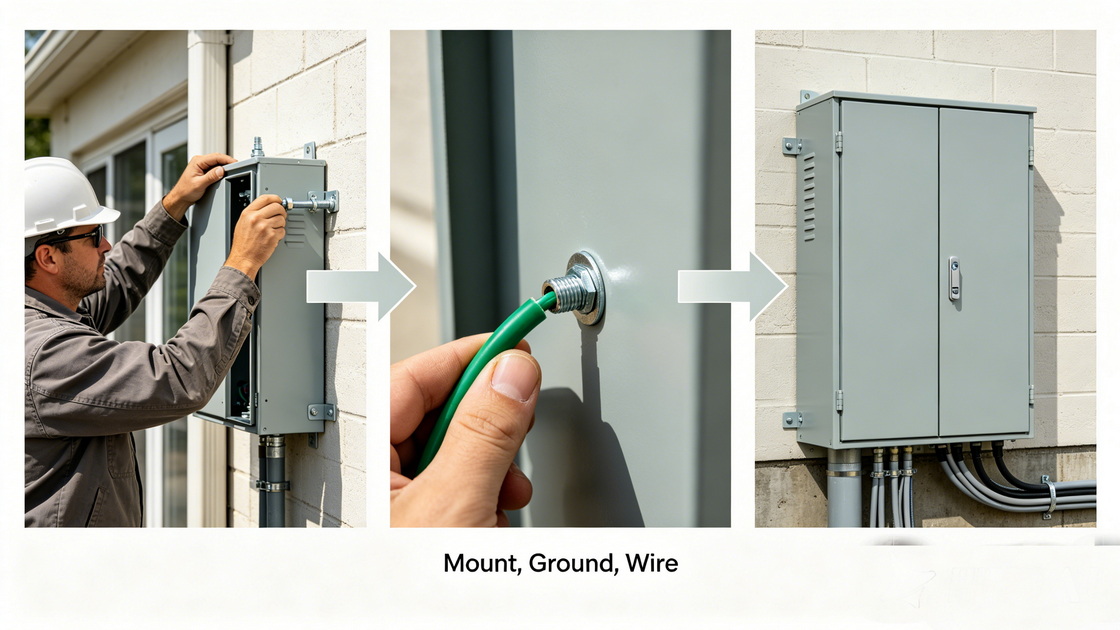
Grounding is not an afterthought; it is the foundation of any safe outdoor installation. [gnswireless]
- Connect the enclosure's ground stud or bar to the facility grounding system
- Bond doors, removable panels, and any sub‑plates if required by standards
- Use appropriately sized green or bare copper conductors and listed lugs [nassaunationalcable]
In systems like industrial automation cabinets, building service junction boxes, or new energy storage systems, we routinely see improved reliability when grounding is treated as a structured subsystem, not as a series of improvised jumpers.
With grounding in place, bring in the supply and load conductors. [dulley]
- Keep power, control, and low‑voltage signal cables separated where practical
- Follow minimum bending radii and support requirements for each cable type [wikihow]
- Cut and strip only as much insulation as needed for clean terminations
Outdoor wiring specialists note that over‑stripping and leaving exposed copper is a common cause of corrosion and intermittent faults, especially near coastal or industrial sites. [thewireguys]
Inside the box, aim for connections that are mechanically secure, electrically sound, and environmentally defended. [youtube]
Typical connection patterns:
- Line (hot) conductors to breakers, switches, or terminal blocks
- Neutral conductors to designated bars or terminals
- Equipment grounds to the grounding bar or stud [gnswireless]
For outdoor environments:
- Use listed connectors rated for moisture and temperature swings [youtube]
- Consider enclosed terminal blocks rather than loose splices where vibration is present
- Follow manufacturer torque specifications to avoid loose or damaged terminals [gnswireless]
Industry commentary on outdoor wiring increasingly highlights sealed or encapsulated connection solutions, such as heat‑shrink terminations or enclosed push‑in connectors, for long‑term reliability. [youtube]
A well‑wired outdoor enclosure looks organized when the door is open. [zablecable]
Good cable management practices:
- Use cable ties, ducts, or channels to group conductors by function
- Keep wires clear of hinges, sharp edges, and mounting hardware [gnswireless]
- Maintain accessible paths to terminals for future testing and maintenance
Feedback from facility maintenance teams consistently shows that tidy internal routing substantially reduces troubleshooting time and lowers the risk of accidental disconnection when someone works in the box years later. [thewireguys]
Once wiring and connections are complete, shift focus to environmental sealing. [nante]
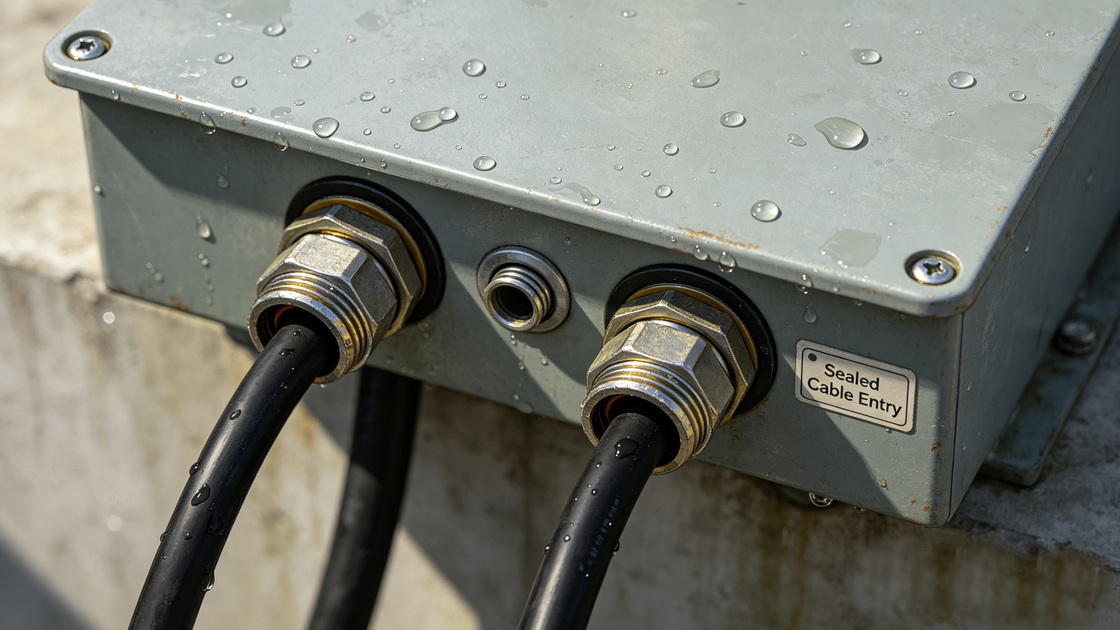
- Inspect gasket surfaces for damage or contamination
- Verify that all glands, hubs, and plugs are tight and correctly assembled [nante]
- Close the door or cover and fasten all latches or screws evenly
Where there is regular exposure to driving rain, industrial mist, or outdoor washdown, many technicians add a visual inspection step: checking for any unsealed path along cable entries or hinge lines that could channel water inside over time. [zablecable]
Before putting the enclosure into service, perform systematic tests. [youtube]
Recommended checks:
- Verify insulation resistance and continuity where required
- Confirm correct polarity (line, neutral, ground) at outlets or terminal points
- Operate switches and controls to ensure expected function under load [homedepot]
Some outdoor wiring guides also call for periodic re‑tests after the first seasonal cycle, especially in climates with large temperature swings or freeze‑thaw effects, so that early issues can be corrected before they become failures. [thewireguys]
In sectors like industrial manufacturing, new energy storage, and outdoor pump systems, enclosures often face extreme conditions: wide temperature ranges, aggressive chemicals, or constant vibration. [thewireguys]
Additional strategies:
- Choose enclosure materials and coatings suited to corrosion risks
- Use ventilated or climate‑controlled cabinets where condensation is likely
- Specify vibration‑resistant terminals and rugged cable supports for machinery [thewireguys]
Recent guidance on outdoor cabling suggests that protecting conductors with proper insulation, grounding discipline, and mechanically secure installation can dramatically improve service life and uptime. [nassaunationalcable]
There is a clear line between simple projects and systems where professional involvement is strongly recommended. [dulley]
You should consider engaging a licensed electrician if:
- The enclosure is part of a main distribution system or high‑current circuit
- Local rules require inspected work for new outdoor circuits [wikihow]
- You are not fully comfortable interpreting code requirements or protection device sizing
Many step‑by‑step guides remind non‑specialists that the cost of expert help is small compared with the risk of concealed faults in outdoor systems that may only reveal themselves under adverse conditions. [thewireguys]
From user reviews and project reports on outdoor wiring, several recurring lessons stand out. [youtube]
Most appreciated improvements:
- Clear labeling of circuits and terminations inside the enclosure
- Generous working space around terminal blocks and devices
- Robust cable support outside the enclosure to avoid pull‑out or fatigue [nassaunationalcable]
Most common regrets:
- Underestimating weather exposure and choosing light‑duty boxes
- Neglecting to close unused openings or fully tighten glands [nante]
- Forgetting that future technicians will need room and clarity to work safely
Manufacturers who specialize in junction box enclosures for power, communication, and industrial systems often design layouts with these user comments in mind: reinforcing corners, improving door hardware, and optimizing internal space for clean routing and labeling.
| Aspect | Good Practice in Outdoor Enclosures |
|---|---|
| Enclosure rating | Use housings rated for moisture, dust, and impact in the installation area gnswireless |
| Cable type | Select conductors approved for outdoor or wet locations and support spacing rules nassaunationalcable |
| Entry and sealing | Install weatherproof glands or hubs and close every unused opening gnswireless |
| Grounding and bonding | Bond metal parts and connect to the grounding system with properly sized conductors gnswireless |
| Internal connections | Use listed connectors suited to temperature and moisture; avoid exposed copper gnswireless |
| Inspection and testing | Test for correct polarity, continuity, and function before regular use homedepot |
Indoor‑only cable types are usually not acceptable where exposed to moisture or direct weather; outdoor or wet‑location conductors and protective raceways are typically required. [wikihow]
Not every enclosure needs its own rod; many systems bond housings to an existing facility grounding network, but some installations specify individual grounding electrodes. [nassaunationalcable]
Many guidance documents recommend periodic inspection, especially after major weather events or seasonal changes, to check seals, corrosion, and cable integrity. [thewireguys]
Common problems include poor sealing of entries, loose or unprotected connections, and ignoring support spacing and mechanical strain on cables. [youtube]
They often do, but good practice is to maintain physical separation and organized routing to reduce interference and simplify maintenance. [zablecable]
1. GNS Wireless – "How to wire an outdoor NEMA enclosure with 120V AC"
[https://www.gnswireless.com/blog/nema-enclosure/wiring-an-outdoor-nema-enclosure/] [gnswireless]
2. Nante – "Safety Tips for Using Electrical Outdoor Box"
[https://www.nante.com/news/industry-news/safety-tips-for-using-electrical-outdoor-box.html] [nante]
3. Home Depot – "How to Install an Outdoor Outlet"
[https://www.homedepot.com/c/ah/how-to-install-an-outdoor-outlet/9ba683603be9fa5395fab905e702719] [homedepot]
4. Nassau National Cable – "NEC Rules for Outdoor Wiring"
[https://nassaunationalcable.com/blogs/blog/nec-rules-for-outdoor-wiring] [nassaunationalcable]
5. wikiHow – "How to Install Outdoor Electric Wiring"
[https://www.wikihow.com/Install-Outdoor-Electric-Wiring] [wikihow]
6. Zable Cable – "How to Protect Outdoor Cables from Harsh Environments?"
[https://zablecable.com/outdoor-cable-enclosures/] [zablecable]
7. The Wire Guys – "Tips for Outdoor Wiring in Canada"
[https://www.thewireguys.ca/post/tips-for-outdoor-wiring] [thewireguys]
8. YouTube – "Dangerous Mistakes DIYers Miss When Installing Outdoor …"
[https://www.youtube.com/watch?v=SHLxvRBxCE4] [youtube]
9. YouTube – "Outdoor Wire Connections Best Practices for Reliability"
[https://www.youtube.com/watch?v=49gEzVNEPgI] [youtube]
10. Dulley – "How to Install Outdoor Wiring"

2026-07-26

2026-07-24


