


Views: 211 Author: Bohui Electric Publish Time: 2026-07-04 Origin: Site


Content Menu
● Introduction: Why Your Electrical Post Enclosure Matters
● What Is an Electrical Post Enclosure?
● Core Design Principles for Electrical Post Enclosures
>> 1. Safety and Standards First
>> 2. Proper Sizing and Internal Space
● Choosing the Right Materials and Finish
>> 1. Metals for Structural Strength
>> 2. Surface Treatment and Corrosion Protection
● Step‑by‑Step: How to Make an Enclosure for an Electrical Post
>> Step 1: Define Application and Requirements
>> Step 2: Design the Enclosure Geometry
>> Step 3: Plan Internal Layout and Cable Management
>> Step 4: Fabrication – Cutting, Bending, and Welding
>> Step 5: Surface Treatment and Assembly
>> Step 6: Device Mounting, Wiring, and Testing
● Mounting the Enclosure on a Post or Pedestal
>> Pole or Mast‑Mounted Enclosures
● Ventilation, Thermal Management, and Working Environment
>> 1. Ventilation and Heat Control
>> 2. Environmental Ratings and Protection
● Accessibility, Labelling, and Maintenance UX
● Expert Tips from Industrial Enclosure Manufacturing
● Recommended Call to Action (CTA)
>> Q1. What standards should an electrical post enclosure comply with?
>> Q2. Which material is best for outdoor electrical post enclosures?
>> Q3. How do I manage heat inside an electrical post enclosure?
>> Q4. Can I mount the enclosure on an existing pole?
>> Q5. Do I need a qualified electrician to install the post enclosure?
Designing and making an enclosure for an electrical post is not just a fabrication job—it is a safety‑critical engineering task that protects people, equipment, and power reliability in harsh outdoor environments. As an industrial manufacturer of metal electrical enclosures serving power, telecom, EV charging, industrial automation, and building projects, I've seen how a well‑engineered post enclosure can significantly reduce failures, downtime, and safety incidents over the life of a project. [youtube]
In this guide, I'll walk you through how to make an enclosure for an electrical post from concept to installation, combining hands‑on manufacturing know‑how with industry best practices for standards, materials, layout, and mounting. [kdmsteel]

An electrical post enclosure is a vertical, free‑standing or pole‑mounted housing that protects power outlets, control devices, or low‑voltage equipment outdoors or in semi‑outdoor environments. Unlike wall‑mounted panels, post enclosures must handle 360° exposure to weather, impact, and public access while still allowing safe, convenient maintenance. [mechpowertech]
Common applications include:
- Outdoor power posts for parks, campgrounds, and parking lots. [youtube]
- EV charging stations and smart energy posts. [mechpowertech]
- Field control posts for pumps, lighting, or small industrial equipment. [youtube]
Before you start cutting metal, you need clear design rules that support both safety and serviceability. [youtube]
Your enclosure design must align with national and local electrical codes and recognized standards such as NEMA or IEC/EN/UL equivalents for dust, water, and impact protection. These ratings define whether the enclosure is suitable for rain, snow, dust, corrosive environments, or hazardous locations, and they heavily influence material and sealing choices. [proax]
Key points to consider:
- NEMA/IP ratings for weatherproof or dust‑tight performance. [proax]
- Compliance with local depth and conduit routing rules for underground feeds. [youtube]
A good enclosure is big enough to work in, but compact enough to be economical. Internal volume should accommodate all devices, wiring, and future upgrades, while leaving clear cable routing paths and space for heat dissipation. [instructables]
When planning size:
- Lay out all components and connectors physically or in CAD before finalizing dimensions. [instructables]
- Allow extra clearance for door opening, cable bending radius, and tool access. [mechpowertech]
Material choice directly affects durability, cost, and corrosion resistance, especially on a post that may stand outdoors for a decade or more. [proax]
For industrial electrical posts, sheet steel and stainless steel remain the most common options because they combine strength, security, and good fabrication characteristics. [dohoelectric]
Typical choices:
- Cold‑rolled steel with powder coating for general outdoor use.
- Stainless steel (304/316) for coastal, chemical, or highly corrosive sites. [proax]
To make the enclosure last, you need a robust surface treatment system, especially at welds and cut edges. Powder coating, galvanizing, or a multi‑layer paint system can significantly extend service life while maintaining a professional appearance. [dohoelectric]
This section outlines a practical manufacturing flow that an industrial shop would use to build a metal post enclosure, adapted for project owners, engineers, and purchasing managers. [kdmsteel]
Start with a clear technical document that answers:
1. Environment: Indoor, outdoor, coastal, industrial plant, or hazardous area. [mechpowertech]
2. Voltage and load: Single‑phase or three‑phase, control or power circuits, maximum current. [youtube]
3. Devices inside: Breakers, contactors, outlets, communication modules, metering. [instructables]
4. Access level: Public access (park power post) vs. restricted industrial area. [youtube]
This requirements step informs NEMA/IP rating selection, material, locking method, and internal layout. [proax]
Next, design the structure of the post and housing:
- Determine height and footprint based on ergonomic access and cable entry routes. [youtube]
- Choose door type: single door, double door, or removable cover for maintenance. [youtube]
- Plan mounting features: base plate holes, pole clamps, anchor brackets, and internal mounting rails. [youtube]
For industrial posts, free‑standing designs often use a base plate with concrete anchors and internal channels for cable routing from underground conduit. [youtube]
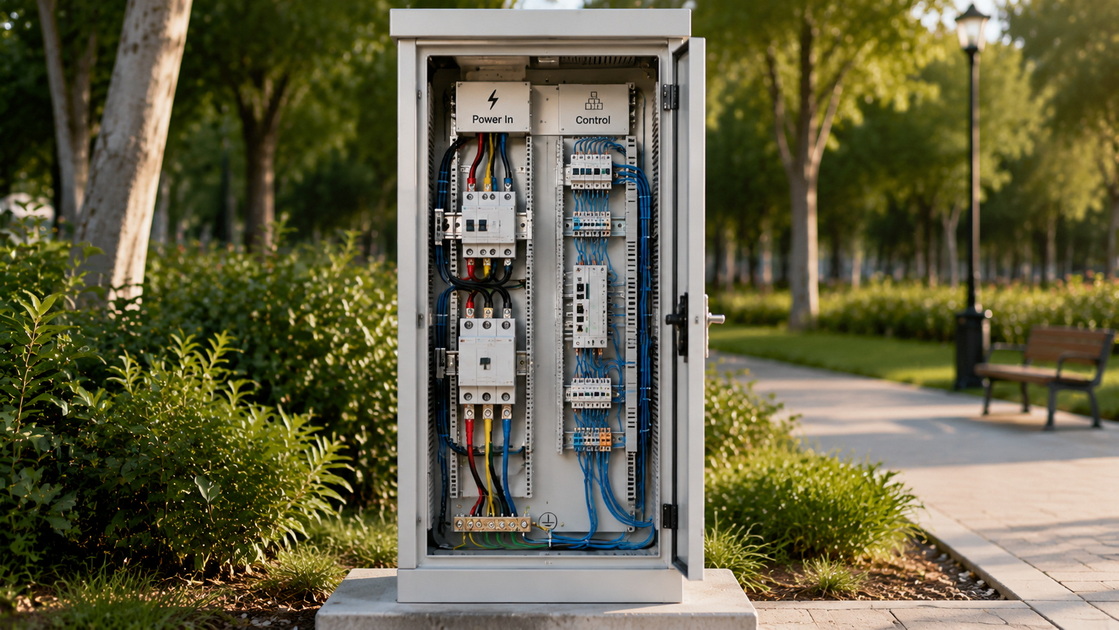
Good internal layout is one of the most underrated factors in enclosure performance. [mechpowertech]
Best practices:
- Separate power wiring from control or communication wiring to reduce interference and improve safety. [youtube]
- Use DIN rails and cable trays to keep wiring organized and accessible for technicians. [mechpowertech]
- Group devices logically: incoming switchgear at the top or accessible side, downstream circuits arranged to minimize live contact risk. [youtube]
Effective cable management reduces overheating, supports ventilation, and cuts maintenance time dramatically. [mechpowertech]
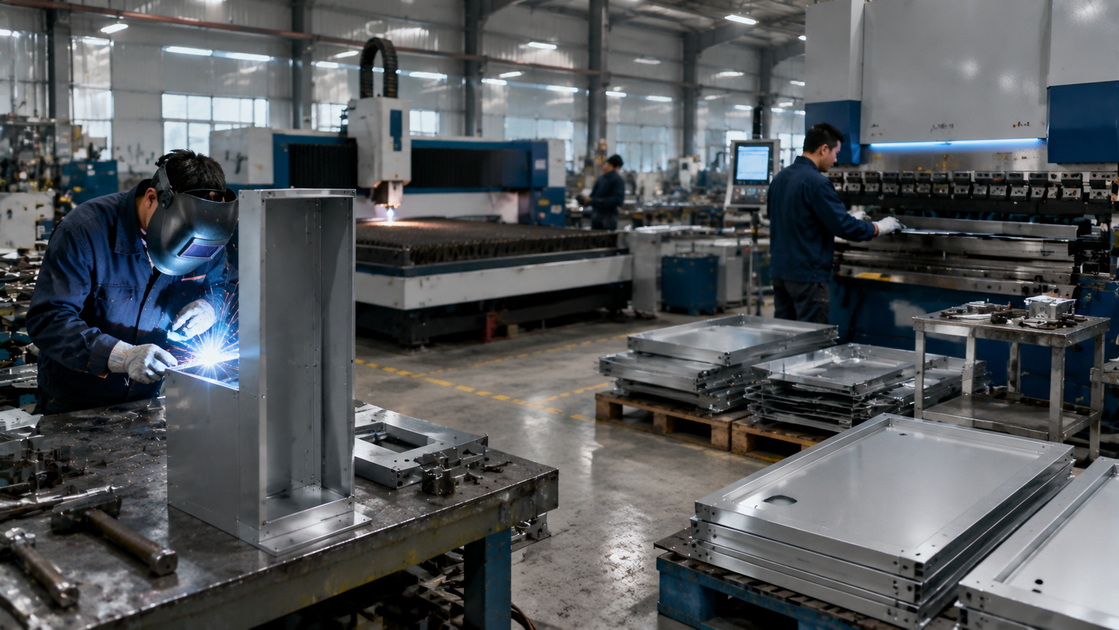
With engineering drawings ready, fabrication typically follows these steps in an industrial sheet‑metal shop: [dohoelectric]
1. Cutting: Laser or CNC punching of sheet metal panels and internal brackets.
2. Bending: CNC press brake forming of side walls, doors, and mounting flanges. [dohoelectric]
3. Welding: Assembling frames, reinforcing corners, and attaching base plates. [dohoelectric]
At this stage, tolerances for door fit, gasket grooves, and hinge alignment are critical to ensure a weather‑tight, easy‑to‑operate enclosure when finished. [proax]
After fabrication:
- Apply cleaning, powder coating, or galvanizing to protect metal surfaces. [dohoelectric]
- Install gaskets, hinges, locks, and mounting hardware. [proax]
- Assemble DIN rails, brackets, and cable management accessories internally. [youtube]
Industrial quality control may include thickness checks, adhesion tests, and visual inspection to ensure coating uniformity and long‑term durability. [dohoelectric]
Once the enclosure shell is ready:
- Mount breakers, outlets, meters, or communication devices per manufacturer instructions. [instructables]
- Route cables through conduits, glands, and cable trays, maintaining bend radius and separation between voltage levels. [mechpowertech]
- Perform functional tests and insulation checks before energizing the post. [youtube]
Qualified installers must follow national and local codes, and power must be disconnected during installation and most maintenance activities. [youtube]
An electrical post enclosure can be free‑standing in concrete or mounted to a pole or mast. [youtube]
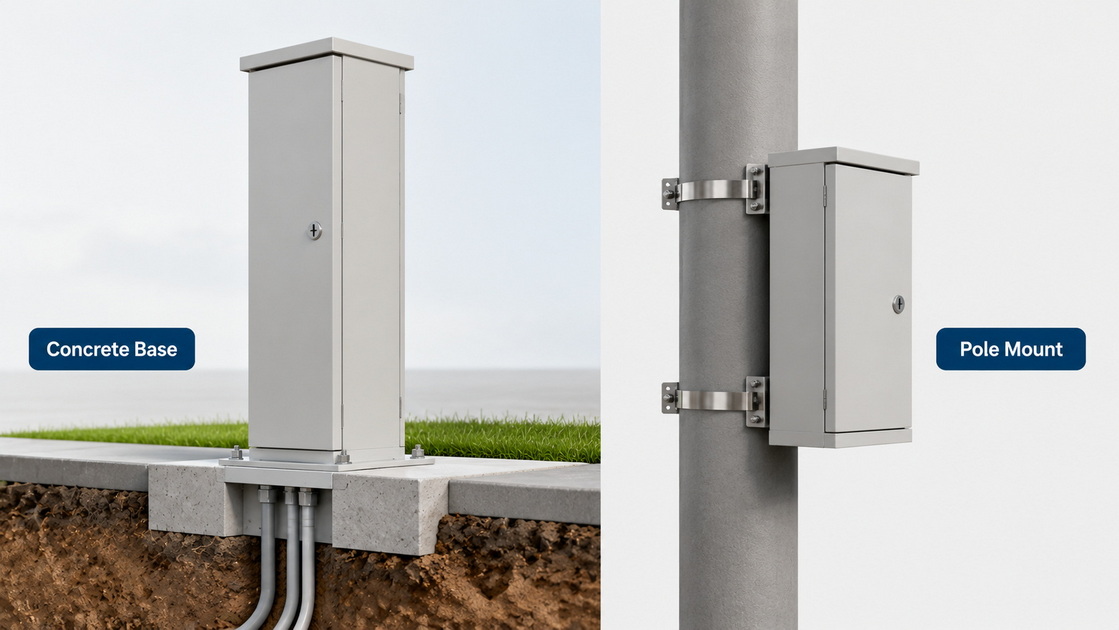
For a new free‑standing post:
- Dig a hole of appropriate diameter and depth (e.g., around 12 inches deep for some park posts, depending on code and load). [youtube]
- Run supply conduits to the hole at the correct trench depth per local regulations. [youtube]
- Use industrial concrete anchors to secure the base plate or mounting strut, ensuring the enclosure is level and the concrete is strong enough. [youtube]
When mounting a small or medium enclosure to an existing pole:
- Use mounting struts and clamps rated for the enclosure weight and wind load. [youtube]
- Ensure the pole or mast is strong, properly footed, and resistant to bending. [youtube]
- Position the enclosure for safe technician access and cable routing. [youtube]
Electrical posts often house devices that generate heat and must face varying temperatures, humidity, and sun exposure. [mechpowertech]
Adequate ventilation prevents heat buildup and reduces the risk of component failure or even explosion in certain environments. Designers should consider: [mechpowertech]
- Natural ventilation through vents and internal spacing.
- Heat‑generating components placement away from sensitive electronics. [youtube]
The working environment — rain, dust, chemicals, or hazardous gases — determines the required rating and special protections. For classified locations, enclosures must be specially designed with added protection and strict adherence to safety standards. [proax]
From a user‑experience angle, a good post enclosure is not just safe; it's easy to understand and work on. [youtube]
Key UX‑enhancing elements:
- Clear labelling of circuits, devices, and enclosure ratings on the door or inside panel. [mechpowertech]
- User‑friendly access with doors that open fully and internal components arranged for troubleshooting. [youtube]
- Locking systems that balance security with authorized technician access. [youtube]
Clear labels help both businesses and individuals select and use the right enclosure, reducing confusion about application suitability and materials. [mechpowertech]
Drawing on industrial manufacturing practices, here are expert tips that can elevate your electrical post enclosure above generic, off‑the‑shelf solutions. [dohoelectric]
- Design for future expansion: Leave spare capacity in both physical space and wiring architecture for later devices or upgraded breakers. [instructables]
- Standardize internal layouts: Use consistent internal arrangements across multiple posts to simplify maintenance and training. [dohoelectric]
- Plan field wiring paths early: Coordinate with civil and electrical teams on conduit locations, trench depth, and access clearances. [youtube]
- Align with sector needs: For EV charging, water pumps, telecom, or industrial automation, adjust materials, ratings, and interface points to match typical field requirements in each domain. [proax]
To turn readers into leads or customers, end your article with a clear, targeted CTA such as:
> Need a custom electrical post enclosure for your project?
> Contact our engineering team today for OEM/ODM design support, material selection, and turnkey manufacturing for power, telecom, EV, industrial automation, and building applications.
This encourages direct inquiry for custom solutions, positioning your company as an expert partner rather than just a component supplier. [dohoelectric]
A1: Depending on your country and application, look for NEMA or IEC/EN/UL ratings that define water, dust, and impact protection, and always follow local electrical codes. [axaxl]
A2: Powder‑coated steel is widely used for general outdoor conditions, while stainless steel is preferred for coastal, chemical, or highly corrosive environments. [proax]
A3: Provide adequate ventilation, separate power and control wiring, and ensure enough internal space around heat‑generating devices to prevent hot spots. [mechpowertech]
A4: Yes, many enclosures can be pole‑mounted using struts and clamps, as long as the pole can safely support the weight and wind load and is properly footed. [youtube]
A5: Yes, installation should be performed by a qualified person following national and local electrical codes, with power disconnected during the work. [youtube]
1. KDM Steel – *How To Build An Electrical Enclosure: The Complete Guide*
https://www.kdmsteel.com/how-to-build-an-electrical-enclosure/ [kdmsteel]
2. Proax Technologies – *Selecting Industrial Electrical Enclosures*
https://proax.ca/en/blog/post/selecting-industrial-electrical-enclosures [proax]
3. MechPowerTech – *6 Electrical Panel Enclosure Design Tips for Industrial Controls*
https://mechpowertech.com/blog/panel-mount-enclosures-17/6-electrical-panel-enclosure-design-tips-for-industrial-controls-50 [mechpowertech]
4. DBK USA – *A Practical Guide to Electronic Enclosure Design*
https://www.youtube.com/watch?v=AmM_6pz52aM (article and video content) [youtube]
5. Instructables – *Building an Electronics Enclosure*
https://www.instructables.com/Building-an-Electronics-Enclosure/ [instructables]
6. Doho Electric – *Electrical Enclosure Manufacturing: How Are Enclosures Made?*
https://dohoelectric.com/electrical-enclosure-manufacturing-how-are-enclosures-made/ [dohoelectric]
7. YouTube – *Mounting Electrical Enclosures*
https://www.youtube.com/watch?v=Kt1pRqhum1Y [youtube]
8. TayMac – *ParkPost Installation*
https://www.youtube.com/watch?v=kxlXnwJukG4 [youtube]

2026-07-26

2026-07-24


