


Views: 222 Author: Bohui Electric Publish Time: 2026-07-13 Origin: Site


Content Menu
● What Does It Mean to Ground a Metal Junction Box?
● Why Proper Grounding Matters for Safety and Compliance
● Tools and Materials You Need
● Step‑by‑Step: How to Ground a Metal Junction Box
>> Step 1: Turn Off and Verify Power
>> Step 2: Identify the Grounding Conductors
>> Step 3: Attach a Grounding Screw or Clip to the Box
>> Step 4: Create a Grounding Pigtail (Bonding Jumper)
>> Step 5: Tie All Grounding Conductors Together
>> Step 6: Inspect, Re‑assemble, and Test
● Common Mistakes to Avoid When Grounding a Metal Box
● Grounding Metal Junction Boxes in Industrial and OEM Applications
● How High‑Quality Metal Enclosures Simplify Grounding
● When to Call a Licensed Electrician
● FAQs: Grounding Metal Junction Boxes
>> 1. Do all metal junction boxes need to be grounded?
>> 2. Can I use the mounting strap of a device as the ground?
>> 3. What size wire should I use for grounding a metal box?
>> 4. Is there a difference between grounding a small junction box and a large industrial enclosure?
>> 5. Can I ground multiple boxes using the same grounding conductor?
To ground a metal junction box safely and "up to code," you must bond the box to the equipment grounding conductor (EGC) using a dedicated ground screw, clip, or bonding jumper so any fault current flows back to the source and trips the breaker instead of energizing the metal enclosure. This step is mandatory for metal boxes in most modern electrical codes and is equally critical whether you are grounding a small residential box or a large industrial enclosure. [linkwellelectrics]
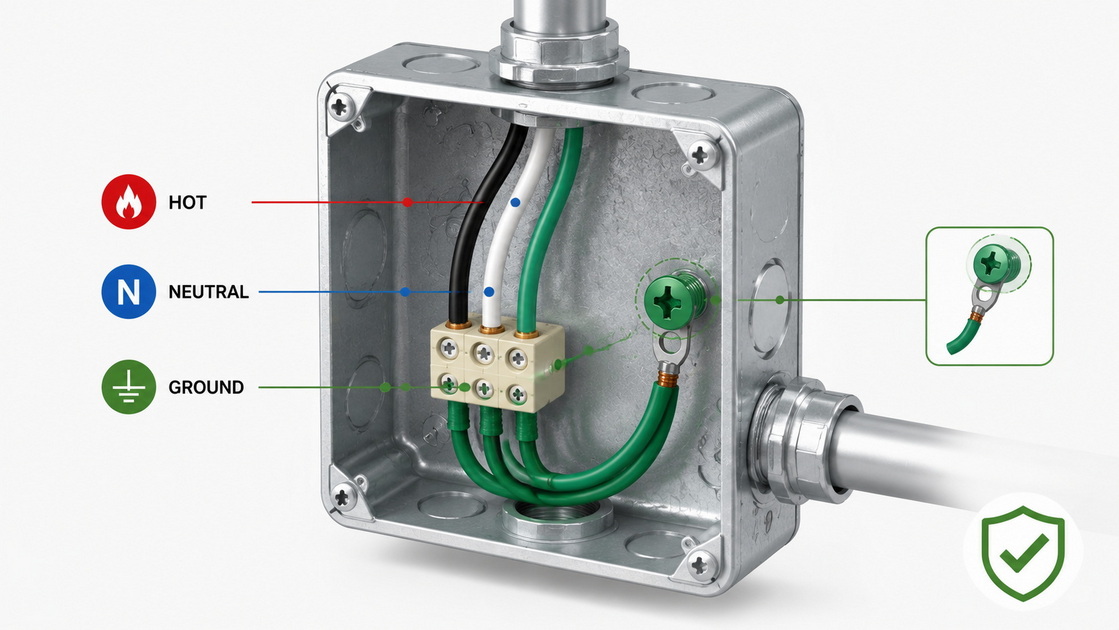
Grounding (or bonding) a metal junction box means connecting its metal body to the system's equipment grounding conductor so the box stays at earth potential during normal operation and during faults. If a live conductor accidentally touches the metal enclosure, this low‑resistance path allows a high fault current to flow, forcing the protective device (breaker or fuse) to trip quickly. [kdmsteel]
In practice, grounding a metal junction box usually involves a bare or green insulated copper wire attached to the box with a listed grounding screw, clip, or lug and tied into the rest of the grounding system. This applies to surface‑mounted boxes, recessed wall boxes, and larger industrial junction or control enclosures. [static.nhtsa]
From both a homeowner's and an industrial engineer's perspective, grounding is not just a best practice—it's a frontline safety control. Without proper grounding, a metal junction box can become energized and deliver a potentially fatal shock if someone touches it while standing on a grounded surface. [youtube]
As a manufacturer serving power, communications, building, and new energy sectors, we also see grounding as essential to system reliability and regulatory compliance. A properly grounded enclosure helps ensure fast fault clearance, reduces equipment damage, and supports compliance with standards such as NEC‑based requirements in North America and IEC‑based practices globally. [s1.solacity]
Before you start, gather the correct tools and components so the job is safe, efficient, and code‑compliant. [linkwellelectrics]
Basic tools: [static.nhtsa]
- Insulated flathead and Phillips screwdrivers
- Wire strippers and combination pliers
- Voltage tester or non‑contact voltage detector
- Needle‑nose pliers for tight boxes
Grounding hardware: [youtube]
- Green 10‑32 or 6‑32 grounding screw (matched to box's threaded hole)
- Bare or green insulated copper ground wire (pigtails)
- Grounding clip designed for metal junction boxes
- Wire connectors (e.g., green wire nuts, Wago‑type terminals rated for grounding)
For larger industrial enclosures, you may also need grounding bars, mechanical lugs, or rated bonding jumpers to connect doors, panels, and external conduits. [kdmsteel]
The following procedure blends residential best practices with industrial enclosure grounding principles. Always follow local code and, when in doubt, consult a licensed electrician. [linkwellelectrics]
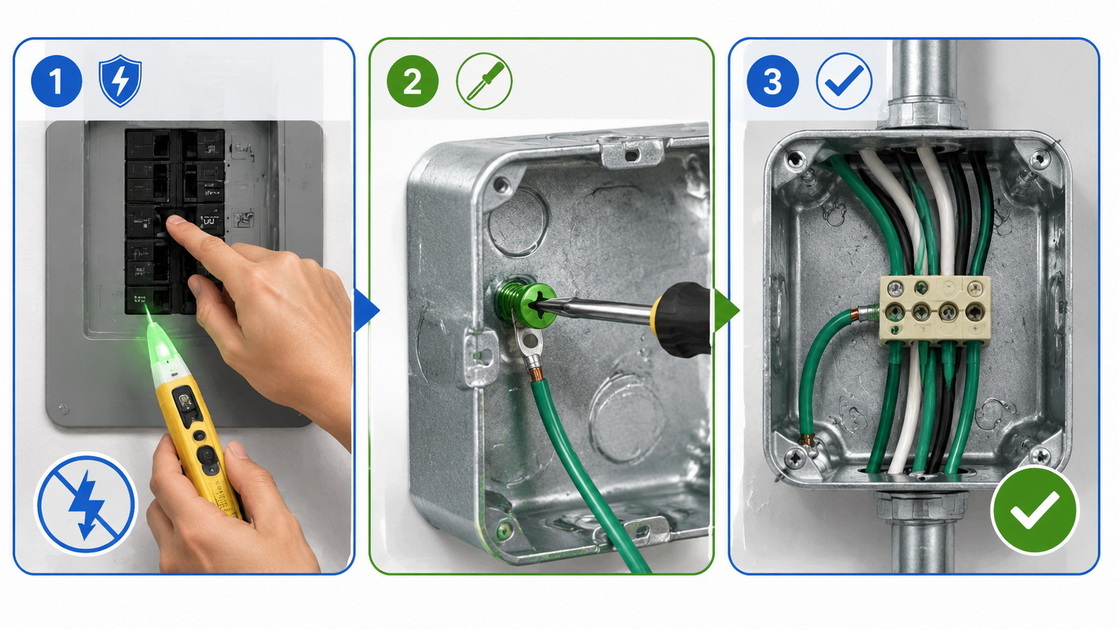
1. Switch off the correct breaker feeding the junction box. [s1.solacity]
2. Use a voltage tester on all conductors in the box to confirm power is off before touching any wires. [static.nhtsa]
This double‑check is a non‑negotiable safety step for both home DIYers and plant technicians. [s1.solacity]
Inside the metal junction box you should see: [kdmsteel]
- Hot (live) conductors – typically black, red, or brown
- Neutral conductors – typically white, gray, or blue
- Grounding conductors – bare copper or green insulation
In many circuits multiple cables enter the box, each with its own bare or green ground wire that must be tied together and bonded to the box itself. For industrial enclosures, the EGC may be a larger copper conductor or a grounding bar already installed on the back panel. [linkwellelectrics]
Most metal junction boxes include a tapped hole or raised "bump" specifically for a grounding screw. [youtube]
- Install a listed green grounding screw into this threaded hole from inside the box and tighten it securely. [youtube]
- Alternatively, install a listed grounding clip on the edge of the box and insert the ground wire into the clip before snapping it in place as demonstrated in common field training videos. [youtube]
The goal is to create a durable, low‑resistance connection between the copper grounding conductor and the metal body of the box. [kdmsteel]
To avoid relying on device mounting screws for grounding, many codes and manufacturers recommend using a separate pigtail to bond the box to the grounding system. [static.nhtsa]
1. Cut a short length (typically 6–8 inches) of bare or green insulated copper wire. [linkwellelectrics]
2. Strip about 10–12 mm of insulation off one end. [linkwellelectrics]
3. Attach this pigtail under the grounding screw or clip you installed, tightening firmly. [youtube]
In some pre‑made pigtails, the grounding screw and hook are already formed, simplifying the installation and improving consistency. [youtube]
Next, join all ground wires into a single, continuous grounding network. [static.nhtsa]
- Twist together the incoming bare/green ground wires and the new box pigtail using an approved wire connector (such as a green wire nut or a multi‑port connector rated for grounding). [youtube]
- For receptacles or switches with a grounding terminal, add another pigtail from this joint to the device's green screw to maintain continuity. [s1.solacity]
A practical field tip from modern installers is to use multi‑port connectors (e.g., Wago‑type) to keep the ground bundle compact, especially in crowded boxes. [youtube]
Before closing the box:
- Confirm that no bare ground wire can touch a live terminal or sharp edge. [diyquickly]
- Ensure all terminations are tight and that the grounding screw or clip is firmly seated. [static.nhtsa]
- Carefully tuck wires back into the box, re‑install the device (if any) and cover plate or enclosure door. [static.nhtsa]
Once you restore power, use a receptacle tester or multimeter to verify correct wiring and grounding continuity. In industrial settings, a low‑resistance ohmmeter (ground tester) may be used to confirm that the enclosure ground path is well below the required resistance threshold. [kdmsteel]
From customer feedback and site audits, we see recurring grounding issues that can compromise safety and code compliance. [kdmsteel]
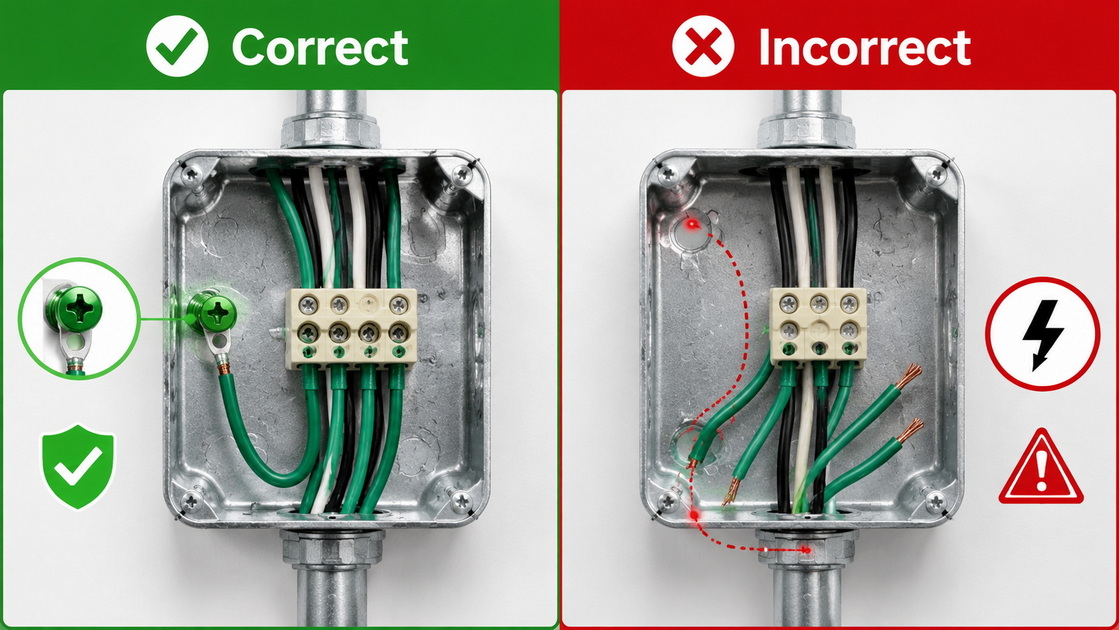
- Relying on device mounting screws as the only ground path instead of using a dedicated pigtail to the box. [youtube]
- Leaving the metal box ungrounded when adding a new circuit or replacing a device, especially in older homes or retrofits. [diyquickly]
- Using non‑listed screws or clips that do not provide a reliable bond under fault conditions. [s1.solacity]
- Overfilling the box so that grounding connections are stressed, loosened, or crimped. [diyquickly]
- Ignoring corrosion or paint that can increase resistance at the grounding point, especially in outdoor or industrial environments. [s1.solacity]
Addressing these issues proactively greatly reduces shock risk and enhances the durability of the installation. [kdmsteel]
In industrial automation, data centers, energy storage systems, and EV applications, grounding requirements become more stringent due to higher fault currents and complex networks. [scribd]
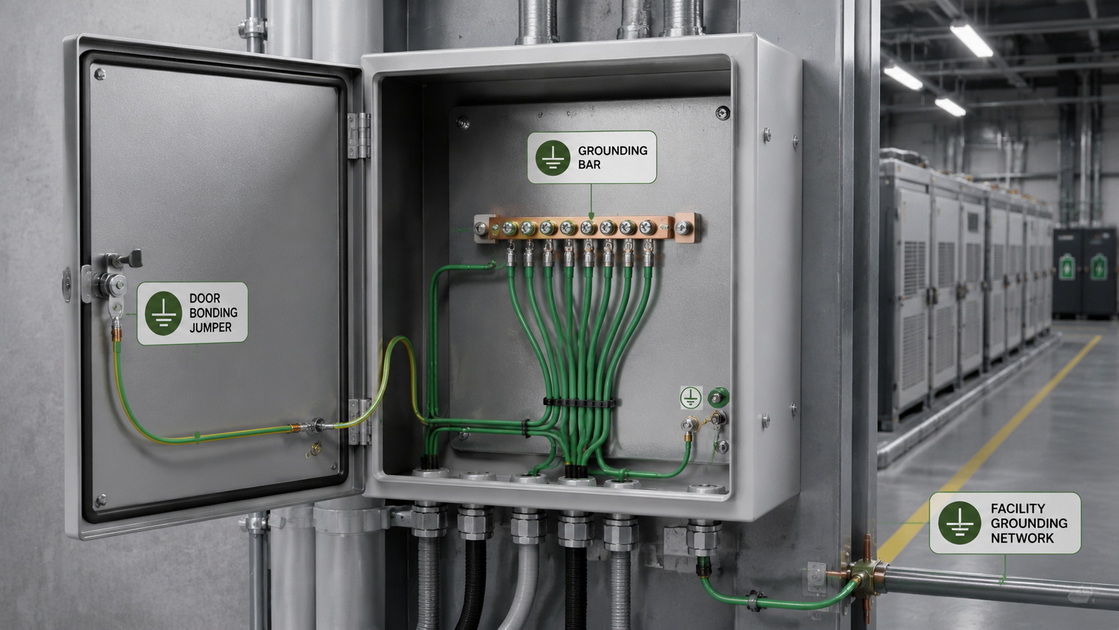
Key industrial practices include: [scribd]
- Using grounding bars or busbars inside larger enclosures to consolidate and manage multiple grounding conductors.
- Installing bonding jumpers between enclosure bodies, doors, and removable panels so every metallic part shares the same potential.
- Ensuring that conduit, cable glands, and metal raceways are properly bonded or listed as equipment grounding conductors.
Manufacturers specializing in junction box enclosures often design features such as pre‑tapped ground points, dedicated grounding studs, and removable plates with bonding options to simplify field installations and support OEM/ODM customizations. [s1.solacity]
From a manufacturer's standpoint, enclosure design directly affects how easy and reliable grounding becomes in the field. [kdmsteel]
Well‑engineered metal junction boxes and electrical enclosures typically offer: [kdmsteel]
- Integrated threaded ground bosses or studs inside the box for quick screw‑on bonding.
- Ample internal space to accommodate grounding bars, pigtails, and cable glands without overfilling.
- Corrosion‑resistant coatings that maintain conductivity at designated bonding points. [s1.solacity]
For end users and installers, this means faster installation, reduced rework, and a lower risk of omitted grounding connections—especially when work is done at scale in industrial plants or large building projects. [s1.solacity]
Even experienced DIY users and maintenance technicians should recognize the limits of their scope. [linkwellelectrics]
You should contact a licensed electrician or qualified maintenance professional if: [linkwellelectrics]
- You are unsure which breaker controls the junction box.
- The wiring appears damaged, corroded, or non‑standard.
- You are working on high‑current industrial circuits, critical systems, or regulated environments.
Professional installers can also verify overarching grounding and bonding schemes across multiple enclosures, panels, or energy storage cabinets to ensure system‑wide compliance. [scribd]
Yes, in most modern electrical codes, all metal junction boxes must be grounded to ensure they do not become energized and pose a shock hazard. [s1.solacity]
While some older installations relied on device mounting hardware, current best practice is to use a dedicated grounding pigtail and screw or clip so grounding does not depend on the device itself. [static.nhtsa]
The grounding conductor size must match code requirements for the circuit's ampacity; many residential circuits use bare 14 or 12 AWG copper, while industrial systems may require larger conductors based on fault levels and code tables. [kdmsteel]
The principle is the same—bond all metal parts to the grounding system—but larger enclosures often require additional bonding jumpers, ground bars, and coordination with facility‑wide grounding networks. [scribd]
Yes, multiple metal boxes can share a continuous equipment grounding conductor, provided it is properly sized and each box is individually bonded with a screw, clip, or jumper to maintain continuity. [s1.solacity]
- Linkwell Electric. "How to Ground a Metal Junction Box?" (2025). https://linkwellelectrics.com/how-to-ground-a-metal-junction-box/ [linkwellelectrics]
- KDM Steel. "How To Ground Electrical Enclosure: The Complete Guide." https://www.kdmsteel.com/how-to-ground-electrical-enclosure/ [kdmsteel]
- NHTSA. "Metal Junction Box Grounding Instructions." July 2021. https://static.nhtsa.gov/odi/rcl/2021/RCRIT-21V449-5718.pdf [static.nhtsa]
- ERICO / Solacity. "Practical Guide to Electrical Grounding." https://s1.solacity.com/docs/Erico%20-%20Practical%20Guide%20To%20Electrical%20Grounding.pdf [s1.solacity]
- YouTube. "The Best Way To Ground An Electrical Box | Up To Code!" 2024. https://www.youtube.com/watch?v=7ZvGOEkxFEs [youtube]
- YouTube. "Ground Clip Attachment to a Metal Electrical Junction Box." 2021. https://www.youtube.com/watch?v=bmzV-hXDUNg [youtube]
- YouTube. "How To Ground And Bond A Metal Electrical Box." 2021. https://www.youtube.com/watch?v=0Dsp8AODN60 [youtube]
- DIY Quickly. "How to Ground a Metal Junction Box." 2022. https://diyquickly.com/how-to-ground-a-metal-junction-box/ [diyquickly]
- Scribd. "Steps to Ensure Effective Substation Grounding." 2025. https://www.scribd.com/document/175912709/Steps-to-Ensure-Effective-Substation-Grounding [scribd]

2026-07-26

2026-07-24


