


Views: 222 Author: Bohui Electric Publish Time: 2026-06-18 Origin: Site


Content Menu
● How to Build an Electrical Enclosure (Expert Industrial Guide)
● Understand What an Electrical Enclosure Really Does
● Step‑by‑Step: How to Build an Electrical Enclosure
>> Step 1 – Define Application and Environment
>> Step 2 – Identify Standards and Protection Ratings
>> Step 3 – Size the Enclosure and Plan Internal Layout
>> Step 4 – Choose Materials and Surface Treatments
>> Step 5 – Design for Ventilation, Thermal Management, and EMC
>> Step 6 – Optimize Cable Entry and Wiring Space
>> Step 7 – Design for Accessibility, Service, and Safety
>> Step 8 – Prototype, Test, and Iterate
● Real‑World Scenarios: Matching Enclosures to Applications
>> Industrial Power Distribution and Automation
>> Communications, Networking, and Smart Manufacturing
>> New Energy, EV, and Pump Systems
● Practical Build Sequence for Panel Shops and OEMs
● How Ningbo Bohui Electric Adds Expert Value
● Table – Design Focus by Application
● Actionable Takeaways and Next Steps
● FAQ: How to Build an Electrical Enclosure
>> Q1. What is the first step in building an electrical enclosure?
>> Q2. How do I choose the right IP rating for my enclosure?
>> Q3. Should I start with a custom enclosure or a standard box?
>> Q4. Why do many industrial designers prefer metal enclosures over plastic?
>> Q5. What does Ningbo Bohui Electric specialize in?
How to build an electrical enclosure starts long before you cut metal or mount a breaker: it begins with clearly defining the environment, standards, and lifetime performance you expect from the enclosure. From my experience working with OEMs and panel builders, the most reliable projects follow a structured, step‑by‑step process that connects design decisions to real‑world installation and maintenance needs. [linkedin]
Building an industrial electrical enclosure is not just a fabrication exercise; it's a safety‑critical engineering process governed by standards, environmental conditions, and lifecycle costs. In this guide, I'll walk through the complete process I use when working with manufacturers and system integrators, then show how a specialist like Ningbo Bohui Electric Co., Ltd. supports each step with sheet‑metal engineering and certified enclosures. [bohuitechnology]
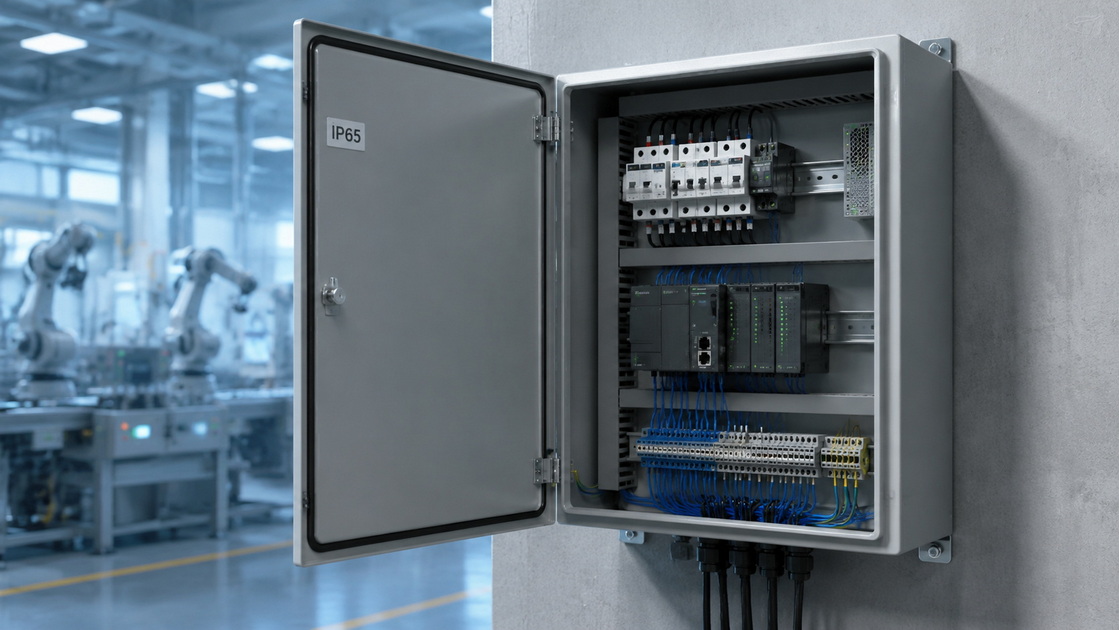
An electrical enclosure is a protective housing that shields electrical and electronic components from dust, water, mechanical impact, electromagnetic interference, and unauthorized access. In industrial environments—power distribution, communication networks, EV charging, and energy storage—the enclosure is also a compliance device, ensuring the overall system can pass safety and EMC tests. [simcona]
From an installer's perspective, a "good" enclosure is one that keeps equipment dry and cool, allows enough working space, and doesn't fight you every time you open the door to troubleshoot. From a manufacturer's point of view, it must be repeatable in production, meet IP or NEMA ratings, and deliver consistent quality at scale. [reddit]
Before you choose materials or dimensions, you need a precise understanding of where and how the enclosure will be used. [kdmsteel]
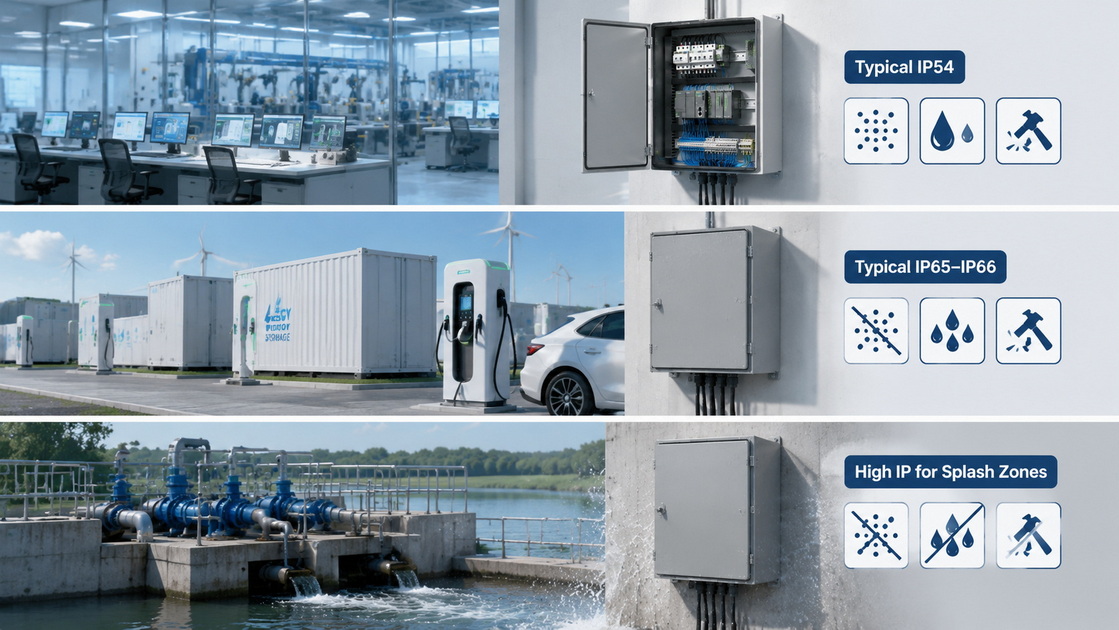
Key questions to clarify:
- Is the enclosure installed indoors or outdoors? [simcona]
- Will it be exposed to rain, wash‑down, salt spray, dust, or chemicals? [cdn.automationdirect]
- Is the location hazardous (explosive gases or dust) or standard industrial? [kdmsteel]
- What temperature range and humidity levels do you expect? [cdn.automationdirect]
- Who will access it—qualified electricians only, or also facility staff? [linkedin]
This environmental profile drives your choice of IP rating (for example, IP54 vs IP66), material (cold‑rolled steel vs stainless), and door sealing strategy. [bohuitechnology]
Industrial electrical enclosures usually need to meet one or more of these frameworks:
- Ingress protection (IP) codes like IP54, IP65, IP66 to indicate dust and water resistance. [bohuitechnology]
- Mechanical impact ratings such as IK10 for robustness against physical shocks. [bohuitechnology]
- Regional electrical and safety standards (UL/NEMA in North America, CE and IEC standards in Europe and many global markets). [simcona]
For example, Bohui offers stainless steel enclosures rated IP54–IP66 and IK10, backed by IP65 and CE certification, which are commonly specified for outdoor power distribution, communications, and industrial automation systems. [bohuitechnology]
Proper sizing is a frequent pain point in user feedback: too small, and technicians fight for space; too large, and costs and footprint explode. [reddit]
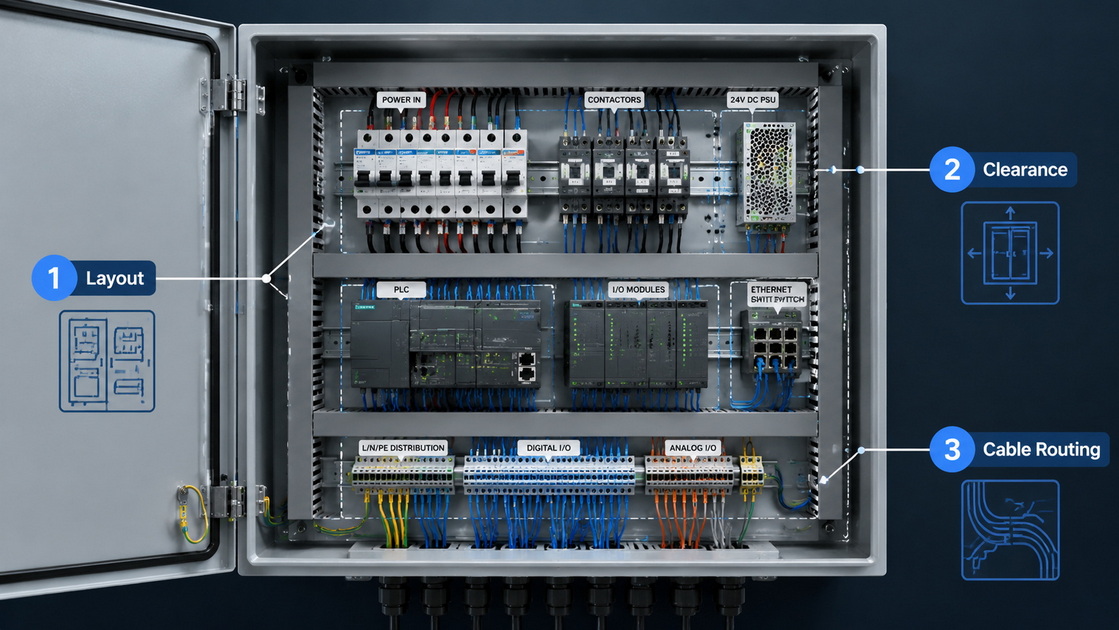
Follow this approach:
1. List all components: breakers, contactors, drives, PLCs, terminal blocks, power supplies, and communication devices. [kdmsteel]
2. Create a layout drawing showing mounting positions on the back panel and door. [cdn.automationdirect]
3. Respect clearance distances defined by applicable standards and manufacturers' datasheets. [cdn.automationdirect]
4. Add 20–30% spare space for future expansion and easier wiring. [linkedin]
Practical advice from experienced electricians is consistent: leave enough room for conduit, connectors, and hand access to terminals—especially for grounding conductors. Bohui's enclosures are supplied with galvanized or painted mounting plates that provide a rigid base for structured component layouts. [reddit]
Your material strategy needs to align with both operating environment and cost targets. [simcona]
Common options:
- Cold‑rolled steel: excellent mechanical strength and cost‑effectiveness for indoor and many outdoor applications when combined with high‑quality powder coating. [bohuitechnology]
- Stainless steel: superior corrosion resistance for food & beverage, chemical plants, marine environments, and heavy outdoor exposure. [kdmsteel]
- Galvanized steel: often used for mounting plates and internal structures to improve corrosion resistance. [bohuitechnology]
Bohui integrates full process control—blanking, bending, welding, surface treatment (painting, electroplating, anodizing, silk‑screening)—to match the specified finish and environmental rating. A thermosetting powder coating with textured finish is typically used to improve durability and aesthetics. [bohuitechnology]
Electrical and power electronics generate heat, and improper enclosure design can drastically shorten component life. [linkedin]
Key points:
- Estimate total heat load from all components and check that internal temperature stays within device limits. [cdn.automationdirect]
- For moderate heat, use louvered vents or filtered fans, while maintaining the required IP rating. [linkedin]
- For high power densities, consider heat exchangers or air conditioning, and discuss mechanical cut‑outs early with your enclosure manufacturer. [simcona]
- For sensitive electronics, engineers often prefer all‑metal enclosures to act as a Faraday cage for EMC performance. [reddit]
From an EMC engineer's "ideal case," a sealed all‑metal box with minimal cable apertures is easiest to pass emissions testing, but real‑world designs must balance cooling, access, and certification. [reddit]
User comments frequently highlight cable entry as the difference between an enclosure they love and one they avoid. [reddit]
Best practices:
- Decide between top, bottom, or side cable entry and coordinate with conduit routing on site. [linkedin]
- Reserve clear zones for bending radii and routing of power vs signal cables to reduce interference. [simcona]
- Plan for gland plates or removable panels to simplify machining and field modifications. [kdmsteel]
- Use cable ducts, tie points, and markers to keep wiring organized and serviceable. [reddit]
For OEMs and panel builders, working with a flexible sheet‑metal manufacturer like Bohui makes it easier to implement custom gland plates, knockouts, and internal cable management features at scale. [bohuitechnology]
Field technicians consistently ask for one thing: make it easy to service. [linkedin]
Consider:
- Door opening angle and hinge design so components and terminals remain visible and reachable. [simcona]
- Enough depth and spacing so tools can reach terminal screws without unsafe hand positions. [reddit]
- Secure but easy‑to‑operate locking systems matched to your security requirements (e.g., quarter‑turn locks, key locks). [bohuitechnology]
- Clear grounding points and bonding between door and body. [cdn.automationdirect]
Users also value clear labelling on the enclosure: materials, ratings, and standards help buyers and installers quickly confirm they have the right product. [bohuitechnology]
For new designs, many experienced engineers recommend starting with an existing standard enclosure and modifying it, especially at low volumes. [instructables]
A typical approach:
1. Select the closest standard enclosure from a trusted manufacturer. [bohuitechnology]
2. Machine openings and mount components to validate layout, thermal behavior, and serviceability. [instructables]
3. Gather feedback from installers and maintenance teams during the first deployments. [linkedin]
4. Move to a fully customized enclosure once volumes and requirements are stable. [bohuitechnology]
Bohui's customized enclosure service is built around this path, supporting OEMs as they progress from standard boxes to tailored designs for sectors like power, industrial automation, communications, and new energy. [bohuielectric]
Power distribution boards, MCCs, and PLC cabinets typically require robust steel or stainless enclosures with IP54–IP66 protection and IK10 impact resistance. These enclosures must withstand mechanical shocks, occasional wash‑downs, and sometimes outdoor exposure while keeping control electronics safe. [bohuitechnology]
Bohui's sheet‑metal distribution boxes are deployed in power, industrial automation, and building projects worldwide, combining mechanical strength with customized cut‑outs, mounting options, and labeling. [bohuitechnology]
In communication and network cabinets, designers care about EMC performance, airflow, and space for cable management. Smart manufacturing and IIoT applications often integrate controllers, gateways, and sensors in a single enclosure, demanding clean internal layouts and easy expansion capacity. [kdmsteel]
Metal enclosures with well‑planned cable routing, EMC‑friendly design, and modular mounting options help maintain signal integrity and simplify future upgrades. Bohui's experience across communications and industrial automation projects supports these multi‑disciplinary requirements. [bohuitechnology]
Energy storage, EV infrastructure, and pump control stations are often installed outdoors or in harsh technical rooms, where enclosures face dust, water spray, and large temperature swings. Here, corrosion‑resistant materials, high IP ratings, and careful thermal management are critical for long‑term reliability. [bohuitechnology]
Bohui provides stainless steel and coated steel enclosures used in new energy and water systems, engineered to meet IP65/IP66 ratings and relevant certifications while still allowing for practical maintenance access. [bohuitechnology]
While the design steps above focus on engineering decisions, the physical build of an enclosure in a workshop follows a repeatable sequence. [instructables]
A typical build process:
1. Receive and inspect enclosure: verify dimensions, surface finish, rating labels, and accessories (door, lock, seal, mounting plate, grounding set). [instructables]
2. Machine cut‑outs: for cable glands, HMI panels, push buttons, vents, and fans; deburr and protect cut edges. [instructables]
3. Install mounting plate and back‑panel components: breakers, contactors, DIN rails, terminal blocks, and power supplies according to layout. [instructables]
4. Wire and label: route cables in ducts, maintain segregation of power and control, and label terminals and devices clearly. [simcona]
5. Install door hardware and accessories: locks, viewing windows, door‑mounted devices, and gaskets. [instructables]
6. Grounding and continuity checks: ensure all metal parts, including the door, are properly bonded. [cdn.automationdirect]
7. Test: perform functional checks, insulation resistance tests, and, depending on scope, thermal or EMC validation. [cdn.automationdirect]
At scale, partnering with a manufacturer that can pre‑configure cut‑outs, mounting options, and finishes reduces on‑site machining and accelerates deployment. [bohuitechnology]
Ningbo Bohui Electric (Ningbo Bohui Technology) is a specialist in high‑quality sheet‑metal electrical enclosures with more than 20 years of industry experience. The company offers standard and customized metal box solutions used in power, industrial automation, construction, communications, new energy, and related fields. [bohuielectric]
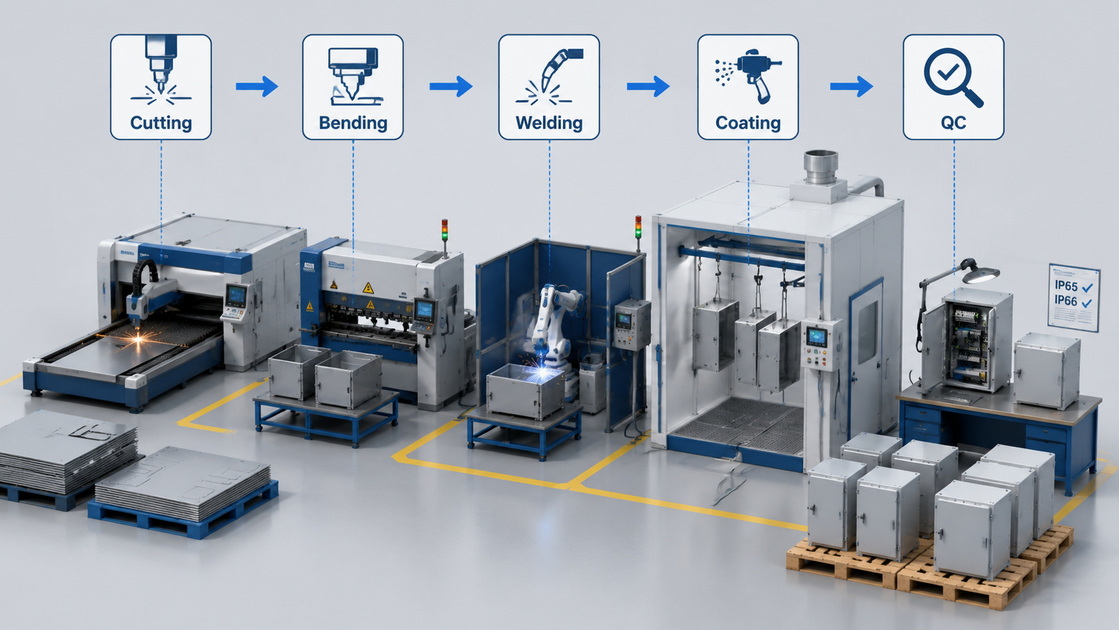
Key strengths that matter when you build an electrical enclosure:
- End‑to‑end sheet‑metal processing: from blanking and bending to welding, riveting, and advanced surface treatments (powder coating, electroplating, anodizing, silk‑screening). [bohuitechnology]
- Certified performance: enclosures with IP65/IP66 and IK10 ratings, and CE certification for use in demanding applications. [bohuitechnology]
- Global supply capability: products exported to markets including the United States, Australia, the Middle East, and Southeast Asia, serving long‑term partners in industrial automation and construction. [bohuielectric]
- Customization service: tailored sheet‑metal enclosures and electrical boxes with flexible dimensions, mounting, and cut‑outs, supported by dedicated engineering teams. [kdmsteel]
This combination of engineering expertise and manufacturing depth makes Bohui a practical partner when you need enclosures that are not only compliant on paper but also efficient to wire, install, and maintain in the field. [bohuitechnology]
| Application | Typical Material and Rating | Design Priorities |
|---|---|---|
| Indoor control panels | Coated cold‑rolled steel, IP54–IP55 bohuitechnology | Accessibility, cable management, expansion space linkedin |
| Outdoor power distribution | Stainless or coated steel, IP65–IP66, IK10 bohuitechnology | Corrosion resistance, sealing, impact strength bohuitechnology |
| Communications and networking | Metal enclosure with EMC focus reddit | Shielding, airflow, cable routing reddit |
| New energy / EV / pump systems | Stainless or robust coated steel, high IP bohuitechnology | Weather resistance, thermal control, safety bohuitechnology |
| Custom OEM machinery enclosures | Customized sheet‑metal enclosure bohuitechnology | Integration with machine, serviceability, branding bohuitechnology |
If you are planning your next enclosure project, you can follow this practical checklist:
- Define environment and standards before drawing anything. [kdmsteel]
- Size for today's components plus future growth, not just bare minimum dimensions. [linkedin]
- Choose materials and coatings aligned with real‑world exposure, not just cost. [bohuitechnology]
- Prioritize internal layout, cable routing, and service access to keep technicians safe and efficient. [reddit]
- Engage an experienced enclosure manufacturer early to align customizations with fabrication realities. [bohuitechnology]
Call to action: If you need a standard or fully customized industrial electrical enclosure for power, communications, smart manufacturing, new energy, EV systems, or pump control, you can reach Ningbo Bohui Electric's team via their official contact page to discuss your project requirements and receive engineering‑backed proposals. [bohuitechnology]
The first step is to define the environment, application, and regulatory standards that apply, as these will determine material choice, IP rating, size, and internal layout constraints. [simcona]
Match the IP rating to exposure: indoor control rooms can often use IP54, while outdoor or wash‑down environments typically require IP65 or IP66, sometimes with IK10 impact resistance. [bohuitechnology]
Many engineers recommend starting with an existing standard enclosure and modifying it during prototyping, moving to a customized solution once requirements and volumes are clear. [instructables]
Metal enclosures provide better mechanical strength and act as a Faraday cage for EMC performance, which is critical for sensitive or safety‑related equipment. [reddit]
Ningbo Bohui Electric specializes in designing and manufacturing sheet‑metal electrical enclosures and distribution boxes, offering standard and customized solutions with IP65/IP66, IK10, and CE‑certified performance for global industrial applications. [bohuielectric]
1. Simcona – "6 Electrical Panel Enclosure Design Tips for Ultimate Safety" – design guidelines on sizing, ventilation, environment, and labeling. [](https://simcona.com/blog/electrical-panel-enclosure-design)
2. KDM Steel – "How To Build An Electrical Enclosure: The Complete Guide" – step‑by‑step enclosure design and material selection. [](https://www.kdmsteel.com/how-to-build-an-electrical-enclosure/)
3. AutomationDirect – "Practical Guide to Electrical Enclosures for Industrial Applications" – sizing, layout, and standards overview. [](https://cdn.automationdirect.com/static/eBooks/Enclosures-ebook.pdf)
4. Simcona (Linked article) – "6 Electrical Panel Enclosure Design Tips for Industrial Controls" – practical advice on sizing, ventilation, accessibility, cable management, environment, and labeling. [](https://www.linkedin.com/pulse/6-electrical-panel-enclosure-design-tips-industrial-controls-hvqyf)
5. Reddit r/ECE – "What was the best advice ever given to you for designing enclosures?" – practitioner insights on EMC, servicing, and using existing enclosures. [](https://www.reddit.com/r/ECE/comments/5wpiam/what_was_the_best_advice_ever_given_to_you_for/)
6. Reddit r/AskElectronics – "How do I build an enclosure for my project?" – hobbyist‑level discussion of enclosure choices and user experience. [](https://www.reddit.com/r/AskElectronics/comments/1e8pp2z/how_do_i_build_an_enclosure_for_my_project/)
7. Ningbo Bohui Technology Co., Ltd – Company homepage – overview of sheet‑metal enclosure manufacturing capabilities and industry applications. [](https://www.bohuitechnology.com)
8. Ningbo Bohui Technology – Product page for stainless steel electrical boxes – material, IP54–IP66, IK10, and standard configuration details. [](https://www.bohuitechnology.com/products/23-CE-Waterproof-Stainless-Steel-Electrical-Boxes-Metal-Distribution-Box-Outdoor-Stainless-)
9. Ningbo Bohui Technology – Customized enclosure products – description of custom OEM sheet‑metal enclosure services. [](https://bohuitechnology.com/lists/29-4-.html)
10. Ningbo Bohui Electric – "Top 10 Metal Electrical Box Manufacturers in China" – positioning Bohui as an enclosure supplier for global markets. [](https://www.bohuielectric.com/top-10-metal-electrical-box-manufacturers-in-china.html)
11. Ningbo Bohui Technology – Contact page – official contact details for OEM and project inquiries. [](https://bohuitechnology.com/contact.html)
12. Instructables – "Building an Electronics Enclosure" – practical step‑by‑step machining and assembly process. [](https://www.instructables.com/Building-an-Electronics-Enclosure/)

2026-07-26

2026-07-24


