


Views: 222 Author: Amanda Publish Time: 2026-02-06 Origin: Site


Content Menu
● What Reddit Users Actually Do with 3D Printed Enclosures
● Safety and Compliance: Why Standards Matter
● Material Choices for a 3D Printed Enclosure Electrical Box
>> PLA
>> PETG
>> ABS
>> Nylon and Engineering Filaments
>> ESD‑Safe and Flame‑Retardant Filaments
● Design Principles for a Safer 3D Printed Enclosure
● Thermal Management and Fire Behavior
● Environmental Protection: Dust, Moisture, and UV
● ESD and High‑Voltage Considerations
● When 3D Printing Is a Bad Idea for Enclosures
● How Professional Manufacturers Complement 3D Printing
● Practical Workflow: From Reddit Idea to Real‑World Enclosure
● FAQ
>> 1. Is a 3D printed enclosure electrical box safe for mains voltage?
>> 2. Which filament is best for a 3D printed enclosure electrical project?
>> 3. Can a 3D printed enclosure electrical housing be waterproof?
>> 4. Does using UL‑rated filament make my enclosure electrical box compliant?
>> 5. When should I choose a commercial enclosure electrical product instead of 3D printing?
Yes, you can 3D print an enclosure electrical box for many low‑voltage and hobby electronics projects, but you must respect material limits, thermal behavior, and safety regulations before using it in real installations.
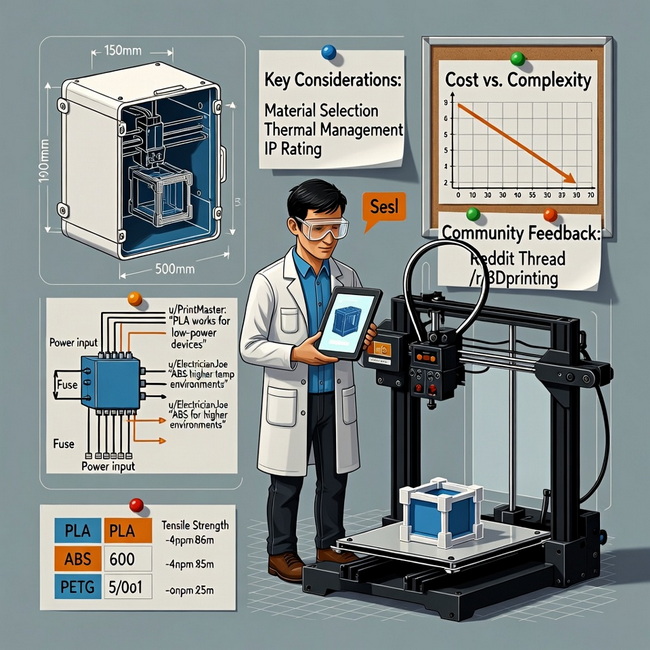
On Reddit, many makers and engineers share projects where they 3D print custom enclosure electrical housings for things like Arduino controllers, LED drivers, sensor hubs, and small power supplies. These users value the ability to design exactly the shape, port layout, and mounting features they need, instead of modifying a generic off‑the‑shelf box.
Typical use cases include:
- Indoor home‑automation controllers for lights, blinds, or HVAC.
- Benchtop test fixtures and measurement tools.
- Small IoT nodes, gateways, and sensor modules.
- Neatly labeled enclosure electrical covers for DIY power adapters and chargers.
However, experienced contributors often draw a clear line between low‑risk DIY experiments and safety‑critical or code‑regulated work. When someone asks “Can I use a 3D printed enclosure electrical box for mains power outdoors?” the most common answer is “You can prototype with it, but final installations should use a certified enclosure.” This reflects a consensus that 3D printing shines during design and testing, while industrial‑grade enclosure electrical products remain the standard for serious applications.
In professional environments, enclosure electrical products rarely rely on intuition alone; they are designed to meet standards such as UL 50 and related regulations that define mechanical strength, resistance to dust and water, corrosion resistance, and protection for users and equipment. These standards exist because enclosure electrical failures can cause shocks, fires, unplanned downtime, or data loss.
A home‑printed enclosure electrical box has several inherent limitations:
- It is not type‑tested by a third party.
- Mechanical performance depends heavily on printer settings, orientation, and user skill.
- Layer lines and micro‑gaps can weaken walls and allow moisture ingress.
- Fire behavior is usually unknown unless you use specialized filament and test it.
For any product that must be inspected, certified, or insured, simply saying “the case is 3D printed” is not enough. Inspectors look for clearly rated enclosure electrical housings, documented specifications, and recognized test marks.
Choosing the right material is one of the most important decisions when you design a 3D printed enclosure electrical housing. Different filaments behave very differently under heat, load, and impact.
PLA is popular because it is easy to print, dimensionally accurate, and available in many colors. For an enclosure electrical prototype on your workbench, PLA can be sufficient, especially if the electronics generate very little heat. However, PLA has relatively low heat deflection temperature. In a warm cabinet, near a radiator, or close to power components, PLA can slowly deform and cause misalignment or even mechanical failure.
PETG offers a good balance of toughness, flexibility, and improved temperature resistance. It is often recommended as a sensible default for enclosure electrical designs where the environment is moderate and the print needs some impact resistance. PETG is also more tolerant of light outdoor exposure and humidity, making it a better choice than PLA for applications like indoor utility closets or sheltered balconies.
ABS is a common engineering plastic in injection‑molded enclosure electrical products because it combines decent impact strength with higher thermal resistance. In 3D printing, ABS is harder to process due to warping and fumes, and it often requires a printer enclosure and good ventilation. If you can manage the print conditions, ABS is very suitable for enclosure electrical housings that must handle a bit more heat and mechanical stress.
Nylon, polycarbonate blends, and fiber‑reinforced materials are used where strength, toughness, and wear resistance are crucial. A nylon enclosure electrical housing can survive repeated snapping, vibration, and some impact better than more brittle plastics. These materials demand careful drying and tuning, but they are closer in behavior to robust industrial enclosure electrical products.
For sensitive electronics, ESD‑safe materials help dissipate static and reduce the risk of electrostatic discharge damaging components. Flame‑retardant filaments aim to slow or localize burning when a fault occurs inside an enclosure electrical box. Even with such materials, you must remember that the finished part is not automatically certified; any professional use still requires testing and documentation.
Even with a good filament, poor design can make an enclosure electrical box unsafe or unreliable. Effective design starts from the inside and works outward, considering both the electronics and the environment.
Key design principles include:
- Model internal components first: Create 3D models of the PCB, connectors, batteries, and wiring harnesses. This ensures accurate clearances and avoids tight spots that might pinch cables or stress solder joints.
- Respect creepage and clearance: Leave sufficient distance between live conductors and between conductors and enclosure electrical walls, especially at higher voltages.
- Optimize wall thickness: For most plastic enclosure electrical designs, 2–3 mm walls are a good starting point, thicker near screw bosses or hinges.
- Use ribs and bosses: Strengthen mounting points, hinges, and panel edges with ribs; surround screw holes with thick bosses to resist cracking.
- Plan the parting line: Decide where the enclosure splits into two halves for access, usually along a midline where screws, clips, or latches can easily secure the halves.
In addition, you should think about assembly: can you insert the PCB and fasten it without bending components? Is there enough space to connect all the cables and close the enclosure electrical housing without crushing anything?
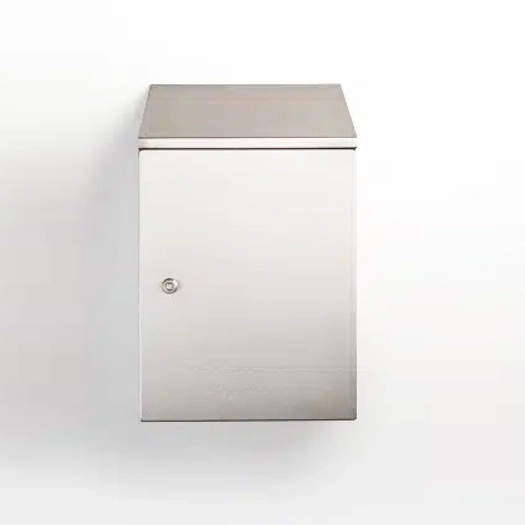
Every enclosure electrical design must consider heat. Even small linear regulators, motor drivers, or LED drivers can raise internal temperature significantly if ventilation is poor.
Strategies for thermal management include:
- Placing high‑dissipation components away from corners and thin walls.
- Creating ventilation slots that allow warm air to escape while maintaining finger‑safe openings.
- Providing clearance around heat sinks and hot components so they can radiate and convect heat.
- Oversizing the enclosure electrical volume slightly to reduce heat density.
Fire performance is more complex. Many hobby filaments are not self‑extinguishing, and in fault conditions (short circuits, overloaded components), they can sustain burning. Professional enclosure electrical boxes for demanding environments often use tested flame‑retardant resins and are evaluated under relevant standards. While you can improve your odds with flame‑retardant or higher‑temperature materials, you should not treat a hobby print as equivalent to a certified enclosure electrical product.
Industrial enclosure electrical boxes are frequently rated for ingress protection, such as IP54, IP65, or IP67, indicating resistance to dust and water. Achieving similar performance with fused‑filament 3D printing is challenging because of layer lines, tiny gaps, and potential warping.
To improve environmental resistance:
- Design overlapping lips where two halves meet to form a “labyrinth” joint.
- Add channels for compressible gaskets and use screws that clamp the joint evenly.
- Minimize unnecessary openings; integrate cable glands instead of large open holes.
- Consider post‑processing, such as sanding and sealing, to reduce surface porosity.
Outdoors, UV exposure can also embrittle some plastics over time. If your enclosure electrical box must live outside, look for UV‑stabilized materials and consider painting or coating the surface to improve durability and appearance.
Sensitive electronics like microcontrollers, FPGAs, or RF front‑ends can be damaged by electrostatic discharge. When designing an enclosure electrical housing for such circuits, you must address static control.
Common practices include:
- Using ESD‑safe filaments or coating the inside of the enclosure with a conductive or dissipative layer connected to ground.
- Providing a defined grounding point or lug so that shields and reference potentials are tied together.
- Avoiding sharp internal points or narrow gaps where high electric field concentrations can lead to breakdown.
For high voltage, design conservatively. The layered micro‑structure of a printed enclosure electrical part can reduce its effective dielectric strength compared with a solid molded shell. That means you should avoid pushing clearance limits and remain well within established design guidelines.
There are clear situations where a 3D printed enclosure electrical product is simply the wrong choice, regardless of how well you design and print it.
You should avoid 3D printed enclosures for:
- Permanent building wiring and distribution boards under electrical codes.
- Safety‑critical systems such as fire alarms, life‑safety controls, and medical devices.
- Industrial power cabinets subject to regular inspection and certification.
- Harsh environments with extreme temperature swings, chemicals, or heavy mechanical abuse.
In these cases, you should specify a tested enclosure electrical solution with documented ratings from a reputable manufacturer. 3D printing can still help at earlier stages—for example, making mock‑ups to test user interfaces or internal layouts—but it should not be the final product.
3D printing and professional enclosure electrical manufacturing are not competitors; they complement each other. Many companies first validate a design using printed prototypes, then move to metal or molded plastic enclosures when they finalize requirements.
A specialized enclosure electrical manufacturer can offer:
- Consistent materials with known mechanical and thermal properties.
- Certified ratings for impact, ingress protection, corrosion resistance, and fire behavior.
- Scalable production for serial builds.
- Customization options such as cut‑outs, surface treatments, branding, and pre‑assembly.
For sectors like power distribution, telecommunications, industrial automation, building management, energy storage, EV systems, and pump control, partnering with such a manufacturer is often essential. They bridge the gap between a functional prototype enclosure electrical design and a product that can withstand real‑world conditions and regulatory scrutiny.
If you discover an interesting 3D printed enclosure electrical design idea on Reddit and want to take it toward a professional product, a practical workflow might look like this:
1. Concept and rough print
Sketch your idea, model a basic enclosure electrical shell, and print a simple version to check fit and overall form factor. Use PLA or PETG for quick iteration.
2. Refined prototype
Once the internal layout stabilizes, rework the design to follow best practices: add ribs and bosses, ensure proper clearances, and consider mounting methods. Print in a material closer to your target, such as ABS or nylon.
3. Functional testing
Install the electronics, run the system under realistic load, and monitor temperature, vibration, and mechanical wear. Note where the enclosure electrical box flexes, heats up, or lets in dust or moisture.
4. Pre‑production design
Decide whether to stay with advanced 3D printing (for low volumes or internal tools) or to move toward metal or molded enclosure electrical products. Adjust wall thickness, radii, and draft angles if you plan for injection molding.
5. Industrialization with a manufacturer
Work with a professional manufacturer to translate the validated design into a robust enclosure electrical product with appropriate certifications and repeatable quality.
This approach allows you to keep the agility and creativity celebrated in Reddit maker communities while still ending with an enclosure electrical solution that stands up to industrial demands.
You can definitely 3D print an enclosure electrical box for many Reddit‑style DIY projects, prototypes, and internal fixtures, especially when you choose suitable materials like PETG, ABS, or nylon and follow solid design principles for wall thickness, clearances, and thermal management. At the same time, 3D‑printed plastic has real limitations in fire behavior, environmental sealing, long‑term durability, and compliance with standards such as UL 50, meaning it is not a drop‑in replacement for certified enclosure electrical products in safety‑critical or code‑regulated applications. A sensible strategy is to exploit 3D printing for rapid concept validation and custom, low‑risk enclosures, then transition to professionally engineered metal or molded enclosure electrical solutions—supplied by specialized manufacturers—when the product must withstand industrial conditions, pass inspections, and operate reliably for years.
Contact us to get more information!
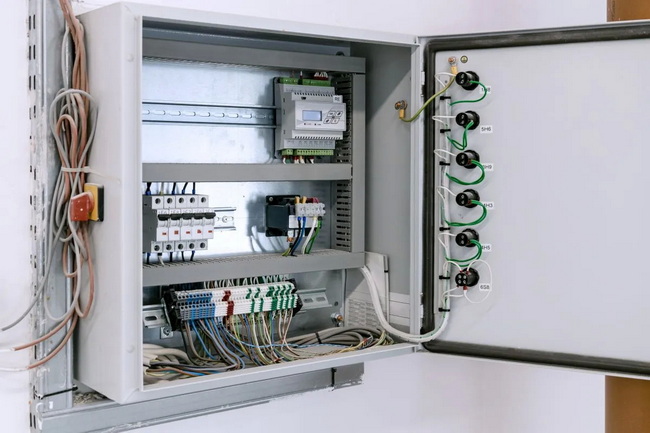
For permanent mains installations, a 3D printed enclosure electrical box is generally not recommended because it lacks formal testing for dielectric strength, impact, fire resistance, and environmental durability. Even if the print looks solid, hidden weaknesses in layer bonding or unexpected heat buildup can create hazards over time, so certified metal or industrial plastic enclosure electrical products are the safer option for mains power.
For most functional enclosure electrical designs, PETG and ABS are often the best starting points because they balance temperature resistance, mechanical strength, and printability. PLA is acceptable for quick prototypes and cool indoor devices, while nylon and other engineering filaments are better choices when the enclosure electrical housing must endure higher loads, frequent handling, or mild environmental stress.
A 3D printed enclosure electrical housing can be made more resistant to splashes and dust with careful design, thick walls, overlapping joints, and gaskets, but achieving a reliable, standards‑grade waterproof rating is difficult. Layer lines and minor imperfections often provide paths for water ingress, so for critical outdoor or submerged applications, a professionally manufactured and rated enclosure electrical box remains the more dependable solution.
Using a UL‑rated or flame‑retardant filament can improve material behavior under heat and fire, but it does not automatically make the finished enclosure electrical box compliant with safety standards. Compliance depends on the entire assembly—geometry, thickness, venting, hardware, seals, and manufacturing consistency—being tested and certified, which is why industrial enclosure electrical products go through rigorous evaluation rather than relying on raw material properties alone.
You should choose a commercial enclosure electrical product whenever safety, regulations, customer confidence, or harsh operating conditions are involved, such as in building power distribution, industrial control cabinets, energy‑storage systems, EV charging infrastructure, and mission‑critical communication equipment. In those contexts, 3D printing is best reserved for early prototypes or internal tools, while the final solution should be a certified enclosure electrical housing supplied by a reputable manufacturer.
1. https://www.reddit.com/r/AskEngineers/comments/1gcaea4/is_a_3d_printed_case_suitable_for_containing/
2. https://phrozen3d.com/blogs/resin-3d-printing-latest-news/3d-printing-safety
3. https://drs.illinois.edu/Page/SafetyLibrary/3DPrinterSafety
4. https://www.stratasys.com/en/resources/blog/guide-to-3d-printing-esd-safe-materials/
5. https://www.hubs.com/knowledge-base/enclosure-design-3d-printing-step-step-guide/
6. https://keystonecompliance.com/ul-50/
7. https://nimonik.com/blog/ul-50-and-ul-50e-updated-electrical-enclosures/
8. https://www.alveo3d.com/en/why-make-a-3d-printer-enclosure-advantages-and-disadvantages/
9. https://www.fictiv.com/articles/enclosure-design-101-for-injection-molding-and-3d-printing
10. https://health-safety.ed.ac.uk/guidance/hazardous-substances/3d-printers
11. https://jlc3dp.com/blog/3d-print-electronic-enclosures

2026-07-26

2026-07-24


