


Views: 222 Author: Loretta Publish Time: 2026-01-29 Origin: Site


Content Menu
● What Is a Busbar Power Distribution System?
● Why Industry Is Moving from Traditional Wiring to Busbar
>> Key Limitations of Traditional Wiring in Industrial Enclosures
>> Core Advantages of Busbar Power Distribution
● Safety and Compliance: Why Busbar Is Now the Industrial Standard
>> Global Regulatory Drivers and Industry Adoption
>> Safety Mechanisms Built into Busbar Systems
● Technical Capabilities of Modern Busbar Systems
>> Mechanical and Electrical Ranges
>> Modular Components and Accessories
>> Example: Shielding and Cover Systems
● How Busbar Systems Improve Enclosure Design and Lifecycle Costs
>> Space Optimization and Design Flexibility
>> Installation, Maintenance, and Downtime Reduction
>> End-to-End Value Across the Industrial Value Chain
● Practical Use Cases for Busbar in Modern Industries
● Step-by-Step Framework for Migrating from Traditional Wiring to Busbar
● Design Best Practices for High-Performance Busbar Enclosures
● Busbar vs Traditional Wiring in Industrial Enclosures
● Take the Next Step: Build Safer, Smarter Enclosures with Busbar
● FAQs: Busbar Systems in Industrial Enclosures
>> 1. What is the main difference between busbar and traditional wiring in an enclosure?
>> 2. Are busbar systems suitable for both AC and DC applications?
>> 3. How does busbar improve safety for maintenance personnel?
>> 4. What current ranges can typical busbar systems handle?
>> 5. Can I retrofit busbar into existing enclosures?
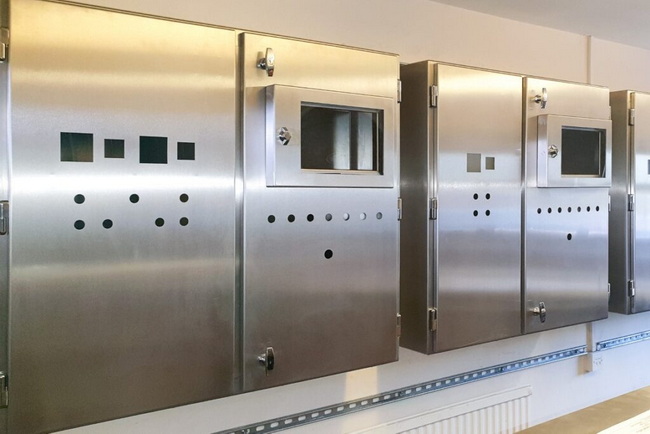
For modern industrial enclosures, busbar power distribution has become the global standard for safe, compact, and scalable power management, replacing traditional cable-heavy wiring in demanding applications across power, telecom, data networks, building automation, and new energy systems.
A busbar power distribution system uses rigid copper or aluminum bars as conductors to distribute power inside an industrial enclosure instead of bundles of individual cables and connectors.
- Busbars are typically flat or rectangular conductors mounted on supports inside the enclosure.
- Power devices such as circuit breakers, fuse-switch disconnectors, and transformers connect directly to the busbar using adapters or plug-in kits.
- Protective covers and trays provide 360-degree contact-hazard protection to keep personnel safe while maintaining accessibility for maintenance.
In contrast, traditional wiring requires a large number of cables, lugs, and terminal blocks, which take up more space, increase wiring complexity, and make modifications slower and less predictable.
Traditional cable-based power distribution has several structural weaknesses in fast-evolving industrial environments.
- Complex, time-consuming installation that requires manual routing, cutting, crimping, and labeling of many cables.
- Bulky wiring bundles that reduce usable space, limit airflow, and complicate thermal design.
- Maintenance and troubleshooting that are resource-intensive and often demand heavy manipulation or partial disassembly of panels.
- Extended downtime and higher labor costs whenever changes, repairs, or expansions are required.
- Reduced space for new components and integrations, making it difficult to adapt to new loads or technologies.
For manufacturers operating in sectors such as power distribution, telecommunications, industrial automation, and energy storage, these limitations can directly constrain scalability and competitiveness.
Busbar power distribution systems address these pain points by providing a modular, configurable, and space-efficient backbone for power delivery inside the enclosure.
- Higher safety through reduced risk of shock and accidental arcing, with insulated covers and defined contact protection.
- Significant space savings inside the panel due to compact busbar arrangements versus bulky cable harnesses.
- Faster installation and upgrades, because components connect to standardized busbar positions instead of being individually wired.
- Easier troubleshooting, with clear visual layout and less cable congestion around critical devices.
- Better scalability, enabling additional loads, protection devices, or communication modules to be added with minimal redesign.
For companies that need to modernize existing panels or build new high-density enclosures, busbar transforms the panel from a one-off assembly into a repeatable, configurable platform.
In recent years, international standards for power distribution and control inside industrial panels have tightened, pushing manufacturers toward safer, more predictable designs.
- Updated guidance and standards for power distribution and control in industrial enclosures have accelerated the shift away from traditional wiring.
- Many European markets have required busbar-based enclosure power distribution over traditional wiring in a variety of applications since the mid-2010s.
- Global OEMs increasingly standardize on busbar to ensure consistent compliance across regions and sectors.
This trend is not only regulatory; it reflects a broader recognition that safer, modular power distribution is essential in high-value environments such as data centers, energy storage systems, EV charging infrastructure, and intelligent manufacturing lines.
Modern busbar systems integrate multiple layers of safety for both equipment and personnel.
- Insulated covers and base trays provide contact hazard protection, helping to prevent accidental touch of live parts.
- Shielding elements are commonly made from thermally modified materials that meet demanding flammability and safety requirements, reducing the risk of accidental arcing.
- Standardized designs help ensure predictable creepage and clearance distances within the enclosure.
- Full 360-degree coverage is achievable with base trays, side covers, and top sections configured as a complete protective system.
For plant engineers, this means safer operation during installation, inspection, and maintenance, even in dense motor control centers, drive cabinets, and power distribution boards.
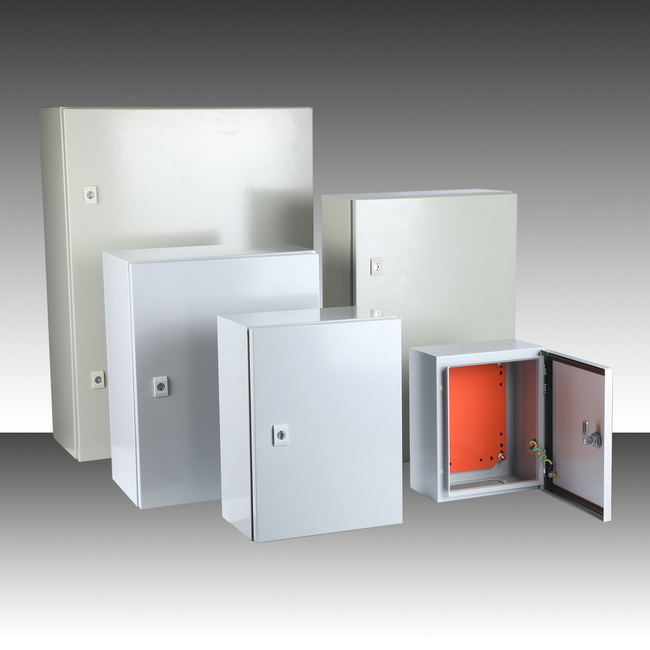
A well-engineered busbar system must support a broad range of currents, dimensions, and mounting configurations.
- Busbar supports typically accommodate flat copper conductors from 40 × 10 mm up to 120 × 10 mm.
- Systems can be designed for rated currents up to approximately 1600 A with short-time withstand current (ICW) capabilities up to around 50 kA.
- Components can be top-mounted using the pitch pattern of the cover system, allowing precise, repeatable device placement.
These characteristics enable reliable operation in demanding applications such as main distribution boards, heavy industrial loads, and high-power drive systems.
One of the defining strengths of busbar is its modular ecosystem of adapters and accessories.
- Customizable plug-ins and adapters enable safe mounting of compact air-circuit breakers from multiple manufacturers.
- Circuit breakers and adapters typically cover current ranges from 100 A to 630 A, suitable for many branch and feeder circuits.
- Connector kits, adapters, and transformers are designed for contact without drilling, preserving the integrity of the busbar and saving installation time.
- NH Slimline fuse-switch disconnectors are available from sizes 00 to 3, supporting both single-pole and 3-pole switchable variants.
- All components are modular, enabling fully customized configurations for each enclosure or project.
This modularity allows enclosure manufacturers to standardize on a busbar backbone while tailoring protection and control devices to each customer's technical requirements.
To illustrate how a modern busbar shielding system works, consider a configuration designed for flat copper busbars.
- A range of shielding sizes can cover busbars from 12 × 5 mm to 60 × 10 mm, supporting safe operation across different current ratings.
- Components can be mounted on top of the cover, which supports easy retrofitting without removing the protective section.
- Base trays provide rear contact-hazard protection straight out of the box and can be selected to fit enclosure widths from 600 mm to 1200 mm.
- Combined, the base tray, side covers, and top cover deliver full 360-degree protection while maintaining serviceability.
By replacing bulky cable bundles with compact copper bars, busbar gives enclosure designers significantly more freedom.
- Higher component density is achievable without compromising accessibility or cooling.
- Designers can keep power distribution in a defined vertical or horizontal zone, freeing up space for control and communication hardware.
- Standardized busbar layouts support faster design replication across projects and product lines.
This is particularly valuable for modular cabinet systems and multi-bay lineups, where consistent layouts improve assembly time and service workflows.
From installation to long-term operation, busbar can materially reduce lifecycle costs.
- Systems can be installed in as few as three steps: position the mounting section, secure the busbar assembly, and clip the cover in place.
- Lightweight, easy-to-handle assemblies minimize disruptions to existing workflows during retrofits or expansions.
- Simplified layouts and direct plug-in interfaces mean faster fault location and replacement of devices, with less unplanned downtime.
- Reduced wiring complexity leads to fewer potential failure points and better long-term reliability.
Over the life of the enclosure, these factors contribute to lower total cost of ownership and a more agile response to new operational demands.
Plant engineers and operations leaders increasingly evaluate equipment choices through the lens of the entire value chain.
- Compliant busbar systems support regulatory alignment, minimizing risks during inspections and audits.
- Improved efficiency and scalability translate into higher uptime and throughput at the plant level.
- Reduced maintenance effort and safer access help protect personnel, a key priority for high-reliability industries.
- A modular busbar architecture also facilitates integration of new technologies, including energy monitoring, smart breakers, and digitalized maintenance tools.
To increase practical value, it helps to understand how busbar systems support real-world applications across different sectors.
- Power and utilities: Busbar in switchgear and distribution boards ensures high fault-current withstand capability and fast integration of protective devices.
- Telecommunications and data networks: Compact busbar layouts free up space for networking hardware and improve airflow in densely populated racks.
- Industrial automation and smart manufacturing: Modular busbar systems support flexible production lines that require frequent changeovers and expansions.
- New energy storage and EV infrastructure: High-current, low-impedance busbar routes energy efficiently while maintaining strict safety standards in battery and charging cabinets.
- Water and pump systems: Busbar simplifies power distribution for multi-motor setups, pump skids, and control panels where quick maintenance access is critical.
In each of these scenarios, the combination of safety, density, and configurability makes busbar a strategic backbone for enclosure power distribution.
For organizations still relying on traditional wiring, a structured migration approach ensures a smooth transition.
1. Assess existing panels and loads: Review current enclosures, load profiles, and fault-level requirements, identifying the most constrained or maintenance-heavy installations.
2. Define electrical and mechanical requirements: Specify rated current, short-time withstand current, enclosure widths, and device types (breakers, fuses, transformers) that must be supported.
3. Select a compatible busbar platform: Choose a system that covers the required conductor sizes (for example 40 × 10 mm to 120 × 10 mm) and supports both AC and DC where needed.
4. Standardize layouts and component templates: Create repeatable busbar layouts and mounting patterns for common enclosure sizes, such as 600 mm to 1200 mm width, to streamline engineering and production.
5. Pilot implementation in a critical but contained application: Deploy the new busbar system in a pilot enclosure to validate installation time, safety, thermal performance, and maintenance procedures.
6. Scale across product lines and facilities: After successful validation, roll out standardized busbar-based designs across additional panels, documenting best practices and training maintenance teams.
To maximize the benefits of busbar in industrial enclosures, designers and engineers can follow several best-practice guidelines.
- Prioritize clear separation of power and control to reduce interference and simplify maintenance workflows.
- Use consistent pitch patterns for top-mounted components so that breaker and disconnector positions are predictable and easy to reference.
- Ensure that cover sections, shielding, and base trays are correctly specified to achieve the required IP rating and flammability performance.
- Allow adequate space for heat dissipation around high-current busbars and connected devices, considering both natural and forced ventilation strategies.
- Document connection points, adapter types, and future expansion slots directly in the enclosure drawings to simplify retrofits.
These practices help enclosure manufacturers deliver systems that are not only compliant at commissioning but also maintainable and adaptable over many years of service.
Aspect | Busbar Power Distribution | Traditional Wiring in Enclosures |
Installation complexity | Short, standardized steps with fewer individual connections. | Many cables, terminations, and routing paths. |
Space utilization | Compact, high-density layouts with clearly defined power zones. | Bulky cable bundles consuming valuable panel space. |
Safety | Integrated covers, shielding, and defined contact protection. | Greater risk of accidental contact and arcing if not carefully managed. |
Scalability | Modular adapters and plug-ins for fast expansions and upgrades. | Adding loads often requires re-routing or adding cables. |
Maintenance | Easier troubleshooting with clear device positions and fewer conductors. | Difficult fault tracing through large cable harnesses. |
Compliance | Designed to meet evolving international and regional standards. | Compliance depends heavily on wiring quality and documentation. |
If you are planning to upgrade existing panels or design new enclosures for power distribution, telecommunications, industrial automation, energy storage, or building systems, now is the ideal time to move to a busbar-optimized platform. By partnering with an experienced enclosure manufacturer that specializes in busbar-based designs, you can reduce risk, shorten project timelines, and create systems that are safer, easier to maintain, and ready for future expansion. Contact our engineering team today to discuss your project requirements and discover how a modern busbar solution can transform the performance and reliability of your industrial enclosures.
Contact us to get more information!
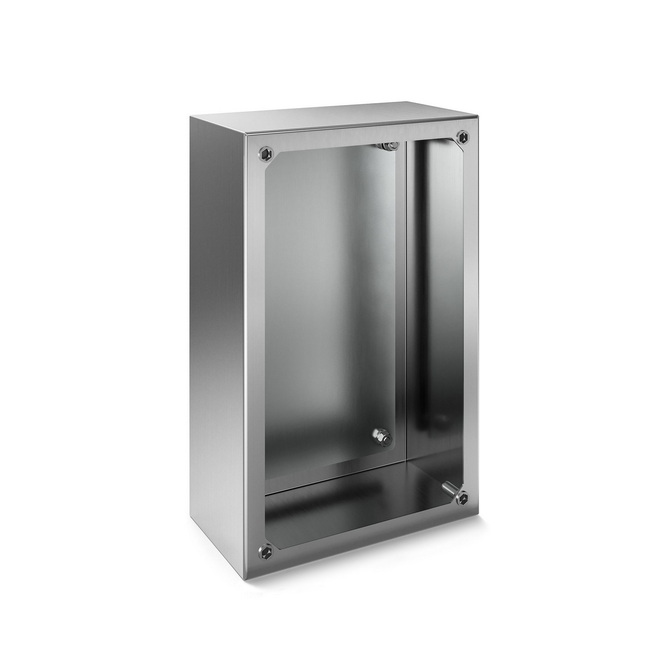
Busbar uses rigid metal bars to distribute power, while traditional wiring uses individual cables and connectors. Busbar offers a more compact, modular, and standardized approach that simplifies design, installation, and maintenance.
Yes, many modern busbar platforms include approved systems with standard components optimized for both AC and DC use. This makes them suitable for international projects and diverse applications, including renewable energy and storage.
Busbar systems use insulated covers, base trays, and shielding that provide defined contact-hazard protection and support stringent flammability performance. This reduces the risk of accidental touch, arcing, and damage during maintenance activities.
Industrial busbar systems can support rated currents up to approximately 1600 A with short-time withstand capabilities up to around 50 kA, depending on conductor dimensions and system design. This makes them suitable for both main distribution and demanding industrial loads.
Yes, many busbar solutions are designed for retrofits, with plug-in components, non-drilling connectors, and modular covers that allow upgrades with minimal disruption to existing workflows. Proper planning and assessment of available space, current ratings, and protection requirements are essential for a successful retrofit.

2026-07-26

2026-07-24


