


Views: 222 Author: Amanda Publish Time: 2026-02-05 Origin: Site


Content Menu
● Busway, Bus Duct, Bus Box and Termination Box: What Is the Difference?
>> Busway
>> Bus Duct
>> Bus Box
● Core Components Inside a Busbar Enclosure
>> 2. Insulation and Support System
>> 4. Access Doors and Hardware
>> 5. Gaskets and Environmental Sealing
● Typical Applications of Busbar Enclosures
● Design Factors That Determine Busbar Enclosure Size and Construction
>> 1. Number of Devices and Access Points
>> 2. Spacing Between Connected Units
>> 3. Installation Environment
>> 4. Current Rating and Short-Circuit Strength
>> 5. Standards, Ratings and Certifications
● Key Custom Features to Look For
>> Multi-Side Access and Serviceability
>> Door and Panel Hardware Options
>> Pre-Punching and Machining of Busbars
>> NEMA and IP Ratings and UL Listing
● Busbar Enclosure vs Cable-Based Distribution
● Best-Practice Steps for Specifying a Busbar Enclosure
>> Step 1 – Define Electrical Requirements
>> Step 2 – Analyze the Installation Environment
>> Step 3 – Determine Mechanical Layout
>> Step 4 – Align With Standards and Certifications
>> Step 5 – Select the Right Manufacturing Partner
● Expert Tips for Safety, Reliability and Maintenance
● Why Work With a Specialized Busbar Enclosure Manufacturer
● Ready to Specify Your Next Busbar Enclosure?
● FAQs About Busbar Enclosures, Busways and Bus Ducts
>> 1. Are busways and bus ducts the same thing?
>> 2. When should I choose a busbar enclosure instead of cables?
>> 3. What standards apply to busbar enclosures?
>> 4. How do I select the correct NEMA or IP rating?
>> 5. What information should I provide to get a quotation for a custom bus box?
Busbar enclosures (also called busways, bus ducts, bus boxes and termination boxes) are specialized electrical enclosures that safely house copper or tin-plated copper busbars carrying very large currents for power distribution. For OEMs, panel builders and EPC contractors, selecting the right busbar enclosure directly affects electrical safety, reliability, maintenance efficiency and total project cost.

A busbar enclosure is an electrical housing that contains rigid copper or aluminum busbars used to distribute high currents between switchgear, transformers, distribution panels and large loads. In many projects, terms like busway, bus duct, termination box and bus box are used interchangeably to describe these enclosures that route and tap power safely along a run.
Typical characteristics:
- Rigid metal enclosure (stainless steel, aluminum or coated carbon steel).
- Multiple busbar phases plus ground supported on insulators or custom Z-brackets.
- Provisions for tapping feeder circuits at defined locations along the enclosure length.
Busbar enclosures are widely used in power distribution, industrial automation, new energy storage, EV infrastructure and building services where compact, high-capacity power routing is required.
In real-world practice, these four terms often overlap, but understanding their nuance helps with design and specification.
A busway is a prefabricated busbar system in a protective enclosure used for distributing power, often over long straight runs within buildings or industrial plants. Busways typically offer standardized lengths, elbows and tap-off units to connect loads along the route.
A bus duct is essentially the same concept as a busway, emphasizing the duct-style enclosure that channels busbars between switchgear, transformers and large loads. Bus ducts are common in medium-to-large commercial and industrial facilities where cable trays would be bulky or hard to cool.
A bus box is a compact busbar enclosure, often custom-made, used at specific points to distribute or terminate high-current feeds. Typical roles include:
- Localized tapping of multiple feeder circuits from a main bus.
- Transition from busway or bus duct to cables or switchgear.
- Compact distribution in machine lines or modular industrial skids.
A termination box usually describes an enclosure where busbars or high-current cables terminate, transition or are re-routed. In many specifications, "termination box" and "bus box" are used interchangeably for enclosures providing protected connection points and cable terminations.
A well-designed busbar enclosure must manage high currents, heat, mechanical forces and environmental risks.
- Material: High-conductivity copper is common; aluminum is used where weight or cost is critical.
- Finishes: Tin-plated copper busbars help prevent oxidation while maintaining low contact resistance, especially in humid or corrosive environments.
- Dimensions: Typical copper busbar stock for custom enclosures ranges from 2–4 inch width and 1/4–1/2 inch thickness, adjusted according to current and thermal design.
Busbars are mounted on insulators and support structures to maintain air clearances and creepage distances. For bus boxes, manufacturers often weld multi-step Z-brackets to separate phases and ground legs reliably. Insulating materials must withstand elevated temperatures and potential short-circuit forces.
Common enclosure materials include:
- Stainless steel for corrosion-resistant, hygienic or outdoor environments.
- Aluminum for lighter weight and easier handling, particularly in overhead or space-critical projects.
- Powder-coated carbon steel as a cost-effective option for indoor, non-corrosive settings.
The enclosure must be sized not only for component fit, but also airflow, creepage distances and required bending radii for incoming and outgoing conductors.
High-current systems demand secure and reliable access:
- Front and rear access panels or doors for installation and maintenance.
- Robust latching mechanisms, hinges and gasketed doors to preserve IP or NEMA ratings.
- Options for locking hardware to prevent unauthorized contact with live parts.
To achieve an ingress protection rating such as IP65 or IP66 or a NEMA rating such as NEMA 4 or 4X, door gaskets and seals must be carefully selected and validated. Poor sealing can allow dust or water ingress, which may lead to tracking, corrosion and unplanned outages.
Busbar enclosures are used wherever there is a need for compact, safe and flexible distribution of high currents.
- Switchgear and power distribution centers: Bus boxes connect switchboards, motor control centers and main low-voltage panels.
- Industrial automation and smart manufacturing: Busways feed production lines, robots and large drives with modular tap-offs.
- Data centers and IT: Busbar systems provide scalable power distribution above racks, reducing cable congestion.
- Commercial buildings: Bus ducts distribute power vertically and horizontally, especially in high-rise or complex layouts.
- New energy storage and EV charging: High-current busbar enclosures interconnect battery racks, power conversion systems, inverters and high-power chargers.
The right busbar enclosure design balances electrical performance, safety, maintainability and cost.
The number of drops or feeder circuits determines how many tap-off or termination points the enclosure must support. More devices typically mean a longer enclosure, larger cross-section or multiple compartments for safe segregation.
The spacing between units, for example between machines or switchgear lineups, affects how many taps are required and where they must be located on the busway or bus box. Thoughtful spacing reduces cable lengths and simplifies routing, lowering installation time and voltage drop.
Location and environmental conditions are critical:
- Indoors: NEMA 1 or 12 or comparable IP ratings may suffice, focusing on dust and accidental contact protection.
- Outdoors: NEMA 4 or 4X or IP65 or IP66 enclosures protect against rain, hose-down water and dust ingress.
- Extreme conditions: Corrosive atmospheres, high humidity, high altitude or heavy pollution may require stainless steel, special coatings and enhanced creepage distances.
Busbar cross-sectional area, spacing and enclosure strength are determined by:
- Continuous current rating and permissible temperature rise.
- Short-circuit withstand requirements and mechanical forces during faults.
- Applicable standards such as IEC 61439 and NEMA PB 1 for low-voltage switchgear and busbar assemblies.
Compliance with recognized standards simplifies approvals and ensures safety:
- IEC 61439-1 and IEC 61439-2 and IEC 60364 for low-voltage assemblies and electrical installations.
- NEMA ratings from 1 to 13 for enclosure environmental protection in North America.
- UL, CE, RoHS and local codes, especially for export-oriented projects and eco-compliance.
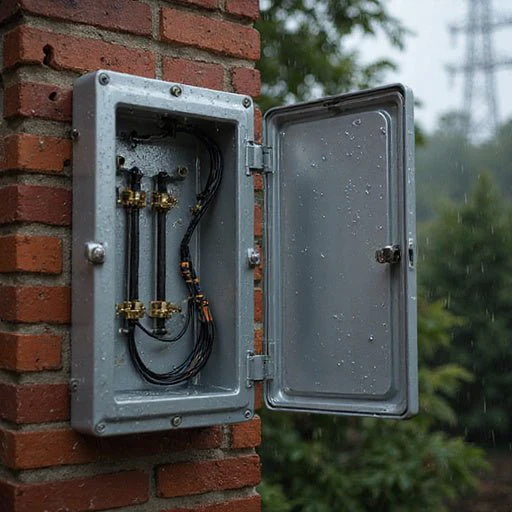
Custom busbar enclosures can be engineered to match your project's exact electrical and mechanical needs.
Manufacturers can offer multiple access points for front and rear access, making installation and maintenance safer and faster in crowded panels or narrow electrical rooms. Good access design reduces downtime and simplifies periodic inspection and torque checks.
Door and panel hardware should support both security and usability:
- Different lock types such as keyed locks, padlockable handles or quarter-turn latches.
- Hinges suitable for frequent access and heavy doors.
- Lifting eyes or brackets for safe handling of large enclosures.
Pre-punching copper busbars to customer drawings allows:
- Consistent hole patterns for bolted terminations and device mounting.
- Reduced on-site fabrication and improved quality control.
Typical busbar dimensions such as 2–4 inch widths and 1/4–1/2 inch thickness can be tailored for bespoke current ratings and thermal performance.
Manufacturers can design enclosures to meet specific NEMA or IP ratings and secure third-party listings such as UL for critical applications. This combination ensures both appropriate environmental protection and recognized safety validation.
For many projects, engineers must decide between traditional cable trays and busbar systems.
Aspect | Busbar Enclosure System | Cable-Based System |
Space efficiency | Highly compact and supports high current in a small footprint. | Requires larger trays and separation for multiple parallel cables. |
Installation speed | Prefabricated lengths and tap-offs reduce installation time. | Pulling, terminating and testing many cables is slower. |
Flexibility | Tap-off units can be repositioned or added for load changes. | Adding loads often requires installing new cables and trays. |
Thermal behavior | Designed for predictable heat dissipation and ratings. | Bundled cables can trap heat and complicate current rating. |
Fault withstand | Mechanically robust against short-circuit forces. | Multiple cable runs may experience uneven forces and damage. |
Visual organization | Clean, organized and easy to audit. | Cable trays may become congested and harder to trace. |
Below is a practical step-by-step approach for engineers and buyers.
1. List all loads, including current, voltage, duty cycle and diversity factors.
2. Determine system short-circuit levels and required withstand rating.
3. Decide on conductor material and plating such as copper, aluminum or tin-plated copper.
1. Confirm indoor versus outdoor location and any presence of dust, moisture or chemicals.
2. Select an appropriate NEMA or IP rating according to risk and local codes.
3. Consider ambient temperature, altitude and ventilation to avoid overheating.
1. Map device spacing and required access points or tap-offs.
2. Define cable entry and exit directions, bending radii and routing space.
3. Specify mounting method such as wall-mount, floor-standing, ceiling suspended or busway supported.
1. Identify relevant standards such as IEC 61439, IEC 60364, NEMA PB 1 and applicable wiring regulations.
2. Determine whether UL, CE, RoHS or other certifications are mandatory for your project.
3. Request type test or routine test documentation where required.
1. Evaluate experience in sheet-metal enclosures and busbar systems across power, industrial, building and new energy projects.
2. Confirm the ability to provide custom dimensions, pre-punched busbars and special coatings.
3. Assess quality systems, on-time delivery record and after-sales engineering support.
A few practical recommendations can drastically improve lifecycle performance.
- Prioritize clearances and creepage: ensure air and surface distances meet or exceed requirements for your voltage and pollution level.
- Plan for thermal performance: validate temperature rise through calculation or simulation to avoid excessive heating under full load.
- Use proper torque tools: connection bolts should be tightened using calibrated torque wrenches to manufacturer specifications.
- Schedule periodic inspections: visual checks, infrared scanning and torque checks help detect loose joints and hot spots early.
- Document configuration: keep updated drawings, settings and test results to streamline troubleshooting and future expansion.
Choosing an experienced manufacturer significantly reduces project risk and engineering workload. A skilled partner in sheet-metal enclosures can design and build stainless steel, aluminum and coated steel solutions that meet demanding environments and service conditions. With custom bus boxes, busways and termination boxes, you can integrate distribution cleanly with switchgear, drives, pumps and energy storage systems.
A manufacturer that supports global markets with CE, IP65 or IP66 and other certifications enables deployment in power, communications, industrial automation, construction and new energy applications. Strong design support, flexible fabrication and robust quality control help you optimize cost and performance while staying compliant with the latest international standards.
If you are planning a new project or upgrading existing distribution, this is the right moment to standardize on high-performance busbar enclosures that improve safety, reliability and maintainability. Share your single-line diagrams, load lists and environmental requirements with a specialized manufacturer to receive a tailored busway or bus box design that matches your electrical and mechanical needs. Reach out today to discuss your application, request engineering guidance and get a customized quotation for your next busbar enclosure project.
Contact us to get more information!
In most low-voltage distribution contexts, busway and bus duct both describe enclosed busbar systems for distributing power and can be treated as equivalent terms. The differences usually come from manufacturer branding or regional usage rather than from fundamental design.
Busbar enclosures are ideal when you need high current capacity, modular tap-off points, cleaner layouts and faster installation compared to large bundles of parallel cables and trays. They are especially advantageous in data centers, industrial plants and high-rise buildings where space and scalability are critical.
Relevant standards include IEC 61439-1 and IEC 61439-2 for low-voltage switchgear and controlgear assemblies and IEC 60364 for electrical installations. NEMA enclosure ratings such as NEMA 12, 4 and 4X are important in North America, and many projects also require UL or CE compliance and RoHS environmental conformity.
Start by assessing whether the enclosure is installed indoors or outdoors and then evaluate exposure to dust, moisture, hose-down cleaning, chemicals or corrosive atmospheres. Match these conditions with the nearest NEMA or IP rating and consider an extra safety margin for harsh or mission-critical environments.
At minimum, provide single-line diagrams, system voltage, current ratings, short-circuit level, environmental conditions, preferred enclosure material and the number and positions of tap-off points. Photographs or layouts of the installation site also help optimize dimensions, mounting design and access for installation and maintenance.
1. https://www.ansys.com/simulation-topics/what-are-electric-busbars
2. https://www.rittal.com/us_en/apps/download/img/uploads/US1096-BR-TR%20Busbar-Guide.pdf
3. https://www.legrand.nl/sites/g/files/ocwmcr626/files/2023-03/AD-EXLG-CS15C-GB-Busbar-Legrand_BEW_WQ.pdf
4. https://viox.com/comprehensive-guide-to-busbars-types-design-manufacturing-applications-and-safety-in-modern-electrical-systems/
5. https://www.tulingmetal.com/common-standards-of-busbar/
6. https://www.bohuitechnology.com
7. https://www.protocase.com/blog/2021/06/30/custom-copper-bus-bars-guide/
8. https://www.chatsworth.com/en-us/resources/blogs/2024/nema-4-vs-nema-12-how-much-protection-do-you-need
9. https://www.fjinno.net/what-is-busbar-complete-guide-to-busbar-systems-monitoring-applications/
10. https://www.rogerscorp.com/blog/2025/enclosure-seal-and-gasket-standards-made-easy
11. https://www.bohuitechnology.com/e_products/
12. http://p537794.webspaceconfig.de/wp-content/uploads/2019/11/Copper-for-Busbars.pdf
13. https://www.archsd.gov.hk/media/publications-publicity/general-specification-for-electrical-installation/eegs2017.pdf

2026-07-26

2026-07-24


