


Views: 222 Author: Amanda Publish Time: 2026-02-13 Origin: Site


Content Menu
● What Is a UL Listed Electrical Enclosure?
● UL Listed vs. Non-UL or Only NEMA Rated Enclosures
● Key Reasons to Use UL Listed Enclosures
>> 1. Meeting Customer and Industry Requirements
>> 2. Supporting Code Compliance and Inspections
>> 3. Environmental Protection and Tested Performance
>> 4. Reduced Safety Risk and Liability Exposure
>> 5. Insurance, Business Continuity, and Brand Trust
● When Do You Really Need a UL Listed Enclosure?
● Best Practices When Selecting UL Listed Enclosures
>> Step 1 – Clarify Standards and Jurisdictions
>> Step 2 – Define Environmental and Safety Requirements
>> Step 3 – Consider Modifications and Customization
>> Step 4 – Work with an Experienced Enclosure Manufacturer
● Example Use Cases for UL Oriented Enclosures
● Final Call to Action: Partner with Ningbo Bohui Electric for Your Next UL Oriented Project
● Frequently Asked Questions (FAQ)
>> 1. What is the difference between a UL listed enclosure and a recognized component?
>> 2. Does every industrial enclosure need to be UL listed?
>> 3. How does modifying a listed enclosure affect its compliance?
>> 4. How do enclosure standards relate to NEMA type ratings like Type 4X?
>> 5. Are enclosures suitable for both the United States and Canada?
Choosing UL listed electrical enclosures is critical if you want safe, compliant, and reliable systems in power, communication, industrial automation, buildings, new energy storage, EV charging, and water-pump applications. Using non-listed or poorly documented enclosures can create hidden safety risks, delay inspections, and even block project approvals.
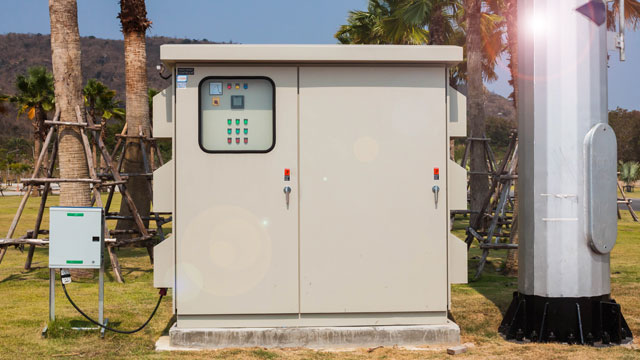
A UL listed enclosure is an electrical enclosure that has been independently tested and certified by Underwriters Laboratories (UL) to meet specific safety and performance standards. These tests typically evaluate flammability, heat resistance, impact resistance, ingress protection, and construction quality to ensure the enclosure can safely house live components and contain failures such as short circuits and arcs.
UL's enclosure requirements are defined mainly in UL 50 and UL 50E (enclosures for electrical equipment) and are referenced by other standards such as UL 508A for industrial control panels. By selecting a UL listed enclosure, OEMs and panel builders show that the mechanical layer of their system meets a recognized third-party safety benchmark rather than relying only on internal declarations.
Many engineering teams confuse NEMA ratings with UL listing, but they address different questions. Understanding this difference is essential if your projects must satisfy electrical codes, workplace safety rules, insurers, or demanding industrial clients.
Aspect | UL Listed Enclosure | Only NEMA Rated / Non-UL |
Verification body | Independently tested and certified by UL (NRTL) | Declared by the manufacturer without mandatory third-party testing |
Main focus | Electrical safety, construction, and environmental performance validated to recognized standards | Environmental capability claimed (dust, water, corrosion) but not necessarily third-party verified |
Typical standards | UL 50 / UL 50E, UL 508A, and related application standards | NEMA 250 rating only, or internal company standard |
Acceptance by inspectors | Widely accepted by Authorities Having Jurisdiction as evidence of code compliance | Often requires extra documentation or field evaluation |
Risk and liability | Demonstrates due diligence and reduces risk in audits, claims, and insurance reviews | Higher risk of rejection, rework, or liability if an incident occurs |
In short, NEMA rating tells you what the enclosure is supposed to withstand; UL listing proves it has been tested to do so.
Many industrial customers now specifically require UL listed enclosures in their technical specifications, RFQs, and framework contracts.
Common scenarios include:
- Global OEMs and system integrators standardizing on UL listed control panels and enclosures for all sites.
- Safety-critical industries such as oil and gas, food processing, pharmaceuticals, and other regulated sectors that mandate UL certification.
- Multinational companies using UL and similar marks to harmonize safety requirements across North America and other regions.
If your quotation proposes a non-listed enclosure in these environments, you risk being removed from consideration before technical evaluation even starts.
In North America, regulatory compliance is often the main driver for using UL listed enclosures.
Key factors include:
- Industrial control panels and related equipment must often be listed or evaluated by a nationally recognized testing laboratory.
- Electrical equipment must be installed and used according to its listing and labeling instructions, which ties field installation directly to the enclosure's certification.
- Workplace safety regulations frequently expect critical electrical equipment to be certified by an independent body.
- Local electrical inspectors rely on recognized certification marks as a practical way to verify that equipment meets safety standards.
Using a UL listed enclosure reduces arguments during inspection and shortens approval time, especially for complex industrial facilities where inspectors focus heavily on documentation and labels.
For applications exposed to harsh environments, a UL listing is not only about electrical safety; it also validates environmental performance.
UL differentiates two core enclosure standards:
- UL 50 – Construction and general performance of electrical enclosures, mainly for non-hazardous locations.
- UL 50E – Adds environmental tests such as water ingress, dust, and impact for indoor and outdoor use, often linked to specific type ratings.
If your enclosure is installed in any of the following conditions, a design aligned with these requirements is highly recommended:
- Outdoor installations exposed to sun, rain, sleet, snow, and ice formation.
- Dusty or dirty environments such as cement plants, mining, grain handling, or machining.
- Heavy washdown areas in food, beverage, and pharmaceutical processing that require corrosion-resistant stainless steel and robust sealing.
Using a properly tested stainless steel enclosure in a washdown food plant, for example, shows that the enclosure has been validated for both corrosion resistance and hose-down protection, not just assumed by the manufacturer.
UL and similar listings are widely recognized as providing enhanced protection against electrical hazards, which directly reduces operational risk.
Typical risk-reduction benefits include:
- Improved personnel safety through controlled access to live parts, consistent creepage and clearance distances, and proven insulating materials.
- Better containment and mitigation of internal faults such as short circuits and overheating, reducing the chance of fire or external damage.
- More consistent build quality thanks to ongoing factory inspections that help maintain the integrity of the certified design over time.
In incident investigations, having certified equipment demonstrates that you followed recognized best practice and can significantly influence how liability and corrective actions are assessed.
Many insurance companies explicitly prefer or require listed electrical equipment because third-party certification reduces the probability and severity of claims.
From a business perspective, UL listed enclosures support:
- Easier insurance approval and, in some cases, more favorable terms.
- Lower risk of project delays, rework, and fines due to failed inspections.
- Stronger brand positioning in safety-critical markets such as data centers, EV infrastructure, energy storage, and process industries.
As a result, UL listed enclosures are often viewed as a strategic investment in risk management and brand protection, rather than a simple cost add-on.
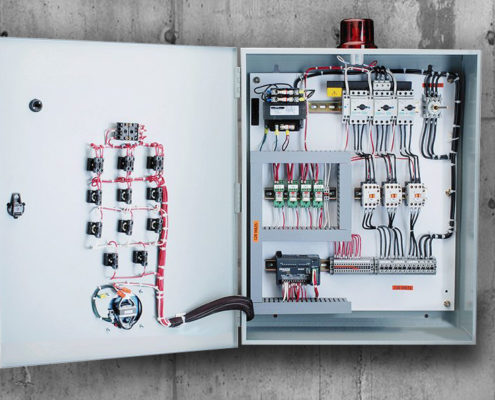
Not every application legally requires UL listed enclosures, but in practice they are strongly recommended whenever one of the following applies.
You should strongly consider UL listed enclosures if:
1. Your customer specification explicitly requires UL or an equivalent certification.
2. You supply to markets where electrical codes and workplace safety regulations are enforced strictly.
3. Your application is mission-critical, such as utilities, data centers, EV charging, storage batteries, and intelligent manufacturing lines.
4. The environment is harsh, including outdoor, corrosive, washdown, or heavily dusty conditions.
5. Insurance, auditors, or corporate standards reference certified equipment as a baseline.
For simpler, non-critical indoor applications outside regulated environments, a non-listed but well-designed enclosure may be acceptable, but it remains your responsibility to document safety, environmental capability, and proper installation.
This section offers practical steps for engineers and procurement teams choosing a UL listed enclosure for new projects.
Before specifying any enclosure, confirm:
- Countries and regions of installation, especially if equipment will be used in multiple markets.
- Applicable codes and internal guidelines, including electrical and building requirements.
- Required standards for enclosures and control panels, so that mechanical and electrical design are aligned from the beginning.
Clear answers here avoid redesigns and late changes during the project.
Map the physical environment and user safety expectations to a suitable type rating and enclosure design.
Key questions include:
- Is the enclosure for indoor or outdoor use, or both.
- Will it be exposed to dust, oil, chemicals, or regular washdown.
- Do you need corrosion-resistant stainless steel, powder-coated steel, or other specialized materials.
- Is there a risk of untrained personnel accessing the panel, requiring higher protection against accidental contact.
Answering these points helps you choose the right type rating and construction details and avoids underspecifying or overspecifying the enclosure.
If you modify a pre-certified enclosure, you may affect its compliance status.
Examples include:
- Cutting additional openings for cable glands, fans, or HMI windows.
- Changing door hardware, gasket materials, or hinges.
- Adding ventilation components or filters that alter ingress performance.
To stay compliant, you may need a follow-up assessment for the modified design or work with a manufacturer that can integrate your cutouts and mounting requirements while maintaining the design within a controlled specification.
Partnering with a manufacturer that understands certification requirements simplifies the entire process from design to inspection.
A strong partner should be able to:
- Recommend suitable materials and type ratings for your environment and industry.
- Design custom enclosure dimensions and layouts that support safe cable routing, device mounting, and heat management.
- Support documentation and marking for smooth inspection and long-term maintenance.
This is especially important for sectors such as power distribution, industrial automation, building management, new energy storage systems, EV charging stations, and water-pump control systems where safety and uptime are critical.
Below are representative scenarios where properly specified and tested enclosures deliver clear value.
- Power and grid applications: Protection for transformers, switchgear, and control systems in substations and renewable energy interfaces.
- Telecom and network infrastructure: Outdoor cabinets housing communication equipment, where sealing and mechanical strength protect against weather and vandalism.
- Industrial intelligent manufacturing: Control panels on automated production lines that must pass strict internal standards and insurance audits.
- Building and HVAC control: Centralized control cabinets serving commercial buildings that are inspected regularly.
- New energy storage and EV charging: Battery management and charger control enclosures exposed to outdoor conditions and public interaction, where safety and reputation are paramount.
These scenarios align closely with the sectors served by professional enclosure manufacturers such as Ningbo Bohui Electric Co., Ltd.
If you are planning new projects in power, communication, industrial automation, building management, new energy storage, EV charging, or water-pump systems, now is the time to standardize on high-quality, UL oriented enclosure solutions that support safe and compliant operation.
Contact Ningbo Bohui Electric Co., Ltd. today to:
- Discuss your target type ratings, application environments, and project timelines.
- Optimize enclosure materials, layouts, and cutouts for your specific equipment and wiring needs.
- Build a scalable enclosure platform that supports safer, more reliable, and more efficient systems across all your sites.
Reach out to our engineering team now and start designing enclosure solutions that are ready for inspection, ready for integration, and ready for long-term performance.
Contact us to get more information!
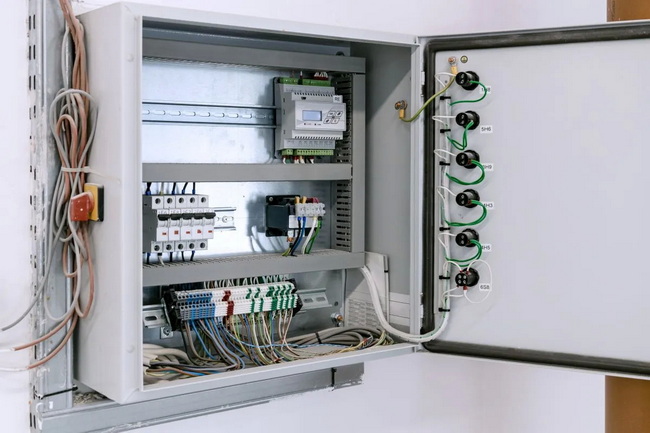
A UL listed enclosure is a complete product evaluated as a standalone unit, while recognized components are parts intended to be used within a larger certified system. For electrical panels, enclosures are usually listed, and internal devices such as relays and breakers may be recognized components.
Not all installations legally require UL listing, but many facilities governed by strict electrical and safety rules expect certified equipment as a baseline. For lower-risk environments, non-listed enclosures may be allowed, but the owner must still ensure safety and proper documentation.
Adding openings, changing doors, or altering sealing components can affect the original compliance status if not evaluated correctly. In such cases, you may need a follow-up assessment, or you should work with a manufacturer who can integrate your modifications under a controlled, properly documented design.
Construction and basic performance requirements define how enclosures are built, while additional environmental testing supports specific type ratings such as Type 4 or 4X. NEMA ratings describe intended environmental capability, while testing and certification validate that performance.
Many enclosures carry marks that show they have been evaluated for use in both countries. When projects span both markets, using enclosures with dual suitability simplifies compliance, specification, and inspection for all stakeholders.
1. https://www.nemaenclosures.com/blog/why-use-a-ul-listed-enclosures/
2. https://blog.cimon.com/nema-vs.-ul-type-ratings-choosing-the-right-protection-for-your-industrial-equipment
3. https://www.fiboxusa.com/enclosure-resources/faq/what-is-cul-and-ul-listed-and-why-is-it-important-for-enclosures-/
4. https://keystonecompliance.com/ul-50e/
5. https://f2labs.com/ul-50-ul-50e
6. https://evsmetal.com/2015/05/ul-certified-type-1-508a-enclosures/
7. https://www.polycase.com/techtalk/electronics-tips/what-does-ul-listed-mean.html
8. https://apx-enclosures.com/benefits-of-using-nema-sheet-metal-enclosures-in-engineering-projects/
9. https://evsmetal.com/2021/10/nema-rated-metal-enclosures/
10. https://www.sytechprecision.com/2024/07/why-industrial-grade-enclosures-are-essential-for-factories/

2026-07-26

2026-07-24


