


Views: 222 Author: Amanda Publish Time: 2026-02-10 Origin: Site


Content Menu
● What Is a NEMA Rating and Why It Matters
● Quick NEMA Rating Overview Table
● NEMA Type 1: Basic Indoor Protection
● NEMA Type 3R: Entry-Level Outdoor Weather Protection
● NEMA Type 4: Water-Tight, Indoor/Outdoor, Washdown Ready
● NEMA Type 4X: Corrosion-Resistant Protection for Aggressive Environments
>> Material Comparison for 4X Enclosures
>> Important Maintenance Note: “Tea Staining” on Stainless
● NEMA Type 12: Indoor Industrial Protection Against Dust, Lint, and Drips
● How to Choose the Right NEMA Rating Step by Step
>> Step 1: Define the Installation Location
>> Step 2: Assess Environmental Exposure
>> Step 3: Identify Corrosion Risks
>> Step 4: Define Compliance and Lifecycle Goals
>> Step 5: Map Environment to Rating
● Best Practices for Installing and Maintaining NEMA Enclosures
>> Maintenance Recommendations
● NEMA Ratings vs. Real-World Applications
● When to Consider Upgrading One Level
● Focused Call to Action: Plan Your Enclosure Strategy Now
● FAQs About NEMA Enclosure Ratings
>> 1. Is a NEMA 3R enclosure completely waterproof?
>> 2. When should I choose NEMA 4 instead of 3R?
>> 3. What is the main advantage of NEMA 4X over NEMA 4?
>> 4. Can I use a NEMA 12 enclosure outdoors?
>> 5. Does stainless steel ever rust in a NEMA 4X enclosure?
For engineers, buyers, and project managers, selecting the correct NEMA enclosure rating is critical to keep equipment safe, compliant, and cost-effective across power, telecom, industrial automation, construction, and new energy applications.
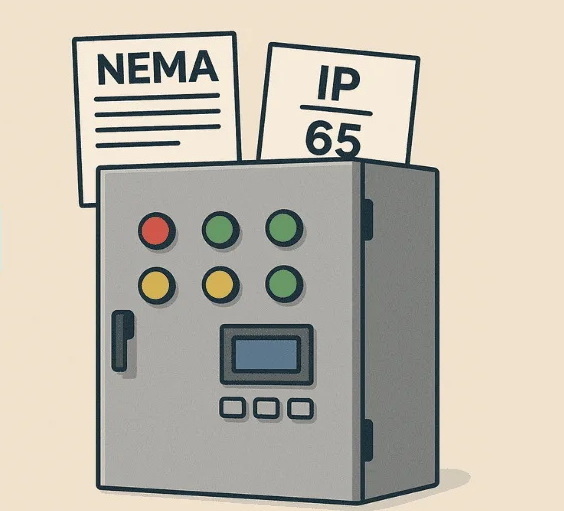
A NEMA rating is a standardized way to describe how well an electrical enclosure protects internal components from dust, water, ice, and environmental contaminants. These ratings are defined by the National Electrical Manufacturers Association and widely used in North America for low- and medium-voltage equipment in industrial and commercial projects.
Choosing an incorrect rating can lead to:
- Premature corrosion or water ingress
- Unplanned downtime and maintenance
- Safety hazards and even code violations
- Over-specification and unnecessary cost
When you match the enclosure rating to the real environment, you extend equipment life and reduce total cost of ownership.
Use this table as a fast reference when screening enclosure types for a project.
NEMA Type | Indoor / Outdoor | Protects Against (Key Points) | Typical Applications |
1 | Indoor | Limited dust, light, incidental contact, indirect splashing (not dust-tight). | Control panels in clean rooms, office or commercial interiors. |
3R | Outdoor | Falling rain, snow, ice formation; not fully rain-tight or water-tight; not gasketed. | Power distribution, lighting control, basic outdoor panels. |
4 | Indoor / Outdoor | Windblown dust, rain, sleet, snow, splashing water, hose-directed water; resists ice formation. | Washdown areas, industrial plants, process equipment outdoors. |
4X | Indoor / Outdoor | All Type 4 protections plus corrosion resistance (for example, salt spray). | Marine, chemical plants, food and beverage, coastal installations. |
12 | Indoor | Dust, lint, fibers, light splashing, oil and non-pressurized fluids; no knockouts; gasketed door. | Industrial machinery, manufacturing lines, dusty workshops. |
NEMA Type 1 enclosures are general-purpose indoor enclosures designed mainly for personnel protection and basic environmental shielding.
- Protects against limited dust, light, and indirect splashing.
- Primarily prevents accidental contact with live or moving parts inside the enclosure.
- Not dust-tight and not intended for dripping oil or washdown environments.
Type 1 is often suitable for:
- Low-risk indoor electrical rooms
- Office-adjacent control cabinets
- Communication or data panels in clean, conditioned spaces
If you expect dust, oil mist, or frequent cleaning with water, you should move to a higher rating like Type 12 or Type 4.
NEMA Type 3R enclosures are designed for outdoor use where equipment is exposed to weather but not to direct washdown or corrosive agents.
- Provides protection against falling rain and ice formation.
- Typically built with knockouts on sides and bottom to route conduits.
- Designed so beating rain does not interfere with proper operation under specified conditions.
- Not rain-tight or water-tight in all conditions, and moisture can enter under heavy water streams.
- Usually without gasketed sealing surfaces.
NEMA 3R is commonly used for:
- Power distribution boxes on building exteriors
- Lighting contactor and control panels
- Outdoor electrical components where occasional moisture is acceptable
In many markets, 3R is used as an economical solution for outdoor panels that do not require full washdown or dust-tight protection.
You should avoid Type 3R when:
- The enclosure is exposed to hose cleaning, pressure washing, or frequent water jets.
- The environment includes wind-blown dust or airborne chemicals.
- The project demands long-term protection from salt spray or industrial corrosion.
In these cases, Type 4 or 4X is usually a better fit.
NEMA Type 4 enclosures are weather-tight (often called weatherproof) and are suitable for both indoor and outdoor use in harsh conditions.
- Protect against falling dirt, rain, sleet, and snow.
- Resist windblown dust, splashing water, and hose-directed water, making them suitable for washdown.
- Designed to be undamaged by the external formation of ice on the enclosure.
- Often used in powder-coated carbon steel with robust gasketing and secure latching.
Typical Type 4 applications include:
- Food and beverage plants with regular water cleaning (non-corrosive detergents)
- Outdoor equipment exposed to dust and occasional hose washdowns
- Industrial process controls in areas with water spray or heavy condensation
NEMA 4 enclosures are often available in wall-mounted, free-standing, and JIC formats to fit different installation layouts.
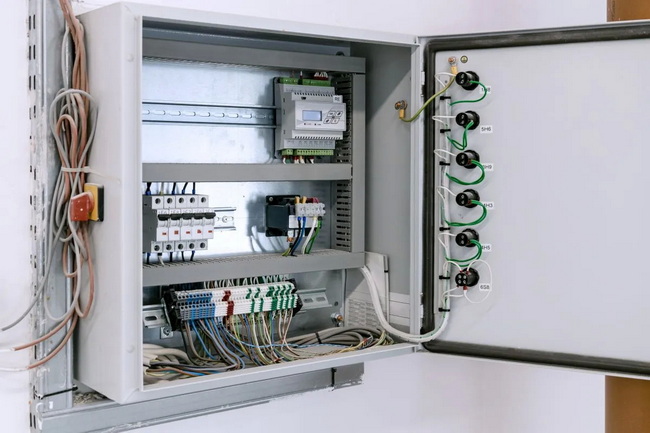
NEMA Type 4X builds on all the protections of Type 4 and adds corrosion resistance using carefully selected materials.
- Provides Type 4 protection against dust, rain, sleet, snow, splashing and hose-directed water.
- Constructed from corrosion-resistant materials designed to withstand salt spray and other corrosive agents.
- Common materials include 5052-H32 aluminum, 304/304L stainless steel, and 316/316L stainless steel.
Material | Corrosion Resistance | Typical Use Case |
5052-H32 aluminum | Good resistance to many industrial atmospheres; light weight. | General outdoor, moderate corrosion environments. |
304 / 304L stainless steel | Strong corrosion resistance, similar to fiberglass in many cases. | Industrial plants, food processing, urban coastal. |
316 / 316L stainless steel | Highest corrosion resistance among common 4X materials; better resistance to salt and some acids. | Marine environments within about 5 miles of salt water. |
316 stainless is strongly recommended for marine applications or coastal zones where salt spray or high salinity is present. However, its resistance to sulfates and chlorine can be lower than that of 304 in some conditions, so material selection should consider the specific chemical profile.
Even corrosion-resistant stainless steel is not completely “stain-free”.
- Under certain conditions, rust-colored deposits can form on the surface due to contamination from rain or marine environments.
- This phenomenon, often called tea staining, does not necessarily indicate structural failure but can affect appearance.
- Periodic cleaning with a neutral solution or regular washing with clean water significantly reduces tea staining.
NEMA Type 12 enclosures are designed for indoor industrial and manufacturing environments where airborne contaminants and light liquid exposure are present.
- Built without knockouts, which improves sealing against dust.
- Provide protection against access to hazardous parts and ingress of solid foreign objects like falling dirt, circulating dust, lint, fibers, and flyings.
- Offer protection from dripping and light splashing water, as well as some non-pressurized oil and coolant.
- Use gasketed doors to seal the enclosure contents from airborne contaminants and non-pressurized water and oil.
Type 12 is widely used in:
- Industrial manufacturing lines and machining centers
- Packaging and material-handling equipment
- Electrical cabinets in dusty workshops or production halls
These enclosures are commonly produced in aluminum, carbon steel, or stainless steel and are intended primarily for indoor use.
To avoid over- or under-specifying an enclosure, follow this simple selection workflow.
- Indoor, outdoor, or mixed (for example, semi-outdoor, covered areas).
- Proximity to coastal or marine environments.
- Presence of rain, snow, or sleet.
- Risk of hose-down, pressure washing, or cleaning cycles.
- Level of dust, lint, fibers, and airborne particulates.
- Exposure to oil, coolants, or chemicals.
- Salt spray (near the sea, highway de-icing, etc.).
- Chemical vapors in industrial plants.
- Long-term outdoor exposure in harsh climates.
- Required standards and certifications.
- Expected service life and maintenance strategy.
- Cost versus risk tolerance.
- Clean indoor: often Type 1.
- Outdoor without washdown or heavy dust: Type 3R.
- Indoor/outdoor with washdown and dust: Type 4.
- Harsh or corrosive environments (marine, chemicals): Type 4X.
- Indoor with dust, lint, oil mist: Type 12.
This structured approach helps buyers, engineers, and OEMs standardize enclosure selection across multiple projects.
Even the best enclosure can fail early if installation and maintenance are neglected.
- Ensure mounting surfaces are flat and rigid to avoid door misalignment and gasket gaps.
- Use appropriate cable glands and fittings that maintain the enclosure's rating.
- Avoid field-cut openings that are not properly sealed or reinforced.
- Follow relevant codes and standards for grounding and bonding.
- Inspect door gaskets periodically for cracks, compression set, or chemical attack.
- Clean stainless surfaces with neutral solutions, especially in marine or polluted atmospheres, to avoid tea staining.
- Monitor for signs of condensation or water ingress and address root causes quickly.
- In outdoor or corrosive sites, schedule regular visual checks for coating damage or corrosion spots.
Below are example scenarios to illustrate how different NEMA ratings align with modern industries:
- Solar and energy storage systems: Outdoor combiner boxes and battery enclosures often demand NEMA 3R, 4, or 4X depending on washdown and corrosion exposure.
- EV charging and new energy vehicles: Public chargers and auxiliary power cabinets typically require outdoor-rated, corrosion-resistant enclosures, often Type 4 or 4X.
- Smart manufacturing and IIoT: Indoor control and communication cabinets in dusty production environments commonly use Type 12.
- Building and infrastructure projects: Stairwell panels, HVAC controls, and pump stations may span Type 1 indoors up to Type 4 or 4X outdoors depending on risk level.
These examples show why it is essential to evaluate both environmental and operational conditions, not just “indoor versus outdoor”.
In many long-lifecycle projects, it can be wise to upgrade to the next higher NEMA rating when:
- The environment is borderline between two ratings (for example, partly sheltered outdoor area).
- Equipment is critical to operations, with high downtime costs.
- Future changes may add washdown, chemical exposure, or process intensification.
For instance, upgrading from 3R to 4 can be an inexpensive way to reduce risk if there is any chance of direct hose spray or high wind-driven rain over the project lifetime.
If you are planning enclosures for power distribution, telecom, networking, industrial automation, building projects, water treatment, new energy storage, or EV infrastructure, now is the right time to define a clear enclosure strategy. By standardizing your NEMA ratings, materials, and installation practices, you can significantly reduce risk, unplanned downtime, and long-term maintenance costs. Reach out to a specialized enclosure manufacturer or engineering partner, share your environmental and performance requirements in detail, and work together to specify the most suitable NEMA type, material, and customization options for your next project.
Contact us to get more information!
No. NEMA 3R is designed for outdoor use and protects against falling rain and ice, but it is not fully rain-tight or water-tight, and water may enter under certain conditions such as heavy beating rain or water streams.
Choose NEMA 4 when the enclosure will be exposed to hose-directed water, washdown, or wind-driven dust, or when you need a more robust seal against harsh weather and airborne contaminants.
NEMA 4X adds corrosion resistance by using materials such as aluminum or stainless steel, making it more suitable for marine, chemical, or high-humidity environments where standard coated steel may corrode faster.
NEMA 12 is intended specifically for indoor use, protecting against dust, lint, fibers, and light splashing or dripping liquids. It is not designed to withstand direct outdoor weather exposure like rain, snow, or UV.
Stainless steel can develop surface rust deposits or tea staining under certain environmental conditions, especially in marine or polluted areas, but regular cleaning with neutral solutions or fresh water helps maintain appearance and performance.

2026-07-26

2026-07-24


