


Views: 222 Author: Amanda Publish Time: 2026-02-03 Origin: Site


Content Menu
● What Is an IP Rating and Why It Matters
● IP66 Rating Explained: Dust-Tight and Powerful Water Jets
>> Typical IP66 Enclosure Applications
● IP68 Rating Explained: Dust-Tight and Continuous Immersion
>> Typical IP68 Enclosure Applications
● IP66 vs IP68: Direct Comparison
● Why IP Ratings Do Not “Stack” (IP66 vs IP68 Misconceptions)
● Real-World Scenarios: When to Choose IP66 vs IP68
>> Scenario 1 – Industrial Automation and Smart Manufacturing
>> Scenario 2 – New Energy Storage and EV Infrastructure
>> Scenario 3 – Water and Wastewater, Tunnels, and Coastal Sites
● Step-by-Step Checklist: How to Choose the Right IP Rating
● How to Maintain IP66 and IP68 Protection in Service
● Design Tips for IP66 and IP68 Electrical Enclosures
● When You Should Specify IP66/IP68 Dual-Rated Enclosures
● Build a Custom IP66 or IP68 Enclosure for Your Application
● Call to Action: Get Expert Help Choosing Between IP66 vs IP68
● FAQ: IP66 vs IP68 Enclosures
>> 1. Is IP68 always better than IP66 for waterproof enclosures?
>> 2. Can I use an IP66 enclosure underground or in a pit?
>> 3. Do I need special cable glands for IP66 or IP68?
>> 4. How often should IP66 or IP68 gaskets be replaced?
>> 5. Can an enclosure be both IP69K and IP68?
When you compare IP66 vs IP68 enclosure ratings, you are choosing between protection against powerful water jets (IP66) and protection for continuous immersion in water (IP68). Both are fully dust-tight, but they solve very different real-world problems in power distribution, telecom, networking, industrial automation, building, and new energy applications.
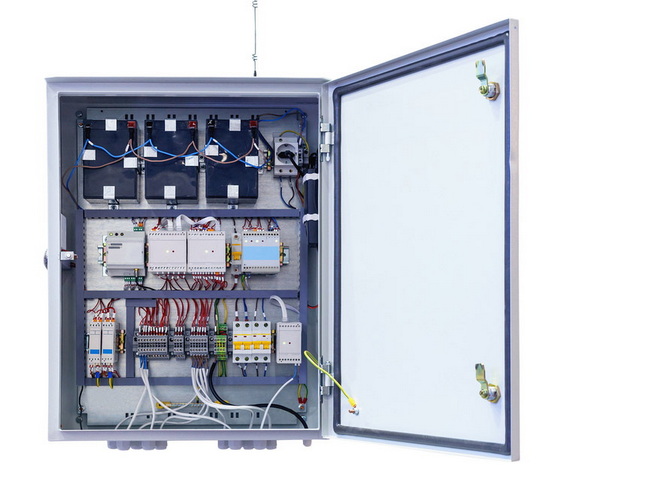
An IP rating (Ingress Protection) is defined by IEC 60529 and describes how well an enclosure resists ingress of solids (dust) and liquids (water). The code uses two digits: the first digit (0–6) covers solid ingress, and the second digit (0–9) covers water protection.
- First digit “6” = dust-tight, no dust can enter during the test.
- Second digit “6” = protection against powerful water jets from any direction.
- Second digit “8” = protection against continuous immersion beyond 1 m, with depth and time defined by the manufacturer.
Because IP ratings focus only on dust and water, you must still consider UV, chemicals, impact (IK rating), and temperature separately when choosing an electrical enclosure solution.
An IP66 enclosure is completely dust-tight and is tested to resist powerful water jets without water entering in harmful quantities. During the typical IPX6 test, a 12.5 mm nozzle sprays around 100 L/min of water at about 100 kPa from 2.5–3 m for at least 3 minutes, or 1 minute per square meter of the enclosure surface, whichever is longer.
- Wind-driven rain and heavy storms
- Hose-down cleaning with moderate to strong jets
- Splash and spray from adjacent processes
- Complete dust ingress
- Outdoor junction and control boxes on walls or poles
- Rooftop HVAC and building automation panels
- Roadside traffic control cabinets
- Food and beverage zones using cold or moderate-pressure washdown
- Dusty sites such as quarries, cement plants, grain handling, and solar/PV combiner boxes
An IP66 enclosure is about jets, not immersion; if flooding or standing water is likely, you should evaluate IP67 or IP68, or a dual IP66/IP68 design.
An IP68 enclosure is also completely dust-tight but is tested for continuous immersion deeper than 1 m, under conditions defined by the manufacturer. Unlike IP66, there is no single fixed test value: the datasheet must specify depth (for example, 2 m) and duration (for example, 24 hours) that meet or exceed the IPX7 requirement.
- Long-term submersion in water beyond 1 m
- Standing water in pits, vaults, and flooded areas
- Dust in harsh, dirty environments
- Underground pits, vaults, and manholes for utilities, irrigation, or telecom
- Water and wastewater lift stations and valve or pump controllers
- Marinas, docks, fountains, and aquaculture systems
- Low points, underpasses, and trenches that regularly collect water
- Submersible lighting, underwater cameras, and sensors
A critical point is that IP68 does not automatically guarantee resistance to powerful water jets; immersion and jet tests are different, so an IP68-only product may be vulnerable during pressure washing.
The table below summarizes the key differences between IP66 and IP68 enclosure ratings for designers, OEMs, and end users.
Aspect | IP66 Enclosure | IP68 Enclosure |
Solids protection | 6 = dust-tight, no dust ingress | 6 = dust-tight, no dust ingress |
Water protection focus | Powerful water jets, storms, and hose-down | Continuous immersion beyond 1 m depth |
Water test method | 12.5 mm nozzle, about 100 L/min at about 100 kPa, at least 3 minutes from 2.5–3 m | Immersion beyond 1 m; exact meters and minutes set by manufacturer |
Immersion protection | No formal guarantee for immersion | Designed and tested for long-term immersion |
Jet-spray protection | Designed specifically for powerful jets | Not necessarily tested for jets; may fail under pressure wash |
Typical NEMA parallel (approximate) | Similar to NEMA 4/4X for weather and hose-down | Similar to NEMA 6/6P for immersion |
Common applications | Outdoor control boxes, roadside cabinets, factory wash areas, PV combiner boxes | Pits, vaults, docks, flood-prone sites, submerged lighting and pumps |
Cost and complexity | Often lower cost and easier to design | Typically higher cost due to sealing and mechanical design |
When not to use | Areas with frequent deep flooding or long-term immersion | Zones where systems face intense, close-range jet cleaning without jet rating |
For many outdoor and industrial applications, IP66 is sufficient and more economical, while IP68 is reserved for critical systems that must survive prolonged submersion, such as flood-prone infrastructure and underwater equipment.
A frequent misconception is that a higher second digit always includes all lower test conditions, so people assume IP68 is better than IP66 in every way. In reality, immersion tests (7–8) and jet tests (5–6 and 9) are different and independent, so an IP68 rating does not guarantee high-pressure jet performance.
Key clarifications:
- IP68 is not the same as “IP66 plus immersion” – it covers immersion but not necessarily jets.
- IP66 is not the same as “IP68 minus immersion” – it handles jets, not long-term submersion.
- Some harsh sites must specify dual ratings, such as IP66/IP68 or IP69K/IP68, to prove both wash-down and immersion protection.
Understanding this non-stacking behavior is crucial when designing enclosures for wastewater plants, tunnels, coastal installations, and energy storage systems that may face both pressure washing and flooding.
Different industries need different combinations of dust, jet, and immersion protection. The examples below show how to choose between IP66 and IP68 in practical engineering scenarios.
In a smart factory with frequent hose-down cleaning but no deep standing water, an IP66 control cabinet typically offers the best balance of protection, cost, and maintainability. If cleaning involves hot, high-pressure steam at close range, you may step up to IP69K for jet protection while keeping IP66 or IP69K/IP68 where occasional flooding is possible.
Battery energy storage systems, EV charging stations, and inverter cabinets installed outdoors must handle dust, rain, and maintenance washing, so an IP66 enclosure is often the base requirement. For low-lying sites or underground cable terminations exposed to flooding, IP68 junction boxes and connectors are used to keep power safe during prolonged immersion.
Wastewater treatment plants, tunnels, underpasses, coastal substations, and marinas often face both wash-down and flooding risk. In these environments, engineers frequently specify IP66/IP68 enclosures, ensuring resistance to powerful jets for cleaning plus proven performance during long-term submersion.
Use this practical checklist when defining enclosure specifications for your project.
- Identify dust and particulate risks.
If the environment includes cement dust, grain, sand, or construction debris, you need the first digit to be 6 for a fully dust-tight design.
- Determine exposure to spray, rain, and wash-down.
For storms, splash, and hose cleaning, IP66 is usually the minimum; for close-range hot pressure cleaning in food, pharma, or vehicle wash areas, consider IP69K.
- Evaluate immersion and flooding scenarios.
If enclosures may sit under water in pits, docks, or flood zones, specify IP68 and verify the exact depth and time on the datasheet.
- Assess if you need both jets and immersion.
Where both wash-down and inundation occur, call for dual rating such as IP66/IP68 or IP69K/IP68 to cover both conditions.
- Check accessories and system-level sealing.
Ensure cable glands, vents, viewing windows, locks, and door seals meet the same IP rating as the enclosure body.
- Plan for thermal management and condensation.
Use pressure-equalization vents, drains, and desiccants as needed, making sure they maintain the required IP rating.
- Request documentation and test evidence.
Ask suppliers for IP test reports or certificates, especially for IP68, where immersion depth and duration are not standardized.
Even the best enclosure will lose its protection if gaskets, fasteners, and cable seals are neglected. A simple maintenance routine can keep IP66 and IP68 enclosures performing for many years in harsh environments.
Recommended maintenance actions:
- Inspect gaskets and O-rings regularly. Check for cracks, flattening, cuts, or loose corners; replace degraded seals promptly.
- Clean sealing surfaces. Keep door frames and covers free from dust, oil, and chemical residue; avoid aggressive solvents on rubber materials.
- Verify hinge and latch torque. Retighten screws and latches to the manufacturer's specifications so the seal compresses evenly.
- Check cable glands and conduit entries. Ensure compression rings, locknuts, and strain reliefs are intact, tight, and rated for the same IP level.
- Monitor corrosion. Treat rust early, apply touch-up coatings, and use anti-seize on stainless fasteners to prevent galling.
For IP68 systems in submerged or buried locations, scheduled inspections during shutdowns and periodic re-testing can confirm that immersion performance remains within design limits.
Thoughtful design choices can improve protection, lifespan, and total cost of ownership for high-IP electrical enclosures.
Key design tips:
- Select enclosure materials such as stainless steel, aluminum, FRP, or polycarbonate that match environmental conditions, including corrosion, UV, and temperature.
- Use molded-in or welded flanges and stiffeners to limit deformation and keep gaskets evenly compressed during jet or immersion loads.
- Minimize the number of penetrations; where needed, use certified high-IP cable glands and sealed connectors.
- For immersion applications, consider double sealing, pressure-balanced designs, and raised or angled surfaces to prevent air pockets.
- Coordinate IP ratings with IK impact ratings where mechanical abuse or vandalism is expected.
When these principles are applied consistently, IP66 and IP68 enclosures can protect sensitive electronics, drives, controllers, and networking equipment in very harsh environments.
Certain environments demand both jet protection and long-term immersion performance. In these cases, relying on a single rating can create hidden risk.
You should consider IP66/IP68 dual-rated enclosures in situations such as:
- Wastewater treatment plants with routine wash-down plus flood risk in pits and channels
- Road tunnels and underpasses where maintenance uses pressure washing and the roadway can be submerged during heavy storms
- Coastal installations, docks, and marinas exposed to wave impact, spray, and tidal flooding
- Industrial plants where process wash-down and occasional backflow or pooling water can occur around cable trenches
By calling out dual ratings in your specification and confirming IP68 depth and duration in the datasheet, you reduce the chance of unexpected failures during extreme weather or cleaning operations.
If your project requires tailored cutouts, exact dimensions, or a specific material combination, a custom high-IP enclosure can deliver better performance and lower total cost than trying to adapt a standard box. A custom design lets you integrate the right IP rating with thermal management, EMC shielding, and cable management from the start.
As a professional enclosure manufacturer, you can work with customers to:
- Match IP66 vs IP68 protection to real-world water and dust risks in power, telecom, industrial automation, new energy, EV, and pump systems.
- Choose optimal materials for corrosion resistance, weight, and mechanical strength.
- Integrate cable glands, pressure-equalization vents, observation windows, and locking systems that maintain the required IP rating.
- Provide engineering support, drawings, and test documentation so end users and inspectors have confidence in the enclosure design.
Choosing between IP66 and IP68 is not just a matter of assuming that a higher number is always better; it is about accurately matching jet and immersion protection to your environment, budget, and long-term reliability goals. If you are planning a project in power distribution, telecom, networking, industrial automation, building systems, new energy storage, EV infrastructure, or pump control, it is important to validate your IP requirements before locking in a design.
Contact our engineering team today with your installation site, cleaning method, flood history, and cable routing details, and we will recommend the most suitable IP66, IP68, or dual-rated enclosure solution and customize it to fit your exact application.
Contact us to get more information!
No. IP68 is better for continuous immersion, but it does not automatically cover powerful water jets, while IP66 is optimized for jets and storms, not long-term immersion. The right choice depends on whether your biggest risk is wash-down or flooding.
You can use an IP66 enclosure in damp, dirty environments, but if there is a real chance of the enclosure being fully submerged or sitting in standing water, IP68 is usually recommended. In high-risk sites, a dual IP66/IP68 enclosure offers stronger assurance.
Yes. Cable glands, vents, and other accessories must be rated to the same IP level as the enclosure to maintain the overall protection. A dust-tight, waterproof body with low-IP glands will not deliver true IP66 or IP68 performance.
Replacement intervals depend on temperature, UV, chemicals, and mechanical stress, but regular inspections for cracks, flattening, and damage should be built into your maintenance schedule. When degradation is visible or sealing performance is in doubt, gaskets should be changed proactively.
Yes. Some rugged industrial products are tested for IP69K, which indicates very high-pressure and high-temperature jets, and IP68, which indicates continuous immersion, and then marketed as IP69K/IP68 dual-rated solutions. This approach is common in heavy wash-down and flood-prone environments such as food processing and wastewater plants.
1. https://www.lianjer.com/ip66-vs-ip68/
2. https://www.lianjer.com/all-about-ip-ratings/
3. https://www.lianjer.com/what-is-ip66/
4. https://www.lianjer.com/what-is-the-highest-waterproof-rating/
5. https://www.polycase.com/techtalk/ip-rated-enclosures/ip66-vs-ip68.html
6. https://integraenclosures.com/category/technical-articles/ip-rating-chart/
7. https://www.gwp.co.uk/guides/ip-ratings-explained/
8. https://atslab.com/testing-and-analysis/environmental/iec-60529-ip-testing/
9. https://castle-compliance.com/iec-60529-testing/
10. https://www.attend.com.tw/en/news.php?act=view&id=197

2026-07-26

2026-07-24


