


Views: 222 Author: Loretta Publish Time: 2026-01-29 Origin: Site


Content Menu
● What Are IP and NEMA Ratings?
>> What Is a NEMA Enclosure Type?
● Key Differences Between IP and NEMA Ratings
>> Geographical and Industry Usage
>> Why There Is No Exact Conversion
● IP vs. NEMA Equivalency Overview
>> Typical NEMA and IP Relationships
● How to Choose Between IP and NEMA for Your Project
>> Step 1: Identify Applicable Standards and Regions
>> Step 2: Analyse Your Environmental Risks
>> Step 3: Match Typical Ratings to Applications
>> Step 4: Think Beyond the Rating Number
● IP vs. NEMA in Edge Computing and IIoT
● Practical Case Examples by Industry
>> Case 1: Outdoor Power Distribution Cabinet
>> Case 2: Factory Automation Control Panel
● Step‑by‑Step IP and NEMA Selection Checklist
>> Step 1: Define Installation Location
>> Step 2: List Environmental Stressors
>> Step 3: Determine Applicable Standards
>> Step 4: Select Candidate Ratings
>> Step 5: Validate With Your Enclosure Partner
● Best Practices to Maximise Enclosure Performance
● Why Work With a Professional Enclosure Manufacturer
● Take the Next Step: Get a Tailored IP or NEMA Enclosure Recommendation
● FAQs: IP vs. NEMA Enclosure Ratings
>> 1. Are IP and NEMA ratings interchangeable?
>> 2. Which rating system should I use for a project in North America?
>> 3. What IP or NEMA rating do I need for outdoor equipment?
>> 4. How do I choose an enclosure for corrosive environments?
>> 5. Why is an edge computing enclosure different from a data center cabinet?
Selecting the right electrical enclosure rating is critical to protecting your equipment, data, and personnel across power, communications, industrial, and new energy applications. In this guide, we explain IP vs. NEMA ratings, show how they compare, and give you a practical selection roadmap tailored to real‑world environments such as power distribution, telecom, EV charging, energy storage, and water pumps.
Core keywords: IP rating, NEMA rating, electrical enclosure protection, ingress protection, enclosure standards.
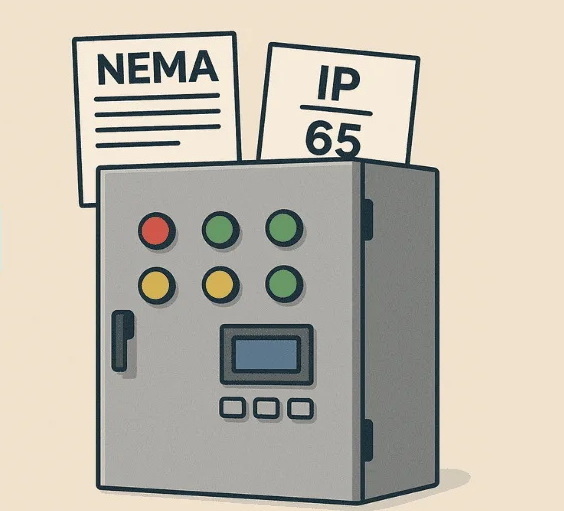
Both IP and NEMA ratings classify how well an enclosure resists ingress of solids (dust, dirt) and liquids (water, coolants) under defined test conditions. The key difference is that NEMA ratings also consider corrosion, ice, and sometimes hazardous locations, while IP ratings focus purely on dust and water.
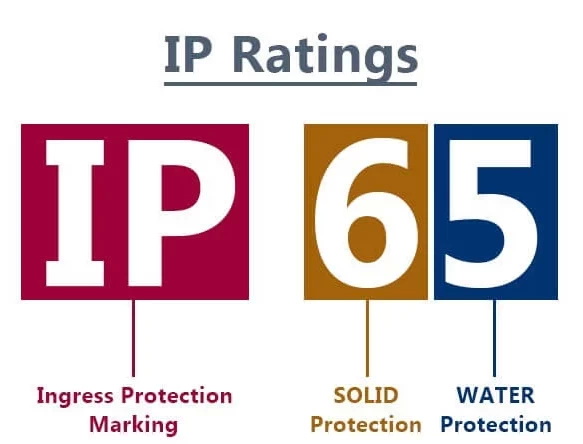
An IP (Ingress Protection) rating is defined by IEC 60529 and uses two digits after “IP,” such as IP54, IP65, or IP67. The first digit (0–6) shows protection against solid objects; the second digit (0–8) shows protection against water.
Typical examples:
- IP54: Limited dust ingress, protection against water splashes from any direction.
- IP65: Dust tight, protection against low‑pressure water jets.
- IP67: Dust tight, protection against temporary immersion in water.
A NEMA enclosure type follows NEMA 250 and is widely used in North America for industrial and infrastructure applications. NEMA types define protection against solid objects, water, ice formation, and, in some types, corrosion and specific environmental conditions.
Common NEMA types and typical uses:
- NEMA 1/2: Basic indoor protection against contact and falling dirt or light dripping.
- NEMA 3/3R/3S: Indoor/outdoor, rain, sleet, and snow, some dust; used for outdoor cabinets.
- NEMA 4/4X: Indoor/outdoor, hose‑down, windblown dust; 4X adds corrosion resistance.
- NEMA 12/13: Indoor, oil and coolant splashes, circulating dust and fibers.
Although both systems deal with environmental protection, they are not interchangeable and do not map one‑to‑one.
- IP rating: Focuses strictly on dust and water ingress under specific test durations and pressures.
- NEMA rating: Includes dust and water plus additional aspects such as corrosion, ice, and suitability for indoor vs. outdoor use.
- NEMA ratings are dominant in North American industrial and utility projects, where compliance with NEMA 250 and UL or CSA is often required.
- IP ratings are the global standard across Europe and many international projects, especially for telecom, IT, and electronics.
Because NEMA tests cover factors like ice formation and corrosion that IP does not, an enclosure that meets a certain IP rating does not automatically meet a corresponding NEMA type. Equivalency charts are therefore guidance, not formal certification.
Use the following table as a practical reference to understand typical relationships between NEMA enclosure types and approximate IP ratings. Always verify your project's standards and test requirements.
NEMA type (typical use) | Approximate IP level (guidance only) | Key protection characteristics |
NEMA 1 – Indoor panels | Around IP10–IP20 (varies) | Basic protection against contact and falling dirt; indoor only. |
NEMA 2 – Indoor with dripping water | Around IP11–IP21 | Similar to NEMA 1 plus protection from light dripping water. |
NEMA 3/3R – Outdoor general | Around IP14–IP54 | Rain, sleet, snow, some dust; outdoor use; can withstand ice formation. |
NEMA 3S – Outdoor with external mechanisms | Around IP54 | Similar to NEMA 3 but external mechanisms must operate when ice covered. |
NEMA 4 – Washdown | Around IP66 | Dust tight, protection from hose-directed water, indoor or outdoor. |
NEMA 4X – Corrosive environments | Around IP66 | Same as NEMA 4 plus enhanced corrosion resistance. |
NEMA 5 – Indoor dust | Around IP52 | Protection from settling airborne dust, lint, fibers, and light splashing. |
NEMA 6/6P – Temporary or prolonged submersion | Around IP67 | Dust tight, protection against limited depth immersion; ice resistant. |
NEMA 12 – Industrial indoor | Around IP52 | Circulating dust, lint, fibers, drips, and light splashes. |
NEMA 13 – Indoor oil or coolant | Around IP54 | Spraying and splashing of water, oil, and non-corrosive coolants. |
This table helps narrow down candidates, but final selection should reference detailed standard test descriptions and the specific project specification.
This step‑by‑step framework helps engineers, integrators, and project owners choose the right enclosure rating for their environment.
1. Define whether your project is primarily North American or global or multi‑regional.
2. Check customer specifications, utility requirements, and local codes, as many industrial projects explicitly require NEMA types.
3. For export equipment or multinational projects, IP ratings are often mandatory alongside or instead of NEMA.
Consider the full lifecycle environment, not just normal operating conditions.
Key risk questions:
- Is the enclosure indoor, outdoor, or exposed to both?
- What dust levels are expected (light office dust vs. heavy industrial particulates)?
- Will the enclosure face washdown, high‑pressure cleaning, or immersion?
- Are there corrosive agents such as salt spray, chemicals, or exhaust gases?
- Is ice formation or freeze–thaw cycling expected?
- Any risk of explosive or hazardous atmospheres requiring special classifications?
Below are illustrative matches for common sectors such as power, telecom, networks, industrial automation, buildings, new energy storage, EV charging, and water pumps.
- Power distribution and substations (outdoor): Often NEMA 3R, 4, or 4X, or IP54–IP66 for dust, rain, and hose‑down, depending on climate and contamination.
- Telecom and network cabinets: Frequently IP54–IP65 or NEMA 3 or 4 to handle dust, rain, and thermal management at the network edge.
- Industrial automation or smart manufacturing: Indoor NEMA 12 or 13, or IP54–IP55, to protect against oil mist, metal dust, fibers, and splashes.
- Commercial and infrastructure buildings: A mix of NEMA 1 or 2 for indoor panels and NEMA 3R or 4 for rooftop or facade‑mounted equipment.
- New energy storage systems (ESS): Outdoor battery cabinets often use NEMA 3R or 4 or IP54–IP65, depending on climatic stress and safety design.
- EV charging stations: Outdoor EV chargers typically require IP54–IP66 or NEMA 3R or 4 to tolerate rain, dust, and public exposure.
- Water pumps and water treatment: For pump control boxes, NEMA 4 or 4X or IP65–IP66 is common due to splashing, hose‑down, and corrosive moisture.
Ratings are based on laboratory tests with defined conditions, which might not represent real‑world abuse, vandalism, or long‑term corrosion and UV exposure. Work with an enclosure partner who can discuss material selection, coatings, sealing design, and thermal management in parallel with IP or NEMA rating.
As edge computing and industrial IoT move IT equipment out of clean data centers and into harsh field locations, enclosure rating decisions have become more critical. Edge nodes may sit near production lines, in outdoor cabinets, or on EV charging islands where dust, moisture, and temperature swings are severe.
Key implications:
- Standard data center cabinets with perforated doors (often un‑rated or basic IP20) are inadequate for dusty or wet environments.
- IP54–IP66 or NEMA 3, 4, or 4X enclosures are often required to protect edge servers, switches, and gateways in uncontrolled spaces.
- Material and coating choices must align with long‑term corrosion risk, especially in coastal or chemical plant locations.
A manufacturer experienced in both IT and industrial enclosures can help bridge the gap between data center expectations and field realities.
A utility is installing low‑voltage switchgear outdoors in a coastal region with wind‑blown salt and storm‑driven rain.
- Environmental risks: Salt‑laden moisture, windblown rain, UV exposure, ice.
- Typical choice: NEMA 4X or similar IP66 enclosure, stainless steel or coated material for corrosion resistance.
- Result: Improved service life and reduced unplanned outages compared with basic outdoor boxes.
An automotive plant needs control panels near welding and machining lines where airborne oil mist and metallic dust are present.
- Environmental risks: Oil or coolant splashes, dust, occasional cleaning.
- Typical choice: NEMA 12 or 13 or IP54–IP55, providing protection from circulating dust and non‑corrosive coolants.
- Result: Reduced contamination of PLCs and drives, fewer maintenance interventions.
A city deploys fast chargers in public parking lots subject to rain, snow, and public interaction.
- Environmental risks: Rain, snow, occasional hose‑down, vandalism.
- Typical choice: IP54–IP65 or NEMA 3R or 4 enclosure with robust mechanical design and secure cable management.
- Result: Increased uptime and safer user interaction with energized components.
Use this five‑step checklist to select or confirm the correct enclosure rating in your next project.
- Indoor, outdoor, or mixed.
- Accessibility to public vs. restricted technical space.
- Dust level, type of particles, humidity, possible flooding.
- Cleaning methods (wiping, low‑pressure hose, high‑pressure washdown).
- Chemicals, salt, or corrosive media.
- Project region: North America, Europe, or global export.
- Customer or utility requirements: NEMA, IP, both, or sector‑specific codes.
- Use tables and application examples to select one to two candidate NEMA or IP ratings.
- For example, move from “outdoor, rain, dust” to “NEMA 3R or NEMA 4” or “IP54–IP65.”
- Confirm rating, materials, sealing, and thermal management.
- Request test reports or certification if required by regulations.
Beyond the rating itself, design and installation practices have a major impact on real‑world performance.
- Use appropriate cable glands and accessories with matching ratings to avoid weak points.
- Ensure correct gasket compression; over‑tightening or misalignment can compromise sealing over time.
- Consider condensation management using vents, drains, or heaters in climates with wide temperature swings.
- Plan for thermal management (natural ventilation, fans, heat exchangers, or air conditioners) to keep electronics within their rated operating temperature.
- Schedule periodic inspection of seals, hinges, locks, and coatings for early detection of wear or corrosion.
Choosing the correct IP or NEMA rating is only one part of designing a safe, reliable enclosure solution. A manufacturer with deep experience across power, communications, industrial automation, construction, new energy, EV, and water applications can help translate rating theory into robust, manufacturable designs.
A professional enclosure partner focused on high‑quality sheet metal distribution boxes and customized metal enclosures can support you from early specification and 3D design through prototyping, testing, and mass production for both standard and custom enclosures. This integrated approach reduces project risk and accelerates time to market.
If you are planning a new project in power distribution, telecom, networking, industrial automation, building infrastructure, energy storage, EV charging, or water management, now is the time to confirm that your enclosures offer the right level of protection. Do not rely on guesswork or generic datasheets when your equipment, uptime, and safety are at stake.
Share your application details, environmental conditions, and target markets with a professional enclosure manufacturer and request a tailored IP or NEMA recommendation, complete with material, sealing, and thermal design options. By acting today, you can reduce risk, extend equipment lifespan, and build a more reliable, compliant system from the outset.
Contact us to get more information!
No. IP focuses on dust and water, while NEMA also covers factors such as corrosion and ice, so an IP rating does not automatically satisfy a NEMA type, and vice versa.
Most industrial and utility projects in North America specify NEMA enclosure types (such as NEMA 3R, 4, 4X, or 12), sometimes alongside IP ratings for global equipment comparability.
Outdoor applications typically require at least NEMA 3R or 3, or IP54, with harsher environments using NEMA 4 or 4X or IP65–IP66 to handle heavy rain, hose‑down, and dust.
Look for corrosion‑resistant NEMA types such as NEMA 4X, combine them with suitable materials (for example, stainless steel) and coatings, and confirm test data from your enclosure manufacturer.
Edge enclosures must tolerate dust, moisture, temperature extremes, and sometimes vibration, so they usually require higher IP or NEMA ratings than the largely clean, controlled data center environment.
1. https://www.rittal.com/us-en_US/Company/Rittal-Stories/IP-vs-NEMA-Which-Rating-Does-Your-Enclosure-Need
2. https://www.huimfg.com/blog/nema-enclosure-types
3. https://www.budind.com/nema-vs-ip-protection-ratings/
4. https://www.lianjer.com/ip-vs-nema-rating/
5. https://apx-enclosures.com/nema-vs-ip-ratings-explained/
6. https://www.fiboxusa.com/enclosure-resources/nema-ratings-and-ip-equivalents/
7. https://www.engineeringtoolbox.com/nema-iec-enclosure-standards-d_920.html


