


Views: 222 Author: Amanda Publish Time: 2026-02-16 Origin: Site


Content Menu
● What Is a Solar Panel Junction Box?
● Safety First: Essential Precautions Before Wiring
● Tools and Materials You Need
● Choosing the Right Conductors and Ratings
● Preparing the Conductors Correctly
● Opening the Junction Box and Identifying Terminals
● How to Wire the Solar Panel Junction Box
● Understanding MC4 Connectors and Polarity
● How to Crimp and Assemble MC4 Connectors
● Extending PV Cables to Combiner Boxes or Inverters
● How to Disconnect MC4 Connections Safely
● Junction Box Wiring in the System: Series and Parallel
● Weatherproofing and Mechanical Protection Best Practices
● Maintenance, Inspections, and Code Awareness
● Example: Residential Rooftop Use Case
● When to Seek Professional Help
● Why Professional Enclosures Matter for Solar Projects
● FAQs About Solar Panel Junction Box Wiring
>> 1. Do I always need to open the junction box to wire a panel?
>> 2. Can I mix different brands of MC4-style connectors?
>> 3. How do I confirm polarity before making final connections?
>> 4. How often should I inspect junction box wiring?
>> 5. What happens if a junction box is not sealed correctly?
Wiring a solar panel junction box correctly is essential for safety, performance, and long-term reliability of any photovoltaic (PV) system, whether it is a small off-grid setup or a large commercial installation. This guide explains junction box fundamentals, step-by-step wiring, MC4 connector assembly, and modern best practices so both DIY users and professionals can complete clean, code-conscious installations.

A solar panel junction box is a compact, weatherproof enclosure mounted on the back of a solar module where internal bus bars, bypass diodes, and external PV cables come together. It provides a secure, protected interface between the panel's internal circuitry and the external DC wiring.
Key functions include:
- Housing bypass diodes that protect cells from hot spots and shading issues.
- Providing clearly labeled positive and negative terminals or leads.
- Offering strain relief and sealing where cables exit the panel backside.
Working on solar wiring involves exposure to live DC circuits whenever panels are illuminated, so safety must be the first priority. Before opening or wiring a junction box, follow these precautions:
- Cover the panel with opaque material (cardboard, blanket) to reduce or eliminate output.
- Work in low-irradiance periods such as early morning or late afternoon whenever possible.
- Use insulated tools, safety glasses, and appropriate electrical work gloves.
- Verify open-circuit voltage with a multimeter before touching any conductors.
- Follow local electrical codes and relevant standards for PV installations and wiring.
Having the right tools and materials ensures precise, low-resistance connections and reduces the risk of failures.
Common tools:
- Wire cutters and insulation strippers sized for PV cable (often 10 AWG).
- Ratcheting crimping tool compatible with MC4 contacts or equivalent connectors.
- Flathead screwdriver for opening junction boxes and tightening terminals.
- MC4 assembly spanner tools for secure tightening and safe disconnection.
- Digital multimeter for polarity, voltage, and continuity checks.
Common materials:
- UV-resistant, double-insulated PV wire (commonly 10 AWG rated around 40 A and appropriate DC voltage).
- MC4 or compatible PV connectors matched to cable diameter and system voltage.
- Cable glands, grommets, and strain-relief fittings for weatherproofing.
Proper conductor selection is critical for both electrical performance and safety. The wrong cable can lead to voltage drop, overheating, or non-compliance.
Key factors to consider:
- System current: Choose a cable gauge whose ampacity exceeds maximum string current with safety margin.
- Voltage rating: Ensure insulation rating meets or exceeds the maximum system DC voltage.
- Environment: Use sunlight-resistant, UV-rated cable for rooftop or outdoor sections.
In many residential and commercial PV systems, 10 AWG PV cable is used because it offers strong current capacity and robust insulation, but always verify against your specific design and code requirements.
Clean preparation of conductors ensures low-resistance connections and long-term reliability.
Step-by-step wire preparation:
1. Measure and cut PV cable to the required length, leaving extra for routing and strain relief.
2. Strip about 6–12 mm (1/4–1/2 in) of insulation from each end according to terminal or connector specifications.
3. Avoid nicking or cutting conductor strands; damaged strands can increase resistance and weaken the cable.
4. Inspect factory-installed leads on the panel to confirm they are undamaged and long enough for your planned routing.
Suggested visual: Close-up sequence of stripping PV wire to the correct length.
Most modern solar panels ship with pre-mounted junction boxes. To access the internal terminations:
1. Use a flathead screwdriver or the designated release method to open the junction box cover.
2. Identify the internal positive (+) and negative (−) terminals, often marked with symbols or color codes.
3. Locate bypass diodes inside the box; these components should be left undisturbed during normal wiring.
Some panels feature factory-installed leads that exit the junction box, meaning you rarely need to open the box unless performing repairs or special configurations.
Once the conductors and terminals are prepared, you can complete the wiring inside the junction box.
Typical wiring procedure:
1. Feed the negative conductor through the appropriate strain-relief or cable gland opening.
2. Seat the cable so that any rubber gasket compresses tightly around the outer jacket.
3. Secure the stripped end into the negative terminal using the specified clamp or screw method, tightening firmly.
4. Repeat the same process for the positive conductor on the opposing side of the box.
5. Confirm that no bare copper is exposed and that cables are not kinked or stressed at the entry points.
A gentle pull test on each conductor is a simple way to confirm a mechanically secure connection.
MC4 connectors are widely used in modern PV systems and are designed to deliver secure, weatherproof DC connections.
Each MC4 connector typically includes:
- Rear end cap or barrel.
- Strain-relief insert.
- Rubber compression seal.
- Main plastic housing (male or female).
- Metal crimp contact (pin or socket).
In many systems, the positive cable is associated with one style of housing and the negative with the complementary one. However, always obey the specific markings on the connectors and panel leads to avoid polarity mistakes. Maintaining correct polarity is essential to protect equipment and prevent inverter or controller faults.
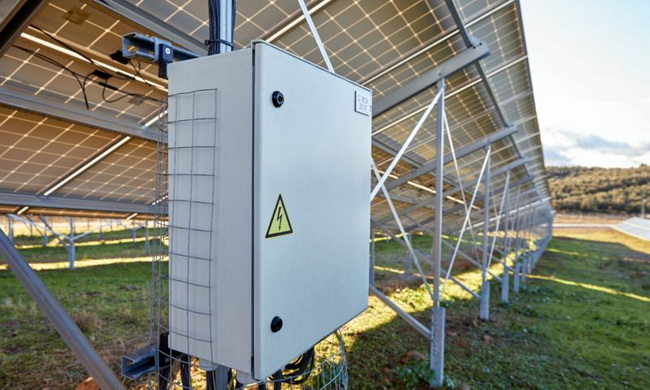
Correct MC4 assembly is a key step in achieving durable, low-resistance connections.
Steps to crimp and assemble:
1. Slide the end cap, strain-relief, and rubber seal onto the cable in the correct orientation before crimping.
2. Insert the stripped conductor fully into the metal pin or socket until the insulation edge aligns with the back of the contact.
3. Use an MC4-rated ratcheting crimp tool to compress the contact wings around the conductor until the tool releases.
4. Push the crimped contact into the MC4 housing until it clicks and locks in place.
5. Tighten the end cap using MC4 spanner tools until the internal seal firmly grips the cable jacket.
Repeat for both positive and negative leads, double-checking that the correct contact type and housing style match each polarity.
In many installations, the panel leads from the junction box must be extended to reach a combiner box, DC disconnect, or inverter.
Best practices for extension cables:
- Use the same conductor type and gauge as factory leads when possible.
- Terminate extensions with MC4 connectors matched to the panel leads for plug-and-play connections.
- Route cables in conduit where required and avoid sharp edges, pinch points, and extremely hot surfaces.
- Secure cables with UV-rated clips or ties, keeping them off the roof surface where possible.
MC4 connectors incorporate locking tabs to prevent accidental disconnection under load. Disconnecting them correctly is important for safety:
1. De-energize the circuit by covering panels or opening the appropriate DC disconnect.
2. Use MC4 spanner tools to depress the locking tabs on the connectors.
3. Pull the connectors straight apart while the tabs are held open, avoiding twisting or bending.
Never separate MC4 connectors under significant load, as DC arcing can damage contacts and pose a fire risk.
Junction box wiring must align with the overall system design, particularly how panels are connected in series or parallel.
- In series strings, the positive of one panel connects to the negative of the next, increasing voltage while current remains that of a single panel.
- In parallel strings, string outputs are combined in a combiner box, keeping voltage constant while currents add.
Correct polarity from the junction box outward is essential to ensure that the final string voltage and current match inverter or charge controller specifications.
A junction box must remain sealed and mechanically secure throughout the life of the system.
Key practices:
- Ensure the junction box cover is fully seated or screwed down after wiring.
- Confirm all gaskets and compression seals are in place and properly tightened.
- Use approved sealants or additional protective measures in harsh or marine environments if recommended.
- Label junction boxes and associated conductors clearly to aid maintenance and inspection.
Several recurring mistakes can undermine junction box wiring and overall system performance:
- Mixing incompatible connector brands that do not mate correctly.
- Leaving crimp connections loose or under-torqued, leading to overheating at high current.
- Allowing cables to rub on sharp edges, leading to insulation wear and possible faults.
- Reversing polarity between the junction box and array wiring, causing inverter errors or equipment damage.
A careful inspection at each step helps avoid these costly errors.
Junction box connections must be maintained over time, just like other parts of the PV system.
Good maintenance habits:
- Perform periodic visual inspections for discoloration, cracks, loose glands, or damaged cables.
- Re-check open-circuit voltage and basic electrical measurements after major storms or structural work.
- Stay up to date with local electrical codes and best practices related to wire management, labeling, and disconnect requirements.
Scheduled inspections help catch issues early, supporting long-term safety and energy yield.
Imagine a typical 400 W residential panel with a pre-installed junction box and short MC4 leads:
- The installer extends the panel leads with 10 AWG PV cable to a rooftop combiner box.
- Panels are wired in series through their junction boxes or MC4 leads to reach the inverter's ideal voltage window.
- All cables are routed in conduit or cable management systems and properly labeled at the DC disconnect and inverter.
This kind of configuration illustrates how correct junction box wiring supports a safe, efficient, and serviceable PV system.
While many tasks are approachable for experienced DIY users, high-voltage DC systems demand professional expertise. You should consider engaging a licensed solar installer or electrician when:
- Designing large or high-voltage multi-string arrays.
- Integrating battery storage, EV charging, or advanced monitoring systems.
- Working under strict permitting or inspection regimes where documentation is required.
A qualified professional can help ensure that your junction box wiring and broader system meet all relevant safety and performance standards.
Behind every reliable PV installation is a network of enclosures that protect electrical connections against weather, dust, and mechanical stress. Purpose-built junction boxes and electrical enclosures provide:
- Robust protection for solar, energy storage, EV charging, industrial automation, and building power systems.
- Configurable layouts that support terminal blocks, surge protection, and cable routing.
- Material options and IP ratings tailored to outdoor rooftops, industrial plants, pump systems, and other demanding environments.
Working with a specialized electrical enclosure manufacturer allows you to match design, performance, and safety requirements across all your solar and power distribution projects.
If you are planning or upgrading a solar project and need durable, application-specific junction boxes or electrical enclosures, contact our engineering team today to discuss your requirements and request a tailored solution. Investing in high-quality enclosures now will make your junction box wiring safer, more reliable, and easier to maintain throughout the entire lifecycle of your PV and power systems.
Contact us to get more information!
Many modern solar panels come with factory-installed leads and MC4 connectors, so you often only need to plug into the existing cables. Opening the junction box is usually reserved for repairs, replacements, or specialized configurations that cannot be achieved with the standard external leads.
It is generally not recommended to mix different brands of MC4-style connectors because they may not be tested or approved to mate with one another. Incompatible connectors can lead to poor contact, moisture ingress, and overheating, so using matching, listed pairs from the same manufacturer is the safer choice.
Use a digital multimeter set to DC voltage mode, expose the panel to light, and measure the voltage between the two leads. The lead that shows positive voltage relative to the other is the positive conductor, and confirming this before energizing helps prevent equipment damage and inverter faults.
As a general guideline, perform at least an annual visual inspection of junction boxes and associated cabling, and conduct additional checks after severe weather events or structural work near the array. High-value or mission-critical systems may benefit from more frequent inspections and documented maintenance schedules.
If a junction box is not sealed properly, moisture and contaminants can enter, leading to corrosion, degraded insulation, and eventual failure of terminals or bypass diodes. Over time, this can reduce power output, create hot spots, or even escalate into safety hazards such as arcing or fire.
1. https://viox.com/how-to-wire-a-solar-panel-junction-box/
2. https://solartechonline.com/blog/how-to-wire-solar-panels-in-series/
3. https://www.leader-solar.com/article/how-to-install-a-solar-junction-box.html
4. https://www.fr-cable.com/post/the-ultimate-guide-to-junction-box-role-assembly-and-installation-in-solar-panel-systems
5. https://astardfw.com/2025/04/solar-panel-electrical-wiring-safe-code-compliant-solar-power-installations/
6. https://aurorasolar.com/blog/solar-panel-wiring-basics-an-intro-to-how-to-string-solar-panels/
7. https://titanwnc.com/2025/12/nec-2025-updates-what-solar-installers-need-to-know-about-wire-management-compliance/

2026-07-26

2026-07-24


