


Views: 222 Author: Amanda Publish Time: 2026-02-03 Origin: Site


Content Menu
● What Is Junction Box Sizing and Why It Matters
● NEC Framework: Box‑Fill vs. Pull‑Box Rules
>> NEC 314.16 – Box‑Fill Method (Splices & Devices)
>> NEC 314.28 – Pull‑Box Method (Large Conductors & Raceways)
● Quick Decision Guide: Which Rule Applies
● Box‑Fill Sizing (NEC 314.16): Step‑by‑Step Method
>> Step 2: Get Volume per Conductor (NEC Table 314.16(B))
>> Step 3: Count All Box‑Fill Allowances
>> Step 4: Calculate Minimum Required Volume
>> Step 5: Adjust with Extension Rings if Needed
● Pull‑Box Sizing (NEC 314.28): Raceways and Large Conductors
● Worked Example A: Box‑Fill Calculation (Splices & Device)
>> Scenario
>> Step 1 – Conductor Sizes and Volumes
>> Step 3 – Multiply by Volume per Conductor
>> Step 4 – Select a Compliant Box
● Worked Example B: Pull‑Box Calculation (Angle Pull)
>> Scenario
>> Step 1 – Identify the Largest Raceway
>> Step 2 – Apply the NEC Formula for Angle Pulls
>> Step 3 – Choose a Box with Sufficient Spacing
● Common Mistakes Installers Should Avoid
● Practical Design Tips for Modern Applications
>> Plan Ahead for Conductors and Devices
>> Keep NEC Values Handy in the Field
>> Use Extension Rings and Modular Enclosures
● Choosing the Right Junction Box or Enclosure
>> How Specialized Manufacturers Add Value
● Example Box‑Fill Reference Table
● When to Consult an Expert or Manufacturer
● Take the Next Step: Get Code‑Compliant Enclosures Tailored to Your Project
● Frequently Asked Questions (FAQ)
>> Q1. What is the difference between a junction box and a pull box under the NEC?
>> Q2. When do I use box‑fill rules instead of pull‑box rules?
>> Q3. Do equipment grounding conductors count toward box‑fill?
>> Q4. Can I fix an undersized junction box without replacing it?
>> Q5. Why should I care about IP rating or enclosure material if my box is correctly sized?
Correct junction box sizing is essential for safe, code‑compliant electrical installations and long‑term system reliability. This guide walks you through NEC 314.16 box‑fill rules and NEC 314.28 pull‑box rules, with practical steps, examples, and selection tips for metal and plastic enclosures used in power, communications, networking, industrial automation, and new energy projects.

Junction box sizing means verifying that an electrical box is large enough for all conductors, splices, devices, and raceways it contains. Undersized boxes can lead to overheating, damaged insulation, difficult maintenance, and failed inspections.
For installers, designers, and OEMs, correct sizing delivers:
- Compliance with NEC Article 314, reducing fire and shock risk.
- Higher likelihood of passing inspections, avoiding rework, delays, and penalties.
- Easier wiring, maintenance, and troubleshooting due to sufficient working space.
- Better lifecycle performance in demanding applications such as industrial control, EV charging, and energy storage.
A simple way to think about it is: small wires and splices mainly require box‑fill calculations, while large conductors and long pulls depend on pull‑box dimensions.
Use NEC 314.16 when:
- Conductors are typically from 18 AWG to 6 AWG.
- The box contains splices, terminations, or devices such as switches, receptacles, sensors, or terminal blocks.
This method is based on the internal volume of the box in cubic inches, with a specific allowance for each conductor, device, clamp, and ground.
Use NEC 314.28 when:
- Conductors are 4 AWG or larger.
- The box is used mainly as a pull point, with straight, angle, or U‑shaped pulls and usually no splices inside.
This method is driven by dimensions and spacing, especially the distance between raceway entries and available bending radius, rather than by cubic volume.
To choose your sizing method, ask two simple questions:
1. Does the box contain splices, terminations, or devices?
- If yes, apply NEC 314.16 box‑fill rules.
2. Is the box only a pull point for 4 AWG or larger conductors?
- If yes, apply NEC 314.28 pull‑box rules.
In some complex installations, you may have both terminations and large pulls in the same enclosure. In those cases, design conservatively, verify both volume and dimensions, and select a box that satisfies the stricter requirement.
When you have splices or devices inside the junction box, use this five‑step box‑fill calculation.
- Locate the cubic‑inch rating stamped or labeled inside the box.
- If it is not visible, refer to NEC tables or the manufacturer's datasheet for volume by size and shape.
The calculated conductor fill must never exceed the box's listed volume.
Each conductor size has a standard volume value. Common values include:
- 14 AWG = 2.0 in⊃3;
- 12 AWG = 2.25 in⊃3;
- 10 AWG = 2.5 in⊃3;
- 8 AWG = 3.0 in⊃3;
- 6 AWG = 5.0 in⊃3;
Within any allowance group, always calculate using the largest conductor size in that group.
This is where mistakes often occur. Use the following rules:
- Insulated conductors
- Each insulated conductor that enters and terminates or splices in the box counts as 1×.
- Each pass‑through conductor that enters and exits without splice counts as 1×.
- Long loops, longer than 12 inches or more than twice the required free length, count as 2×.
- Pigtails that originate and terminate within the same box do not count toward fill.
- Internal clamps
- Any clamp mounted inside the box counts as 1×, based on the largest conductor size in the box.
- External clamps do not count toward box‑fill.
- Support fittings
- Fixture studs or hickeys count as 1×, based on the largest conductor associated with that fitting.
- Devices (switches, receptacles, etc.)
- Each yoke or strap counts as 2×, based on the largest conductor connected to that device.
- Equipment grounding conductors (EGCs)
- All grounding conductors together count as 1× up to four EGCs.
- For each ground beyond four, add ¼×, based on the largest grounding conductor present.
- Add up all allowances (conductor equivalents).
- Multiply the total by the volume value for the largest conductor in the allowance group.
- The result is the minimum box volume in cubic inches that the enclosure must provide.
The box you select must have equal or greater listed volume than your calculated requirement.
If an existing box is too small:
- Install a listed extension ring or domed cover to add internal volume.
- This approach is often faster and more economical than replacing the entire box, particularly in remodels or retrofit work.
For 4 AWG and larger conductors used mainly for pulling, NEC 314.28 provides dimensional rules for junction boxes and pull boxes.
When conductors enter and exit the box in a straight line:
- The minimum box length must be at least:
8 × (trade size of the largest raceway)
Example:
- Largest conduit = 2 in. trade size
- Minimum box length = 8 × 2 = 16 in.
When conductors change direction inside the box (angle or U‑shaped pulls):
- The minimum distance between raceway entries on the same wall must be:
6 × (trade size of the largest raceway) + (sum of other raceway trade sizes on that wall)
Example:
- One 1¼ in. conduit and one 1 in. conduit
- Largest raceway = 1.25 in.
- 6 × 1.25 = 7.5 in.
- Add the 1.0 in. conduit → 7.5 + 1.0 = 8.5 in. minimum spacing between entries on that wall.
For these pull boxes, volume is not the controlling factor. Box dimensions, spacing, and bending radius dominate to protect insulation and make pulling easier.
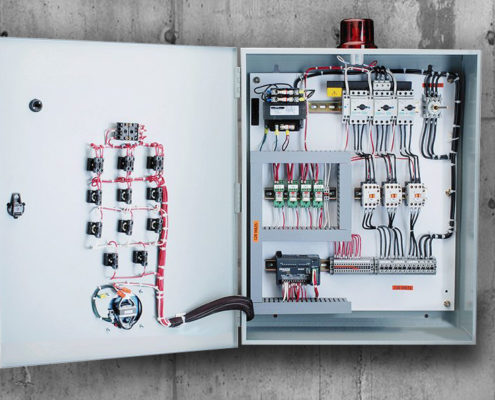
A 4 in. square metal box contains:
- Mixed 12 AWG and 14 AWG conductors
- One switch on a device yoke
- One internal clamp
- Three equipment grounding conductors
- 14 AWG volume = 2.0 in⊃3;
- 12 AWG volume = 2.25 in⊃3;
- Use 2.25 in⊃3; (the larger value) for the calculation, because 12 AWG is the largest size in the box.
- Four insulated conductors (two 12 AWG spliced, two 14 AWG spliced) → 4×
- One device yoke (switch) → 2×
- One internal clamp → 1×
- Three grounding conductors → 1× total
Total allowance = 4 + 2 + 1 + 1 = 8× (12 AWG equivalent).
- 8 × 2.25 in⊃3; = 18 in⊃3; minimum required volume
- A standard 4 in. square metal box, 2⅛ in. deep, has approximately 21 in⊃3; of volume.
- Since 21 in⊃3; is greater than 18 in⊃3;, this box is acceptable and code‑compliant for the described configuration.
A junction box has two conduits entering:
- One 1¼ in. conduit
- One 1 in. conduit
- Conductors change direction inside the box (angle pull)
- Largest raceway = 1¼ in. (1.25 in.)
- Minimum distance between raceways on the same wall:
- 6 × largest raceway + sum of other raceways
- 6 × 1.25 = 7.5 in.
- Add 1.0 in. for the other conduit → 7.5 + 1.0 = 8.5 in. minimum
- The box must provide at least 8.5 in. between those raceway entries on the same wall.
- Any box meeting or exceeding this spacing is compliant, regardless of total internal volume.
Even experienced electricians and panel builders can miss details in junction box sizing. Avoid the following pitfalls:
- Counting pigtails that do not need to be counted, which can make the box seem undersized when it is not.
- Forgetting to include internal clamp allowances as one conductor equivalent based on the largest wire in the box.
- Failing to count device yokes as two conductor equivalents, leading to undersized boxes.
- Ignoring the updated grounding conductor rule, where all grounds together count as one equivalent up to four, then an additional quarter equivalent for each extra ground.
- Using volume rules to size pull boxes, which should instead be sized using dimensional rules from NEC 314.28.
Before pulling wires:
- List all circuits, conductor sizes, and devices that will terminate in each box.
- Include possible future expansion, such as additional circuits, communication cabling, or sensor wiring.
- If your calculated box‑fill is close to the limit, choose a deeper or larger enclosure from the beginning.
- Carry a pocket reference, laminated card, or mobile app with NEC box‑fill values.
- Check the cubic‑inch capacity stamped or labeled inside modern boxes to confirm suitability in the field.
In retrofit and industrial upgrades:
- Add extension rings to existing wall boxes to increase volume and remain compliant.
- Use modular enclosure systems and consistent junction box families to standardize dimensions, accessories, and IP ratings across a project.
Correct sizing is about more than volume and dimensions. You also need an enclosure that fits its environment and application.
1- Material
- Steel or stainless steel for demanding industrial, outdoor, or corrosive environments.
- High‑quality plastic for lighter‑duty or indoor applications where weight and cost are critical.
2- Protection rating
- Use appropriate NEMA or IP ratings depending on dust, water, and impact exposure.
- For harsh outdoor or wash‑down conditions, consider IP65 or higher.
3- Mounting style
- Wall‑mounted junction boxes for building services, industrial equipment, and control systems.
- Floor‑standing cabinets for power distribution, data centers, and large automation systems.
4- Application‑specific features
- Knockouts or gland plates positioned for your raceway layout.
- Internal mounting plates, DIN rails, and accessory options for breakers, contactors, relays, and communication devices.
A professional enclosure manufacturer with strong design and fabrication capabilities can help you:
- Standardize enclosure sizes and footprints while staying compliant with box‑fill and pull‑box requirements.
- Customize junction boxes with tailored cutouts, ventilation, and mounting features to match your wiring layout and local standards.
- Supply enclosures and junction boxes with relevant certifications and ratings for international markets.
AWG size | Volume per conductor (in⊃3;) | Typical usage note |
14 AWG | 2 | Lighting and small branch circuits. |
12 AWG | 2.25 | General-purpose 20 A circuits. |
10 AWG | 2.5 | Higher-load branch circuits and small feeders. |
8 AWG | 3 | Feeders and equipment connections. |
6 AWG | 5 | Larger feeders and high-current equipment. |
Because junction box sizing combines code requirements with real‑world wiring constraints, it is often efficient to involve specialists at the design stage. Consider expert support when you:
- Design large systems in industrial intelligent manufacturing, energy storage, or EV charging networks.
- Need coordinated enclosure solutions for power, communications, networking, and building automation.
- Must comply with multiple standards and client specifications on the same project.
An experienced enclosure partner can review your conductor and raceway data, recommend standard or custom junction boxes, and help you balance cost, safety, and maintainability over the full lifecycle of your installation.
If you are planning or upgrading systems in power distribution, communications, networking, industrial automation, building services, new‑energy storage, EV charging, or pump control, now is the ideal time to review your junction box and enclosure strategy. Make sure every installation satisfies NEC box‑fill and pull‑box requirements, while also delivering the protection, durability, and configuration flexibility your application demands. Contact a specialized enclosure manufacturer to discuss your conductor counts, raceway layout, and environmental conditions, and request customized junction box solutions, drawings, and samples for your next project.
Contact us to get more information!
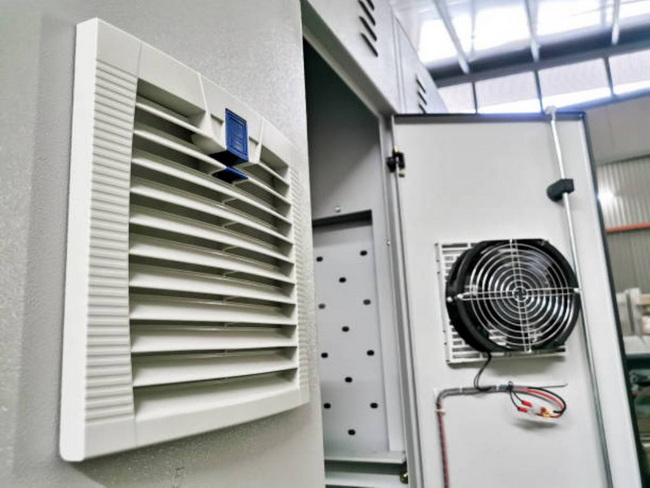
A junction box usually contains splices or terminations, while a pull box mainly provides space to route large conductors or long raceway runs without splicing. Junction boxes are sized by internal volume using box‑fill rules, while pull boxes are sized by dimensions and spacing based on the largest raceways.
You should use box‑fill rules whenever the box includes splices, terminations, or devices with conductors typically between 18 AWG and 6 AWG. You should use pull‑box rules when the box is used as a pull point for 4 AWG and larger conductors and the conductors change direction or make long runs without splicing inside the box.
Yes. All equipment grounding conductors in a box are counted together as one conductor equivalent up to four grounding conductors. For each additional grounding conductor beyond four, you add one‑quarter of a conductor equivalent, based on the size of the largest ground in the box.
Often you can. If the calculation shows that your existing box does not have enough volume, you can install a listed extension ring or domed cover to increase the box volume. This solution is common in retrofit and renovation projects where completely replacing the box would be more costly or disruptive.
Correct sizing ensures that there is enough internal space, but it does not guarantee environmental protection or mechanical durability. Material and IP rating determine how well the enclosure protects against dust, moisture, impact, and corrosion, which is critical for outdoor, industrial, new‑energy, and pump applications.
1. https://www.lianjer.com/how-to-size-a-junction-box/
2. https://viox.com/nec-code-for-junction-boxes/
3. https://www.ecmweb.com/content/article/20886012/box-fill-calculations
4. https://www.ecmag.com/magazine/articles/article-detail/codes-standards-pull-and-junction-box-calculations
5. https://viox.com/junction-box-sizing-guide/
6. https://expertce.com/learn-articles/how-to-calculate-junction-box-size-nec-2023/
7. https://www.ecmag.com/magazine/articles/article-detail/codes-standards-box-fill-calculations-part-v
8. https://www.mainelectricsupply.com/customer/docs/SKUDocs/ozg8361-spec-sheet.pdf
9. https://www.lianjer.com/nec-junction-box-code/
10. https://www.bohuielectric.com/steel-enclosure.html
11. https://www.bohuitechnology.com

2026-07-26

2026-07-24


