


Views: 222 Author: Amanda Publish Time: 2026-02-06 Origin: Site


Content Menu
● What Is an Electrical Panel Enclosure?
● When Is an Enclosure Required?
● Situations Where Your Panel Definitely Needs an Enclosure
>> Outdoor and exposed locations
>> Industrial workshops and factories
>> Public or semi-public areas
>> Utility, communication, and critical infrastructure
● Why Enclosures Matter: Safety, Protection, and Reliability
>> Safety and human protection
>> Regulatory compliance and uptime
● Choosing the Right Enclosure Electrical Design
>> Consider the installation environment
>> Select the right material and construction
>> Think about future expansion
● Enclosure Electrical Needs by Industry
>> Communication and networking
>> Industrial smart manufacturing
>> Buildings and commercial facilities
>> New energy, EV, and pump systems
● Why Work With a Professional Enclosure Manufacturer?
● Do You Personally Need an Enclosure for Your Panel?
● FAQ
>> 1. Does every electrical panel legally need an enclosure?
>> 2. How do I choose the right protection rating for my enclosure?
>> 3. Can I house power and communication equipment in the same enclosure?
>> 4. How do I know if my existing enclosure needs to be upgraded?
>> 5. Why might I need a custom enclosure instead of a standard one?
Modern electrical systems are more exposed to risk than ever, so the question “Does my electrical panel need to be in an enclosure?” is critical for safety, reliability, and compliance. An enclosure electrical solution is not just a metal box; it is the first line of defense for your power, communication, and control infrastructure.

An electrical panel enclosure is a protective housing that surrounds electrical panels, breakers, switches, and control components to keep people safe and equipment protected. A well-designed enclosure electrical product is engineered so that live parts are never directly accessible, while still allowing easy operation and maintenance.
Typical features of a panel-focused enclosure electrical design include:
- Rigid metal or engineered plastic body (often sheet metal, stainless steel, or coated steel).
- Doors, gaskets, and seals to keep out dust, water, and airborne contaminants.
- Locking systems or latches that prevent unauthorized access to live components.
- Mounting provisions (wall-mount, floor-standing, pole-mount) adapted to power, communication, and industrial environments.
- Internal mounting plates, rails, and brackets that make it easy to organize breakers, relays, PLCs, and terminals.
In practice, an enclosure electrical cabinet becomes the visible “face” of your distribution or control system, while the breakers and terminals remain safely protected behind it.
In most jurisdictions, electrical codes and standards require that electrical equipment be enclosed to prevent shock, fire, and unauthorized access. If you install a panelboard, load center, or industrial control panel, you should assume that some form of enclosure electrical cabinet will be mandatory.
Although the exact wording varies by country and region, widely referenced standards (such as the National Electrical Code in North America) generally expect that:
- Panelboards are mounted in cabinets, cutout boxes, or identified enclosures.
- Installations are “dead-front,” meaning that energized parts are not directly touchable during normal operation.
- Equipment is installed so that unqualified people cannot easily reach live parts.
- Adequate working space and clearance are maintained around the enclosure electrical installation to allow safe operation, inspection, and maintenance.
Even if you are working on a private industrial site, ignoring enclosure electrical requirements can expose you to safety incidents, insurance problems, and potential legal consequences. For that reason, designers and installers treat using an enclosure as the default choice, not a special option.
Whether your specific panel needs an enclosure electrical solution depends on where it is installed, what it controls, and who might be nearby. In many real-world situations, using an enclosure is absolutely essential.
If the panel is outdoors or exposed to rain, wind, dust, UV, or corrosive air, it must be housed in a robust, sealed enclosure electrical cabinet. Typical examples include:
- Pump stations and water treatment equipment.
- Solar inverters, combiner boxes, and energy storage controls.
- EV charging stations and roadside power distribution.
- Agricultural and irrigation systems.
Without a sturdy enclosure electrical housing, water ingress and corrosion can quickly damage components, cause tripping failures, or create shock and fire hazards.
Factories, machine shops, and industrial production lines are full of vibration, dirt, oil mist, metal shavings, and accidental impact risks. Here, an enclosure electrical cabinet:
- Protects sensitive electronics and breakers from contamination and mechanical damage.
- Reduces the likelihood of accidental operation or contact when staff move equipment or materials.
- Supports lockable doors and clear labeling for energy isolation and maintenance.
Leaving industrial panels exposed is almost never acceptable in a modern plant environment.
Panels installed in public spaces, commercial buildings, car parks, shopping centers, schools, and offices must always be in enclosure electrical boxes or cabinets. In these settings, many people without technical training can pass by or stand near the equipment.
An enclosure:
- Prevents children or untrained adults from touching live components or resetting breakers unsafely.
- Protects the equipment from vandalism or tampering.
- Helps maintain a clean, professional appearance that integrates with the building design.
Critical infrastructure systems—such as power distribution, telecom base stations, data centers, and transport facilities—cannot tolerate frequent failures. Here, enclosure electrical systems are part of the basic risk-control strategy:
- Reducing unplanned outages due to environmental contamination or physical damage.
- Allowing consistent grounding, shielding, and cable management practices.
- Enabling remote monitoring equipment and sensors to operate reliably inside protected spaces.
In all of these scenarios, the question is not whether to use an enclosure electrical product, but which specific enclosure type is appropriate.
Even when an enclosure is not explicitly mandated by law in a particular situation, using one brings major benefits.
An enclosure electrical system significantly improves safety by:
- Preventing accidental contact with energized parts, reducing the risk of electric shock.
- Providing a barrier that helps contain small faults and reduces the severity of arc-flash exposure.
- Allowing lockable doors so that only trained personnel can operate or service the equipment.
When you place a panel in a properly rated enclosure electrical cabinet, you also make it easier to implement lockout/tagout procedures and to follow internal safety policies.
Electrical and electronic components are sensitive to moisture, dust, aerosols, and corrosive gases. A quality enclosure electrical design:
- Keeps contaminants away from terminals, circuit boards, and mechanical contacts.
- Guards against accidental impact, dropped tools, or moving equipment.
- Minimizes corrosion and overheating by providing controlled airflow or appropriate sealing.
By shielding the equipment, enclosure electrical systems reduce failure rates, lengthen equipment life, and lower total ownership cost.
Regulators and insurers pay close attention to how electrical equipment is installed. Using a tested, correctly selected enclosure electrical cabinet:
- Helps align your installation with recognized safety standards.
- Reduces the risk of failing inspections or audits.
- Supports stable operation, which is especially important for continuous-process industries, data centers, and public infrastructure.
For owners and operators, the combination of compliance and improved uptime is a powerful justification for investing in the right enclosure.
Not all enclosures are the same. To ensure that your panel is properly protected, you need to match the enclosure electrical product to the environment, function, and long-term requirements of the system.
The environment largely determines the protection rating and material:
- Indoor, clean rooms: A basic metal enclosure electrical box may be enough, provided it offers safe access and sufficient space.
- Dusty industrial areas: Higher dust protection levels and robust construction are essential.
- Outdoor locations: You may need higher protection ratings (such as IP65 or IP66) with resistance to rain, sunlight, and temperature extremes.
- Corrosive atmospheres: Stainless steel or specially coated enclosures are preferred to prevent rust and material degradation.
By accurately assessing humidity, dust, corrosive substances, and risk of impact, you avoid under-specifying the enclosure electrical cabinet.
Common enclosure materials include:
- Powder-coated sheet steel: a cost-effective, strong, and widely used option for power and control panels.
- Stainless steel: ideal for outdoor, marine, food, and pharmaceutical environments where corrosion resistance and hygiene are critical.
- Aluminum or engineered plastics: used where weight savings or specific chemical resistances are needed.
The choice of hinges, locks, seals, and mounting hardware is also part of the enclosure electrical design and influences durability and ease of use.
A good enclosure is not only about the outer shell; the internal layout is equally important:
- Mounting plates and rails must accommodate breakers, terminal blocks, relays, contactors, PLCs, power supplies, and communication modules.
- Space for cable entry, routing, and bending radii is necessary to avoid cramped, messy, or unsafe wiring.
- Adequate airflow or ventilation strategies help manage heat, especially in high-density control cabinets and inverter or drive panels.
An enclosure electrical housing that is carefully planned internally will make installation faster and later modifications much easier.
Most systems evolve over time. When you choose an enclosure electrical solution, consider:
- Extra space for adding new circuits or devices later.
- Modular designs that can be extended or combined with additional cabinets.
- Standardized cutouts and panel sizes that work with widely available accessories.
Investing in an enclosure that supports future growth can save considerable time and cost on future upgrades.
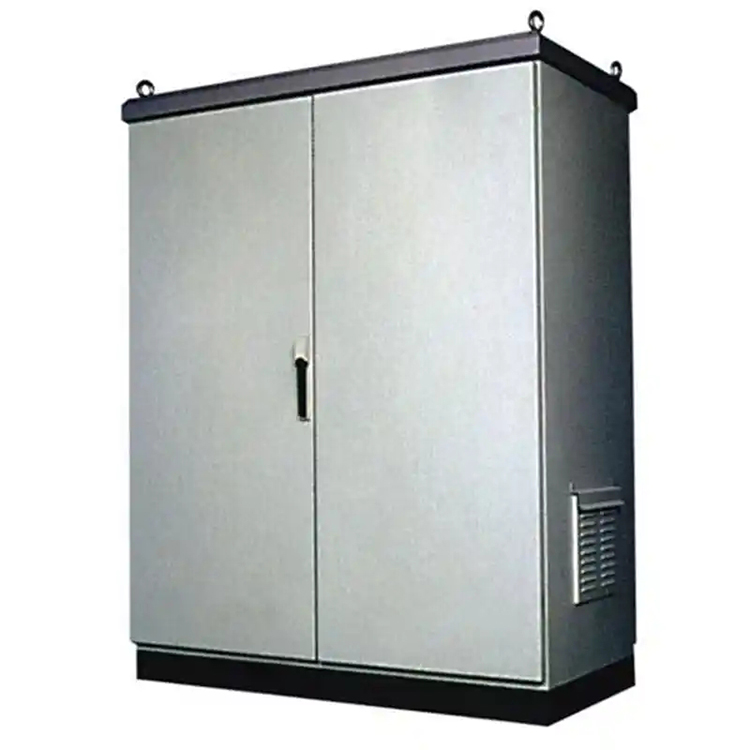
Because electrical panels are used in many sectors, it is helpful to look at how enclosure electrical solutions are applied in different industries.
Power generation, transmission, and distribution systems depend on stable and safe operation. Enclosure electrical cabinets are used to house:
- Switchgear and protection relays.
- Metering panels and control logic.
- Remote monitoring and communication modules.
These enclosures must often withstand severe outdoor conditions and, in some cases, high fault currents, so their mechanical strength and safety design are critical.
For communication and networking systems, enclosure electrical products protect sensitive low-voltage and data equipment:
- Outdoor telecom cabinets that host routers, switches, and power supplies.
- Network racks in buildings that combine power distribution units with IT hardware.
- Edge computing enclosures that handle both data and control signals.
Good grounding, shielding, and thermal management inside these enclosure electrical cabinets help maintain signal integrity and uptime.
Smart factories use advanced automation and data-driven control. Here, enclosure electrical designs must accommodate:
- Programmable logic controllers (PLCs), I/O modules, and industrial PCs.
- Drives and soft starters for motors.
- Safety relays, sensors, and communication gateways.
Because these environments are often harsh, industrial-grade enclosure electrical cabinets are built to resist vibration, dust, oil, and cleaning processes.
In commercial buildings and public infrastructure, enclosure electrical boxes organize and protect:
- Distribution panels for lighting, HVAC, and power outlets.
- Control panels for elevators, fire pumps, and emergency systems.
- Integration of power, metering, and building management systems.
Aesthetic considerations also matter: a well-finished enclosure electrical cabinet blends with architectural design while maintaining easy, safe access.
New energy and mobility projects have specific enclosure challenges:
- Solar and energy storage systems require outdoor cabinets for inverters, DC combiners, and battery management equipment.
- EV charging installations need vandal-resistant, weatherproof enclosure electrical housings that integrate power electronics and communication modules.
- Water pumps and industrial pumping systems use enclosures to protect starters, variable frequency drives, and control logic in damp or outdoor environments.
In these applications, enclosure electrical design directly affects safety, lifetime, and user experience.
Because enclosure selection and design involve safety, mechanical engineering, and electrical layout, working with a professional enclosure electrical manufacturer is highly beneficial.
A specialized manufacturer can:
- Analyze your environment, standards, and functional requirements.
- Propose standard models or custom enclosure electrical solutions that match your needs.
- Provide certified products with verified protection ratings and quality control.
- Support you from design through production, assembly, and long-term supply.
Ningbo Bohui Electric (Ningbo Bohui Technology Co., Ltd.) is an example of such a professional partner, focusing on high-quality sheet metal distribution boxes and cabinets for power, industrial automation, construction, communications, new energy, and related fields. With more than two decades of experience and both standard and customized offerings, a specialist like this can help you create enclosure electrical systems that are safe, reliable, and visually clean.
If you are deciding whether a specific panel should be placed in an enclosure, ask yourself the following questions:
- Is the panel in a location where untrained people can see or reach it?
- Is there dust, moisture, chemical exposure, or risk of impact in the area?
- Do local codes and standards expect a dead-front, enclosed design for this type of panel?
- Would equipment failure or downtime cause serious disruption or safety issues?
If the answer to any of these questions is “yes,” then using a properly selected enclosure electrical cabinet is the safer and more professional choice. Even in borderline cases, enclosing the panel usually improves safety and reliability at relatively low cost.
For most modern installations, the practical answer to “Does my electrical panel need to be in an enclosure?” is yes. An enclosure electrical system protects people from live parts, shields sensitive components from harsh environments, supports regulatory compliance, and improves uptime across power, communication, industrial, building, new energy, EV, and pump applications.
By carefully matching the enclosure electrical design to your environment, choosing appropriate materials and protection levels, and planning a smart internal layout with future expansion in mind, you transform a vulnerable open panel into a safe, durable, and professional solution. Partnering with an experienced enclosure manufacturer helps ensure that your panels not only meet today's requirements but are also ready for tomorrow's demands.
Contact us to get more information!

Most modern codes and standards expect panelboards and similar equipment to be installed in cabinets or identified enclosures that provide a dead-front surface and protect users from live parts. Even if an older installation was built without a proper enclosure electrical cabinet, upgrading to an enclosed solution usually improves safety and helps align the system with current best practices.
Start by assessing the environment around the panel. Indoor, clean areas can often use basic enclosure electrical boxes, while dusty, wet, or outdoor locations may require higher protection ratings and corrosion-resistant materials. Consider factors such as rain, washdown cleaning, airborne dust, and chemical exposure, and select an enclosure rating that fully covers those risks rather than just meeting the bare minimum.
Yes, many projects place power, control, and communication components in the same enclosure electrical cabinet, as long as space, thermal management, and safety requirements are respected. In such designs, it is common to separate low-voltage communication circuits from higher-voltage power sections, use proper shielding and grounding, and provide clear routing paths so that cables do not interfere with each other.
Inspect your current enclosure electrical housing for signs of wear or failure, such as rust, dents, broken locks or hinges, damaged seals, or evidence of water ingress and dust accumulation inside. If the door does not close properly, labels have faded, or internal components show corrosion or overheating marks, it is a strong indication that the enclosure is no longer providing adequate protection and should be repaired or replaced with a more suitable design.
Standard enclosures are cost-effective when your layout and environment are simple, but complex systems often need tailored dimensions, cutouts, and internal structures. A custom enclosure electrical solution can provide optimized space for cable routing, special mounting for unique devices, better integration with the surrounding structure, and a consistent appearance across your project. Working with a professional manufacturer allows you to balance cost and customization so that you get exactly what your panel needs.
1. Ningbo Bohui Technology Co., Ltd. – Company and product overview:
https://www.bohuitechnology.com
2. Ningbo Bohui Technology Co., Ltd. – Electrical enclosure products:
https://bohuitechnology.com/list/29-list-29-url.html
3. Bohui – Steel enclosure and custom enclosure solutions:
https://www.bohuielectric.com/steel-enclosure.html
4. 2023 NEC panelboard enclosure requirements (Section 408.38 and related guidance):
https://expertce.com/courses/electricians-guide-for-nec-2023/lessons/how-are-2023-nec-panelboard-enclosure-requirements-different
5. NEC requirements for panelboards and working space:
https://www.electricaltechnology.org/2024/10/nec-code-requirements-electrical-panels.html
6. Benefits of using high-quality electrical enclosures:
https://www.sytechprecision.com/2024/07/why-industrial-grade-enclosures-are-essential-for-factories
7. 4 benefits of electrical enclosures (security, safety, aesthetics):
https://loebelectric.com/blog/4-benefits-electrical-enclosures
8. The role and importance of electrical enclosures in modern power systems:
https://www.electricalbusinessreview.com/news/the-role-of-electrical-enclosures-in-modern-power-systems-nwid-438
9. The importance of quality electrical enclosures for reliability and reduced maintenance:
https://www.ec-box.in/post/the-importance-of-quality-electrical-enclosures


2026-04-22

2026-04-21


