


Views: 222 Author: Bohui Electric Publish Time: 2026-04-03 Origin: Site


Content Menu
● The Strategic Importance of Selecting the Right Manufacturer
>> Core Market Segments in 2026
● 1. nVent HOFFMAN: The Gold Standard for Durability
● 2. Rittal North America: The Precision Engineers
● 3. Saginaw Control & Engineering (SCE): The Value-Add Specialists
● 4. Hammond Manufacturing: The Versatility Experts
● 5. PolyCase: The Non-Metallic Leaders
● The Information Gap: How Global OEMs Bridge the Lead-Time Divide
>> Material Selection Comparison Table
● Strategic Guide: Professional Criteria for Supplier Evaluation
>> 1. Verification of Technical Compliance
>> 2. Thermal Management Integration
● 3 Hidden Challenges in Enclosure Procurement (Expert Tips)
● FAQ: Professional Insights on Electrical Enclosures
>> 1. What is the main difference between NEMA and IP ratings?
>> 2. Why is 316 stainless steel preferred over 304 for outdoor use?
>> 3. Can I modify a NEMA-rated enclosure myself?
>> 4. What are the typical lead times for custom enclosures in 2026?
>> 5. How do I calculate the heat load for my enclosure?
As an industry veteran who has spent decades navigating the intricacies of precision sheet metal fabrication and global supply chains, I've seen how a single enclosure choice can determine the lifespan of a multi-million dollar power grid or a high-speed automated production line.
The American market for electrical enclosures is currently undergoing a massive transformation. Driven by the "Made in America" initiative, the rise of EV infrastructure, and the expansion of 5G networks, the demand for high-quality, NEMA-rated protection has never been higher. According to recent 2026 market data, North America now holds a dominant 39.1% global market share, with the industry projected to reach a valuation of $59.39 billion this year.
In this guide, I will break down the top manufacturers and suppliers in America, providing the technical depth you need to make an informed procurement decision for your specific infrastructure needs.

Selecting an enclosure is no longer just about "buying a box." It is about thermal management, electromagnetic interference (EMI) shielding, and ensuring long-term structural integrity in harsh environments. Whether you are looking for a standard wall-mount unit or a custom-engineered modular cabinet, a manufacturer's ability to meet NEMA 250 and UL 508A standards is non-negotiable for project safety and compliance.
Energy & Power: Accounting for over 30% of the total market share.
Industrial Automation: Expected to contribute 39.6% to total demand due to the integration of smart manufacturing and robotics.
Metallic vs. Non-Metallic: Metal enclosures (Stainless Steel and Aluminum) still lead with a 52.8% share, though polycarbonate and fiberglass are gaining ground in coastal and corrosive environments.
Based in Anoka, Minnesota, nVent HOFFMAN remains the most recognized name in the North American market. They are particularly renowned for their extensive distribution network and the legendary reliability of their 3-point door linkages.
Key Strength: Their PROLINE series of modular enclosures is the industry benchmark for flexibility in data communications and industrial networking.
Insight: In my experience, HOFFMAN enclosures are the "safest bet" for maintenance teams. Their components are widely stocked by local distributors, meaning replacement parts like handles and gaskets are rarely more than 24 hours away.
While originally a German powerhouse, Rittal's massive manufacturing presence in Urbana, Ohio, has made them a "local" giant. They have revolutionized the market with their TS 8 and VX25 modular systems.
Key Strength: Integration. Rittal doesn't just sell enclosures; they sell a "system" that includes climate control, power distribution, and software-assisted engineering (EPLAN).
Insight: If you are designing a high-density control room with complex thermal requirements, Rittal's Blue e+ cooling technology integrated into their cabinets is hard to beat for energy efficiency and operational uptime.
Operating out of Michigan, Saginaw (SCE) has carved out a massive niche by offering high-quality alternatives to traditional market leaders, often at a lower price point and with faster custom modification lead times.
Key Strength: Rapid Customization. SCE is famous for their "Next Day Custom" services. If you provide a CAD model, they can laser-cut knockouts and interlocks for a remarkably low surcharge compared to larger competitors.
Insight: For system integrators working on tight margins, SCE provides the best balance of "industrial-grade" build quality and cost-effectiveness.
Hammond is a staple in both the US and Canadian markets. They excel in small-to-medium enclosures, particularly for the electronics and networking sectors.
Key Strength: Stainless Steel Specialists. Their 304 and 316L stainless steel junction boxes are ubiquitous in food processing and pharmaceutical plants due to their superior washdown resistance and hygienic design.
For applications where weight or signal transparency is an issue—such as outdoor 5G nodes or IoT sensors—PolyCase in Ohio is the leader in plastic and polycarbonate solutions.
Key Strength: High-impact, UV-resistant enclosures that carry NEMA 4X and IP66 ratings without the risk of oxidation or corrosion.

While domestic giants dominate local stock, there is a growing trend of American firms partnering with high-efficiency overseas manufacturers like Ningbo Bohui Electric Co., Ltd. to solve supply chain bottlenecks.
[Suggest Image: A side-by-side comparison of a precision CNC laser cutting process and a robotic welding arm in a modern factory setting]
As a content strategist in this sector, I've noted that American buyers often struggle with long lead times—currently 12–16 weeks for custom steel units from domestic plants. Global manufacturers with advanced OEM/ODM capabilities are closing this gap by offering:
Advanced Material Selection: Utilizing 316 Stainless Steel for maritime applications or Zinc-coated steel for urban infrastructure.
Precision Fabrication: Integrating automated CNC punching and robotic welding to ensure consistency that matches or exceeds domestic standards at a competitive scale.
| Feature | NEMA 4X (Stainless) | NEMA 12 (Mild Steel) | Polycarbonate |
| Corrosion Resistance | Excellent | Low (Requires Coating) | Excellent |
| Durability | High | High | Medium |
| Cost | High | Moderate | Low |
| Typical Use | Marine/Food Process | Indoor Industrial | Outdoor IoT |
Don't just look at a catalog. To ensure project longevity, verify that the manufacturer provides:
Certifications: UL, CSA, CE, and RoHS compliance documents.
Testing Facilities: Official Ingress Protection (IP) test reports and salt spray test data.
Proven Track Record: Case studies in specific verticals like EV charging stations, solar inverters, or telecommunication hubs.
Modern electronics generate significant heat. A supplier that only provides the "shell" is half a supplier. Ensure they offer:
Passive cooling (Louvers and Vents).
Active cooling (Filter fans or industrial air conditioners).
Heat exchange calculations based on your specific internal component heat dissipation.
In 2026, the best price is meaningless if the lead time is six months. Diversifying your supplier base to include both a local "stocking" partner (for immediate needs) and a "direct-to-factory" OEM partner like Ningbo Bohui Electric (for high-volume, custom projects) is the most resilient B2B strategy.
The Gasket Trap: Many low-cost enclosures use glued-on gaskets that fail after 2 years of UV exposure. Always specify poured-in-place foam gaskets (FIPFG) for a seamless, long-lasting environmental seal.
EMI/RFI Shielding: For communication enclosures, "painting" the inside isn't enough. You need conductive gaskets and specific plating to prevent signal interference in high-frequency environments.
The "Tea-Staining" Myth: Even 316 stainless steel can show brown spots (tea-staining) if not finished correctly. Ensure your supplier uses a #4 brushed finish or electropolishing for coastal environments to maintain aesthetic and structural integrity.
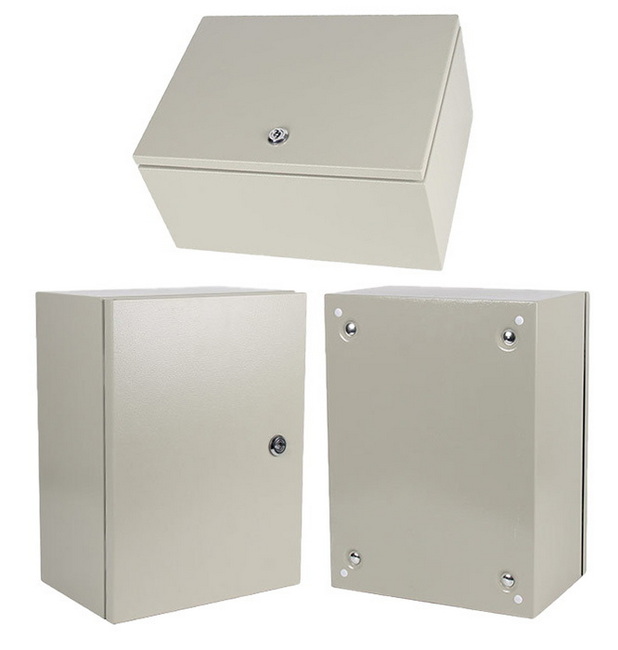
NEMA ratings (used primarily in North America) cover environmental hazards like corrosion and ice, whereas IP ratings (international) focus strictly on protection against solids (dust) and liquids (water). While they overlap, a NEMA 4X rating is generally more comprehensive than an IP66 rating because it includes specific corrosion resistance testing.
316 stainless steel contains molybdenum, which significantly increases its resistance to chlorides (like salt in coastal air) and industrial chemicals. For any enclosure within 5 miles of the ocean or in chemical processing plants, 316 is the professional standard.
Yes, but you must use UL-listed holes seals and hubs that match or exceed the enclosure's rating. If you cut a hole and use a standard washer, you have effectively downgraded your NEMA 4X enclosure to NEMA 1, voiding the environmental protection.
Standard stock items from major US suppliers are usually available in 1-2 weeks. However, custom-engineered solutions or large-scale OEM orders currently range from 10 to 18 weeks due to high demand in the renewable energy and EV sectors.
You must sum the total wattage (heat dissipation) of all internal components and factor in the total surface area of the enclosure and the maximum ambient temperature. Most top-tier manufacturers offer online thermal calculators to help you select the right cooling fan or AC unit.

2026-07-26

2026-07-24


