


Views: 222 Author: Amanda Publish Time: 2026-02-12 Origin: Site


Content Menu
● What Are Offshore Marine Enclosures?
● Key Offshore Enclosure Applications
● Common Material Options for Offshore Enclosures
● 5052 Aluminum Offshore Enclosures: Pros and Cons
>> Advantages of 5052 Aluminum
>> Corrosion Behavior in Marine Environments
>> Anodizing Aluminum for Extra Protection
● Stainless Steel Offshore Enclosures: 304L vs 316L
>> Why Stainless Steel for Offshore Use?
>> 304L Stainless Steel in Corrosive Atmospheres
>> 316L Stainless Steel for Extreme Marine Exposure
● The Best Combination: 316L Enclosure Body with 304L Hardware
● Understanding NEMA 4X and Offshore Ratings
>> What NEMA 4X Means for Marine Enclosures
>> When to Consider Higher or Different Ratings
● Real-World Offshore Use Cases and Lessons Learned
>> Case Example: Offshore Platform Control Panels
>> Case Example: Coastal Water Treatment and Pump Stations
● How to Choose the Right Offshore Enclosure Material: Step-by-Step
>> Step 1: Assess Environmental Severity
>> Step 2: Define Mechanical and Weight Constraints
>> Step 3: Balance Material Cost and Lifecycle Cost
>> Step 4: Confirm NEMA Rating Requirements
● Best Practices for Offshore Enclosure Design and Maintenance
>> Design Practices That Improve Corrosion Resistance
>> Maintenance Tips for Longer Service Life
● Call to Action: Get Expert Support for Your Offshore Enclosure Project
● Frequently Asked Questions (FAQ)
>> 1. Why is 316L stainless steel recommended for offshore enclosures?
>> 2. Is 304L stainless steel suitable for offshore applications?
>> 3. Why not use 316L for both the enclosure body and all hardware?
>> 4. What does a NEMA 4X rating guarantee for offshore enclosures?
>> 5. When should aluminum enclosures be used offshore?
Offshore and marine projects operate in some of the harshest environments on earth, where salt spray, UV exposure, vibration, and constant moisture can quickly destroy unprotected electrical equipment if the enclosure is not correctly specified. Choosing the right enclosure material—aluminum or stainless steel, and the right stainless grade for both body and hardware—is critical for safety, uptime, and lifecycle cost.
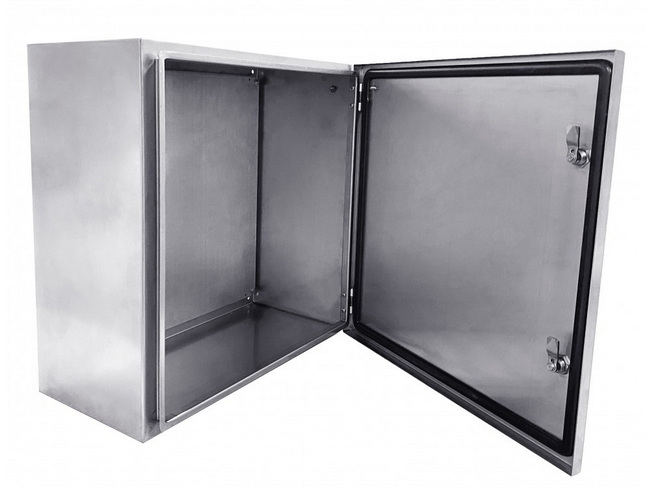
Offshore marine enclosures are protective housings for electrical and electronic equipment installed on ships, offshore platforms, coastal facilities, and other salt-laden or chemically aggressive locations. They are typically designed to meet NEMA 4X or similar ratings to keep out water, dust, and corrosive contaminants, while preventing accidental contact with live parts.
In these environments, corrosion resistance is just as important as mechanical strength. Enclosures must withstand salt spray, humidity, and frequent washdowns without pitting, rusting, or losing structural integrity over many years. Poor material selection can lead to premature failures, unscheduled downtime, and costly replacements.
Offshore and marine enclosures are widely used wherever critical power, control, and communication systems must stay operational around the clock.
Typical applications include:
- Platform power distribution panels and switchgear housings
- Pump, valve, and motor control panels on offshore rigs and ships
- SCADA, PLC, and industrial networking cabinets in coastal plants
- Instrumentation and sensor junction boxes exposed to salt spray
- Shore power and charging infrastructure at ports and marinas
In each case, the enclosure is the first line of defense between a corrosive offshore atmosphere and the sensitive equipment that keeps operations running.
When specifying an offshore enclosure, engineers usually consider 5052 aluminum, 304L stainless steel, and 316L stainless steel. Each material offers a different balance of corrosion resistance, strength, weight, and cost.
Material | Key Advantages | Typical Limitations |
5052 aluminum | Very lightweight, good formability, acceptable corrosion resistance with proper finish. | Surface corrosion and pitting can develop under long-term salt spray without additional protection. |
304L stainless steel | Good corrosion resistance, higher strength and wear resistance, cost-effective for hardware and enclosures in less aggressive areas. | Less resistant to chlorides and marine environments than 316L, may pit in heavy salt exposure. |
316L stainless steel | Excellent corrosion resistance in saltwater and chloride-rich environments due to its molybdenum and higher nickel content. | Higher cost, slightly lower strength and wear resistance than 304L, heavier than aluminum. |
5052 aluminum is widely used where weight reduction is a priority, such as on shipboard equipment, elevated platforms, and structures with strict load limits. It offers good general corrosion resistance and can be formed into complex shapes without cracking, which makes it appealing for customized enclosures.
When properly finished, aluminum enclosures can provide acceptable service life in many industrial environments, especially where salt exposure is intermittent or moderate rather than continuous.
In harsh offshore settings with continuous salt spray, 5052 aluminum will eventually show surface corrosion and pitting over time. While initial cosmetic changes may not immediately affect performance, ongoing pitting can weaken the enclosure and compromise seals or mounting points.
This is why aluminum is usually considered a secondary choice for the most aggressive offshore zones, especially when compared to stainless steel grades engineered for chloride resistance.
A common way to boost aluminum's performance is anodizing, an electrochemical process that thickens the natural oxide layer. Anodizing:
- Increases surface hardness
- Improves corrosion resistance in marine atmospheres
- Creates a non-conductive surface layer on the enclosure body
Anodized coatings typically tolerate temperatures up to about 80 °C. Prolonged exposure to higher temperatures can cause cracking in the finish, although the coating will not peel like paint. For offshore projects with tight weight budgets but moderate temperatures and salt exposure, anodized aluminum enclosures can be a practical compromise.
Stainless steel is the go-to material for many offshore electrical enclosures because its alloy composition provides strong resistance to atmospheric and salt-induced corrosion. Both 304L and 316L stainless steels contain chromium and nickel, which form a passive oxide layer that protects the metal from rust and pitting.
Stainless steel enclosures are heavier than aluminum but deliver higher mechanical strength and impact resistance, which is valuable on crowded platforms, ships, and docks.
304L is a low-carbon variant of 304 stainless steel that maintains good weldability while offering good general corrosion resistance. It performs well in humid indoor and many industrial environments, and even in some coastal conditions with moderate chloride exposure.
Because of its slightly higher chromium content compared to 316L, 304L exhibits higher strength and wear resistance, which is particularly advantageous for fasteners, hinges, and latches that experience repeated mechanical loading. 304L is also more economical than 316L, helping control system cost when used intelligently.
316L stainless steel is widely regarded as the benchmark for offshore corrosion resistance because it includes molybdenum and a higher nickel content than 304L. These alloying elements significantly improve resistance to pitting and crevice corrosion in chloride-rich environments like seawater.
In harsh marine atmospheres—such as splash zones on platforms, exposed ship decks, and coastal installations with persistent salt fog—316L offers superior long-term protection and reduced risk of perforation. This makes 316L the preferred material for the body of an offshore enclosure when maximizing service life is the priority.
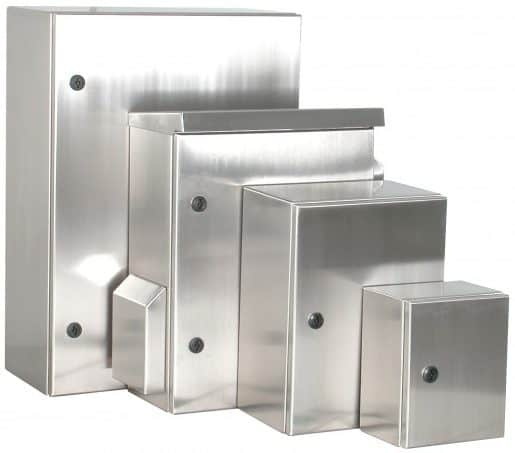
Many end users initially assume that if the enclosure body is 316L stainless steel, then all hardware—nuts, bolts, fasteners, handles—should also be 316L. In practice, this is not the most effective or economical configuration.
Field experience shows that:
- 316L stainless steel is the best material for the enclosure body in severe marine environments because of its superior corrosion resistance.
- 304L stainless steel is often the optimum material for hardware due to its higher strength, better wear resistance, and lower cost.
304L hardware provides greater resistance to galling and mechanical wear on hinges, latches, and bolted joints, while still delivering adequate corrosion resistance for exposed fasteners on a 316L body. This combination gives offshore operators a robust, corrosion-resistant enclosure without over-specifying more expensive 316L hardware where it offers limited additional benefit.
For most offshore and coastal applications, NEMA 4X is the reference rating for stainless steel electrical enclosures. A NEMA 4X enclosure must:
- Prevent water ingress from rain, splashing, and hose-directed water
- Resist windblown dust and airborne contaminants
- Offer an additional degree of protection against atmospheric corrosion
- Remain undamaged by external ice formation
To ensure corrosion resistance, the materials used must withstand extended salt spray testing with minimal evidence of corrosive pitting. For offshore platforms, ships, docks, and coastal facilities, NEMA 4X is therefore a common requirement when specifying stainless enclosures.
In addition to NEMA 4X, some offshore installations may require other ratings or certifications, such as enclosures designed for hazardous locations where explosive gases are present. In such cases, dual-rated enclosures may be used to satisfy both explosion protection and environmental protection requirements at once.
On a typical offshore oil or gas platform, main control panels for pumps, compressors, and safety systems are exposed to constant salt-laden winds and periodic washdowns. Operators who originally installed painted carbon steel or non-optimized aluminum enclosures often reported:
- Early paint failure and rust spots
- Pitting corrosion around fasteners
- Increased maintenance, recoating, and replacement cycles
By upgrading to 316L stainless steel NEMA 4X enclosures with 304L hardware, many sites have extended the service life of critical panels and reduced unplanned maintenance. The improved corrosion resistance also helps maintain gasket compression and door alignment, which further protects internal equipment.
Coastal water and wastewater plants often house pump controls and instrumentation near seawater intakes, where fog, salt spray, and chemical cleaners combine to create a highly corrosive environment. In these facilities, 316L enclosures with properly oriented grain finishes and 304L hardware have proven very effective at minimizing corrosion under daily washdown conditions.
Use the following practical process to select the most suitable material for your offshore enclosure project.
Ask these questions:
1. Is the enclosure located in a direct salt spray or splash zone, or is exposure mainly airborne salt fog?
2. Will the area see frequent high-pressure washdowns or just occasional cleaning?
3. Are chemical cleaners, acids, or caustics used nearby?
4. What are the minimum and maximum ambient temperatures?
For continuous salt spray, direct splash, or combined chemical exposure, 316L stainless steel for the enclosure body is usually the safest choice.
Consider whether weight is a limiting factor, such as on elevated structures or small vessels. If weight is critical and environmental severity is moderate, anodized 5052 aluminum may offer the best compromise between load and corrosion resistance.
Where structural robustness and impact resistance are more important than weight—such as on heavy-duty platforms—stainless steel becomes preferable.
While 316L stainless steel has a higher upfront cost than aluminum or 304L, its longer service life in harsh marine conditions often results in a lower total cost of ownership. Using 316L for the body and 304L for hardware further optimizes this balance by avoiding over-specification of fasteners and hinges.
Verify whether the application requires NEMA 4X or higher ratings. For most offshore and coastal electrical systems, NEMA 4X stainless steel enclosures are recommended to ensure robust protection against water ingress and corrosion.
If hazardous gas or dust is present, consult local codes and consider enclosures that combine environmental and explosion-proof ratings.
To maximize service life in marine environments, apply these enclosure design best practices:
- Choose 316L stainless for enclosure bodies in areas with heavy salt or chemical exposure.
- Use 304L stainless hardware for higher strength and wear resistance at a lower cost.
- Opt for vertical grain orientation on stainless surfaces to help water and contaminants drain off more easily.
- Avoid crevices that trap water, and ensure proper drainage paths and overhanging drip edges.
- Use compatible sealing materials and gaskets rated for marine and chemical exposure.
These measures help reduce the risk of localized corrosion and maintain enclosure integrity over time.
Even the best materials benefit from proper maintenance in a corrosive environment:
- Rinse enclosures periodically with fresh water to remove salt deposits.
- Inspect regularly for early signs of pitting or discoloration, especially around fasteners and joints.
- Avoid abrasive cleaning methods that damage the passive surface layer.
- Replace gaskets and seals when they show compression set, cracking, or chemical attack.
Consistent maintenance supports the long-term performance of both 316L and 304L stainless steel in offshore applications.
Selecting the right offshore stainless steel enclosure is critical for the reliability and safety of your power, control, and communication systems in marine and other highly corrosive environments. If you are planning a new offshore installation or upgrading existing equipment, partner with an experienced enclosure manufacturer that understands NEMA 4X requirements, stainless steel material selection, and the unique mechanical and environmental challenges of offshore applications. Contact our engineering team today to discuss your project, review drawings, and specify a custom enclosure solution optimized for your offshore, marine, or corrosive environment.
Contact us to get more information!
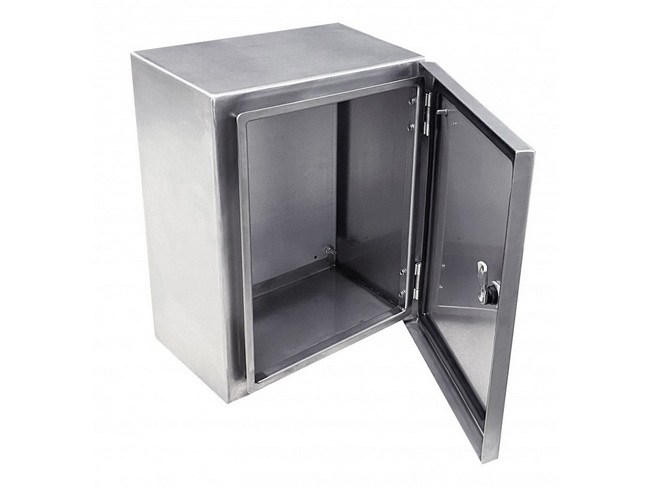
316L stainless steel contains molybdenum and higher nickel levels than 304L, which significantly improve resistance to pitting and crevice corrosion in chloride-rich environments like seawater. This makes it particularly suitable for long-term exposure to salt spray and marine atmospheres.
304L stainless steel can be used in some coastal and marine environments, especially where salt exposure is moderate and regular maintenance is feasible. However, in the harshest offshore zones, 316L usually delivers better long-term protection against chlorides and aggressive chemicals.
Although 316L offers superior corrosion resistance, 304L hardware often provides higher strength and wear resistance at a lower cost, which is advantageous for hinges, latches, and fasteners. Combining a 316L body with 304L hardware therefore balances corrosion performance, mechanical durability, and budget.
A NEMA 4X rating indicates that the enclosure protects against windblown dust, rain, sleet, snow, and hose-directed water, while also providing enhanced resistance to corrosion. Materials used must withstand extended salt spray testing with minimal pitting, making NEMA 4X a common standard for marine and coastal installations.
5052 aluminum enclosures are typically selected when weight reduction is critical and environmental severity is moderate rather than extreme. With anodizing and proper design, aluminum can perform well in many marine-related applications, but it is more prone to surface corrosion and pitting under long-term salt spray than 316L stainless steel.
1. https://www.nemaenclosures.com/blog/offshore-enclosures/
2. https://www.nemaenclosures.com/blog/corrosion-protection-for-offshore-marine-equipment/
3. https://www.rspsupply.com/c-1667-stainless-steel-enclosures.aspx
4. https://integraenclosures.com/stainless-steel-enclosures-vs-carbon-steel-enclosures/
5. https://www.eabel.net/knowledge-of-electrical-enclosures-en/nema-enclosures-for-coastal-and-marine-environments/
6. https://integraenclosures.com/category/technical-articles/nema-4x/
7. https://www.tzrmetal.com/nema-4x/
8. https://kongfangmetal.com/304l-vs-316l-stainless-steel/
9. https://www.themetalcompany.co.nz/technical-tuesday-304-316-stainless-steel-what-is-the-difference/

2026-07-26

2026-07-24


