


Views: 222 Author: Amanda Publish Time: 2026-02-17 Origin: Site


Content Menu
● What Is a Junction Box and Why Size Matters
● Junction Boxes vs Pull Boxes: Different Sizing Logic
● Core Concept: NEC Box Fill and Volume Requirements
● How to Size a Junction Box Step by Step
>> 1. Identify All Conductors in the Box
>> 2. Account for Equipment Grounds, Clamps, and Devices
>> 3. Determine the Volume Allowance for Each Conductor Size
>> 4. Add Everything Up to Get Required Volume
● Practical Example: Basic Box Fill Calculation
● When Junction Boxes Must Follow Large-Conductor Rules
● Common Junction Box Sizing Mistakes to Avoid
● Additional Sizing Factors Beyond NEC Volume
>> 1. Environmental Protection and Ratings
>> 2. Material and Mechanical Strength
● Modern Tools and Calculators for Junction Box Sizing
● Where Junction Box Sizing Matters Most in Modern Applications
● Best Practices for Junction Box Selection and Installation
● Call to Action: Plan Your Next Project with Properly Sized Junction Boxes
● Frequently Asked Questions (FAQ)
>> 1. What is the main purpose of a junction box?
>> 2. How do I know if my junction box is too small?
>> 3. Do equipment grounding conductors count toward box fill?
>> 4. When do I use different sizing rules for junction boxes?
>> 5. Are online box fill calculators acceptable for code-compliant designs?
Choosing the right junction box size is essential for electrical safety, NEC compliance, and long-term system reliability in residential, commercial, and industrial projects. When junction boxes are undersized, wires overheat, terminations are stressed, and maintenance becomes difficult, increasing the risk of failures and downtime. This guide explains how to size a junction box correctly, how NEC box fill rules work, and what practical factors electricians, engineers, and facility managers should consider before selecting an enclosure.

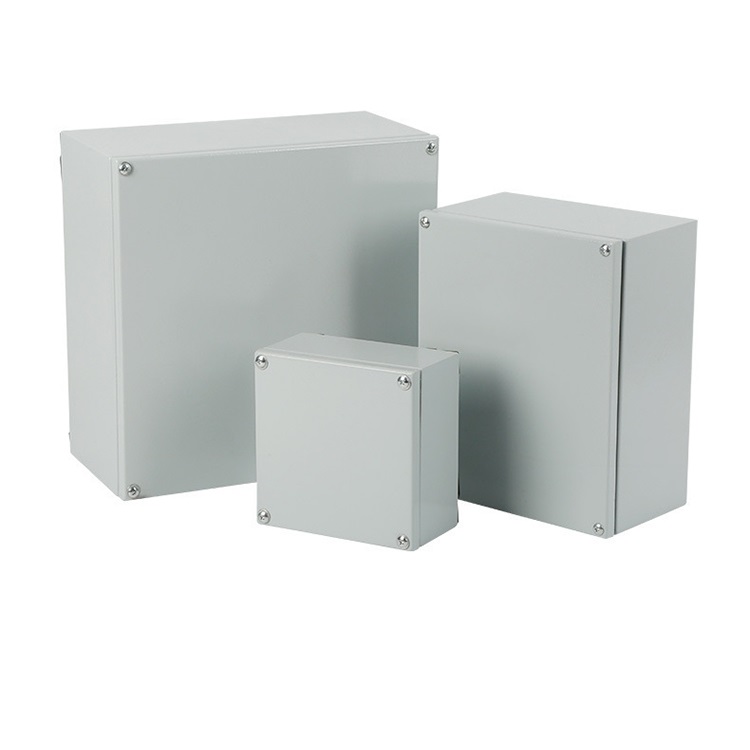
A junction box is an enclosure where electrical conductors are joined, spliced, or branched, while protecting connections from dust, moisture, and mechanical damage. Correct sizing ensures enough free space for conductors, devices, and fittings so that insulation is not damaged and heat can dissipate safely.
Key reasons junction box sizing matters:
- Safety and fire prevention. Adequate volume prevents overheating and reduces the risk of arcing or insulation breakdown.
- Code compliance. NEC requirements specify how to size boxes based on conductor count, wire size, and raceway arrangements.
- Ease of installation and maintenance. Larger, well-sized boxes give technicians room to pull, bend, and terminate conductors without damage.
- Future flexibility. Allowing extra space makes it easier to add circuits or devices later without replacing the box.
Electricians often confuse junction boxes with pull boxes, but they serve different purposes and follow different sizing rules.
- Junction box. Used where conductors are spliced, tapped, or connected to devices; sized by box volume and conductor count according to box fill rules.
- Pull box. Used to facilitate pulling conductors in long or complex conduit runs with no splices; sized mainly by conductor size and raceway layout, often using multiples of raceway trade size.
Aspect | Junction Box | Pull Box |
Primary function | Splicing and device terminations. | Assist pulling conductors through raceways. |
Main sizing basis | Box fill (volume vs conductor count). | Raceway trade size and bend configuration. |
Typical size range | Small device boxes to medium enclosures. | Often larger, with generous straight-pull dimensions. |
Common locations | Connection points, outlets, equipment terminations. | Along long conduit runs or direction changes. |
When your design includes splices or terminations, you must treat the enclosure as a junction box and apply box fill rules, even if it looks like a pull box.
For junction boxes with 6 AWG and smaller conductors, the NEC uses a box fill calculation to ensure the box has enough volume. Instead of measuring each wire's physical volume, the Code assigns a standard cubic-inch allowance for each conductor size and component.
Typical volume allowance per conductor:
- 14 AWG conductors: 2.00 in³ per conductor
- 12 AWG conductors: 2.25 in³ per conductor
- 10 AWG conductors: 2.50 in³ per conductor
- 8 AWG conductors: 3.00 in³ per conductor
- 6 AWG conductors: 5.00 in³ per conductor
Manufacturers mark the cubic inch volume on listed boxes, or you can reference standard volumes in applicable tables. Your task is to count conductors and components, multiply by the appropriate volume allowances, then ensure the box volume is at least that total.
This step-by-step process gives you a repeatable method you can use on every project.
Start by identifying every insulated conductor that enters and terminates or passes through the box.
- Count each unbroken conductor that passes through as one conductor of its size.
- Count each conductor that terminates in the box as one conductor.
- Do not count pigtails that originate and terminate entirely within the box, unless local interpretation differs.
Using a simple sketch of the box showing all raceways and conductors helps prevent mistakes and provides documentation for inspections.
The NEC assigns simplified allowances for grounds, clamps, and device yokes.
- Equipment grounding conductors. All grounds together count as one conductor based on the largest grounding conductor present.
- Internal cable clamps. If they are inside the box and not external to the volume, they count as one conductor based on the largest conductor they secure.
- Support fittings. Fittings that occupy space in the box may count as one conductor if they reduce usable volume.
- Device yokes (switches, receptacles). A single yoke that supports one or more devices typically counts as two conductors based on the largest conductor connected to that device.
This is where many miscalculations occur, so treat grounds, clamps, and devices carefully.
Group your conductors by gauge, then apply the volume allowance for each size.
- Multiply the number of conductors in each size group by that group's cubic-inch allowance.
- For the special allowances (grounds, clamps, devices), always use the volume for the largest associated conductor.
If you are working with several wire sizes in one box, keep separate subtotals for each gauge before adding them together.
Sum all the volumes from conductors, devices, grounds, and fittings to get the total required box volume.
- The junction box you choose must have a marked or tabulated volume that is equal to or greater than this total.
- If the box is not clearly marked, use data from the manufacturer that gives volume based on dimensions and configuration.
When you are deciding between two sizes, choosing the larger box usually improves workability, reliability, and future expansion options.
Consider a junction box that will contain the following 12 AWG conductors and one duplex receptacle.
- Four 12 AWG conductors entering from one cable (hot, neutral, ground, spare)
- Four 12 AWG conductors leaving to another cable
- One 12 AWG equipment grounding conductor from each cable (two grounds total, bonded together)
- One duplex receptacle on a single yoke
- One internal clamp inside the box volume
Step-by-step count:
- Current-carrying conductors: 4 entering + 4 leaving = 8 conductors
- Grounds: all grounds together count as 1 conductor (largest is 12 AWG)
- Device yoke: duplex receptacle counts as 2 conductors of 12 AWG
- Internal clamp: counts as 1 conductor of 12 AWG
Total conductor equivalents:
- 8 (current-carrying) + 1 (grounds) + 2 (device yoke) + 1 (clamp) = 12 conductor equivalents of 12 AWG.
With 12 AWG at 2.25 in³ per conductor, the total required volume is:
- 12 × 2.25 in³ = 27.0 in³.
In this scenario, you must select a junction box with a marked volume of at least 27 in³, and preferably more to allow easier wiring and future modifications.
For conductors 4 AWG and larger, NEC rules shift from box fill to raceway-based sizing. These rules are especially important in industrial power distribution, large feeders, and long runs of conduit.
Key principles include:
- Straight pulls. The length of the box must often be at least 8 times the trade size of the largest raceway in a straight-pull configuration.
- Angle pulls, U-pulls, and splices. Minimum dimensions increase and must account for the distance between raceway entries and opposite walls.
- Multiple raceways. Additional space is required for each extra raceway in the same wall to maintain proper bending radius and pulling space.
Because these calculations can be complex, many professionals rely on reference charts, design software, or digital code tools to validate box sizing for large conductors.
Even experienced electricians sometimes misjudge required box size. Avoid these recurring pitfalls:
- Ignoring device yoke allowances. Forgetting to count a multi-gang switch or receptacle yoke often causes hidden overfill.
- Under-counting grounds and clamps. Assuming grounds and clamps “do not count” leads to boxes that are too small.
- Not accounting for multiple wire sizes. Mixing 14 AWG and 12 AWG conductors, for example, requires separate volume calculations for each gauge.
- No margin for future changes. Choosing the smallest acceptable box leaves no room for later additions or troubleshooting.
- Overlooking working clearances. Even if the volume is adequate, cramped boxes make it hard to maintain bend radius and torque terminations properly.
Implementing a standard checklist for box fill helps enforce consistency across projects and crews.
Code compliance is the baseline, but reliable junction box selection also depends on environment, mounting, and system integration.
- Indoor dry areas. General-purpose boxes are often sufficient.
- Wet or corrosive areas. Use boxes with appropriate environmental ratings, such as gasketed enclosures with corrosion-resistant materials.
- Dusty or hazardous locations. Hazard-rated, sealed, or pressurized enclosures may be required to contain ignition sources.
Matching the enclosure to the real-world environment extends equipment life and reduces maintenance.
- Steel and stainless steel. Provide high impact resistance and are common in industrial and outdoor applications.
- Non-metallic (PVC, polycarbonate, fiberglass). Offer corrosion resistance and electrical insulation for certain installations.
Material selection affects durability, grounding methods, and compatibility with the surrounding structure.
- Entry points on the sides, top, bottom, and back must leave enough room for bending radius, conduit fittings, and strain relief.
- Extra space may be needed for cable glands, larger connectors, or multi-core cables used in industrial and renewable-energy systems.
Good planning at this stage avoids overcrowded entries and difficult field modifications.
- Front-accessible designs with hinged covers improve maintenance in control panels, power distribution boards, and smart manufacturing systems.
- Some applications need removable panels or internal mounting plates to support terminal blocks, relays, and communication modules.
Thinking about access early avoids situations where critical terminations end up buried behind other components.
Digital tools make junction box sizing faster and less error-prone.
- Online box fill calculators. These tools let you input conductor sizes, counts, devices, and clamps, then output required volume in cubic inches.
- Manufacturer selector tools. Many enclosure suppliers provide configuration platforms that match box fill requirements with specific part numbers and accessories.
- Training videos and e-learning. Short video lessons on box fill and sizing rules help apprentices and experienced electricians stay current with recent code editions.
For complex industrial systems, combining calculators with CAD or BIM layouts helps designers check clearances, conductor routing, and maintenance space early in the design process.
With electrification expanding into new sectors, properly sized junction boxes are critical in several rapidly growing fields.
- Data centers and networking. High-density power and communication cabling demand organized junction boxes and robust enclosures to maintain uptime.
- Industrial automation and smart manufacturing. Junction boxes must accommodate control wiring, field I/O, sensors, and network cables in harsh environments.
- Renewable energy and energy storage. PV arrays, battery energy-storage systems, and EV charging infrastructure use junction boxes to manage high currents and multiple circuit terminations.
- Building infrastructure. Modern buildings integrate lighting control, HVAC, fire safety, and access systems, all of which rely on well-planned junction boxes.
Specialized electrical-enclosure manufacturers can provide custom sizes, materials, and cutouts tailored to these demanding applications, improving reliability and ease of integration.
To design safer, more maintainable electrical systems, project teams can adopt a few best practices around junction box sizing and selection.
- Standardize on a sizing method. Use a consistent, documented workflow for box fill and large-conductor sizing across all projects.
- Build in extra space. Where possible, choose a box that exceeds minimum volume to simplify installation and future modifications.
- Match enclosure material to environment. Select metal or non-metallic boxes, gaskets, and coatings that match temperature, humidity, and chemical exposure.
- Coordinate with enclosure manufacturers. Early collaboration helps ensure that box sizing, mounting, and cutouts align with the mechanical design and cable routing.
- Document box fill and box schedules. Including box fill data in project documentation helps inspectors and maintenance teams verify compliance later.
These practices support safer installations, smoother inspections, and longer equipment life.
Proper junction box sizing is more than a calculation on paper; it is the foundation of safe, scalable, and maintainable electrical systems across power, communications, industrial automation, and new energy applications. If you are planning new projects in power distribution, smart manufacturing, building infrastructure, or renewable-energy systems, take the time now to review your box fill data, environment, and mounting requirements so you can specify junction boxes that truly match real-world conditions. For upcoming projects, work directly with a specialized electrical-enclosure manufacturer or trusted supplier, share your conductor schedules and environmental constraints, and request tailored junction-box and enclosure recommendations that will support long-term safety, reliability, and ease of maintenance.
Contact us to get more information!
A junction box protects wire splices and terminations from mechanical damage, dust, and moisture, while providing a safe space to branch or extend electrical circuits. It also improves safety by containing potential faults and making future maintenance and troubleshooting easier.
If conductors are tightly packed, difficult to bend, or stressed at terminations, the box may be undersized. A box with a marked volume that is lower than the total volume required by your box fill calculation is too small and should be replaced with a larger unit.
Yes, all equipment grounding conductors together count as one conductor based on the largest grounding conductor present in the box. This allowance must be included in your box fill calculation along with conductors, clamps, and device yokes.
You typically use box fill and volume allowances for junction boxes containing 6 AWG and smaller conductors. For 4 AWG and larger conductors, you follow rules that size boxes based on raceway size and configuration rather than cubic-inch volume.
Online box fill calculators are widely used as a design aid and can help quickly estimate required box volume, especially when multiple conductor sizes and devices are involved. However, you remain responsible for verifying that the inputs, outputs, and resulting box selection comply with the current code and any local amendments.
Approximate word count (from main heading to end of FAQs): about 1,900 words.
1. https://polycase.com/techtalk/electronics-tips/how-to-size-junction-box.html
2. https://expertce.com/learn-articles/how-to-calculate-junction-box-size-nec-2023/
3. https://omnicalculator.com/construction/box-fill
4. https://www.mikeholt.com/newsletters.php?action=display&letterID=1979
5. https://www.mikeholt.com/newsletters.php?action=display&letterID=1988
6. https://shop.chapmanelectric.com/resources/how-to-calculate-underground-pull-box-sizing
7. https://viox.com/pull-box-vs-junction-box/
8. https://copperweld.com/resources/calculators/box-fill-calculator
9. https://www.youtube.com/watch?v=HNUvDvO4Onw
10. https://www.youtube.com/watch?v=WHiXxc4_zyA

2026-07-26

2026-07-24


